Free Zone vs Mainland: Cost and Benefit Comparison for New Businesses

By UAE Freezone Finder Team | Updated September 2026
Choosing between a free zone and a mainland setup is the most critical decision an entrepreneur faces when entering the United Arab Emirates market. In 2026, the landscape has evolved significantly with the full implementation of corporate tax and updated commercial laws. This comprehensive free zone vs mainland cost comparison breaks down the financial and operational nuances to help you determine which path aligns with your 2026 business goals.
What are the Primary Differences Between UAE Free Zones and Mainland Companies?
Regulatory Bodies and Jurisdictional Authority
A mainland company is an onshore entity registered under the Department of Economy and Tourism (DET) in the respective emirate (such as Dubai or Abu Dhabi). These companies are governed by the UAE Federal Law No. 32 of 2021 on Commercial Companies. Conversely, a free zone company is registered within a specific geographical enclave, governed by its own independent regulatory authority. Each free zone—be it DMCC, IFZA, or SHAMS—has its own rules, regulations, and licensing frameworks designed to cater to specific industries.
Geographical Operational Limits
The most distinct difference lies in where you can do business. A mainland company can trade anywhere within the UAE and internationally without restrictions. They can also bid for government contracts, which is a significant advantage for construction and consultancy firms. Free zone companies are technically restricted to trading within their specific zone or internationally. To sell goods directly into the UAE mainland from a free zone, a company must typically appoint a mainland distributor or establish a mainland branch, which adds to the operational complexity.
Ownership and Sponsorship Structures
While the UAE changed its laws in 2021 to allow 100% foreign ownership for many mainland activities, some strategic sectors still require a UAE National partner holding 51% of shares. In contrast, free zones have always offered 100% foreign ownership across all sectors. For many investors, the simplicity of the free zone ownership structure remains a major draw, avoiding the need for side agreements or complex “Local Service Agent” (LSA) arrangements required for professional mainland licences.
How Does the Free Zone vs Mainland Cost Comparison Look in 2026?
When conducting a free zone vs mainland cost comparison, it is essential to look beyond the initial licence fee. Total cost of ownership includes office rent, visa allocations, mandatory insurances, and annual renewal fees. In 2026, the gap between the two has narrowed, but free zones generally remain the more cost-effective entry point for startups and service-based businesses.
Initial Licensing and Registration Fees
In 2026, a standard service licence in a Northern Emirate free zone (like Sharjah or Ras Al Khaimah) starts at approximately AED 12,500 to AED 18,000. This often includes a “flexi-desk” or virtual office solution. A mainland licence in Dubai, however, typically starts at AED 15,000 for the licence alone, but quickly escalates to AED 25,000–AED 35,000 once you factor in the “Market Fees” (usually 2.5% of the annual office rent) and various administrative deposits.
Office Space and Physical Infrastructure
The mainland usually requires a physical office space with a minimum size (often 200 sq. ft.) verified by an “Ejari” (tenancy contract). In prime Dubai areas, this can cost upwards of AED 40,000 per annum. Free zones offer more flexibility. Many provide “Smart Desks” or “Coworking Spaces” that satisfy the legal requirement for a physical address at a fraction of the cost, often bundled into the licence package for as little as AED 5,000 per year.
Comparison Table: 2026 Estimated Costs (AED)
| Cost Component | Free Zone (e.g., IFZA/SHAMS) | Mainland (Dubai DET) |
|---|---|---|
| Licence Fee (Annual) | AED 12,000 – 18,000 | AED 15,000 – 25,000 |
| Office/Rent | AED 0 – 5,000 (Flexi-desk) | AED 30,000+ (Physical Office) |
| Visa Cost (per person) | AED 3,500 – 5,500 | AED 5,000 – 7,000 |
| Establishment Card | Included or AED 2,000 | AED 5,000 (Labour/Immigration) |
| Total Year 1 Estimate | AED 17,500 – 25,000 | AED 55,000 – 75,000 |
Which Setup Offers Better Tax and Financial Benefits in 2026?
Corporate Tax Implications
Since the introduction of the 9% UAE Corporate Tax, the “tax-free” status of free zones has become more nuanced. To qualify for a 0% tax rate on “Qualifying Income,” a free zone entity must maintain “Adequate Substance” (physical office and staff in the zone) and comply with strict transfer pricing rules. Mainland companies are subject to the standard 9% tax on profits exceeding AED 375,000. For many small businesses, the Dubai free zone costs are justified by the potential tax savings if they deal primarily with international clients.
Customs Duties and Import/Export
Free zones remain the gold standard for import/export businesses. Goods brought into a free zone are exempt from customs duties (usually 5% in the UAE) as long as they are re-exported or remain within the zone. Mainland companies must pay customs duties on all imports. If your business model involves high-volume international transshipment, the free zone is the clear winner in any free zone vs mainland cost comparison.
Capital Repatriation
Both jurisdictions allow for 100% repatriation of capital and profits. However, free zones often have more streamlined processes with their partner banks to facilitate international transfers, whereas mainland companies may face more rigorous compliance checks during the business setup in Dubai process and subsequent banking operations.
Is the Setup Process Faster in a Free Zone?
Time is money for a new business. Free zone registration is notoriously faster because the authority acts as a “one-stop-shop.” In zones like Meydan or IFZA, a licence can be issued in as little as 48 to 72 hours, often without the owner needing to be physically present in the UAE. The entire process, including the E-channel registration and initial visa approval, can be completed remotely.
Mainland setup has improved with the “Instant Licence” schemes, but it still often requires more bureaucratic steps. This includes notarising the Memorandum of Association (MOA) at the Dubai Courts or through a digital notary, and obtaining approvals from external departments (such as the Municipality, RTA, or Health Authority) depending on the activity. A typical mainland setup takes 7 to 14 days, provided all documents are in order.
Which Option is Best for Your Specific Business Activity?
Service-Based and Consultancy Firms
If you are a consultant, IT professional, or creative freelancer working with global clients, a free zone is almost always the better choice. The lower overheads, lack of a requirement for a large physical office, and the ability to operate under a professional licence make it highly efficient. The free zone vs mainland cost comparison for a single-person consultancy shows a saving of nearly 60% in the first year when choosing a free zone.
Retail and Local Services
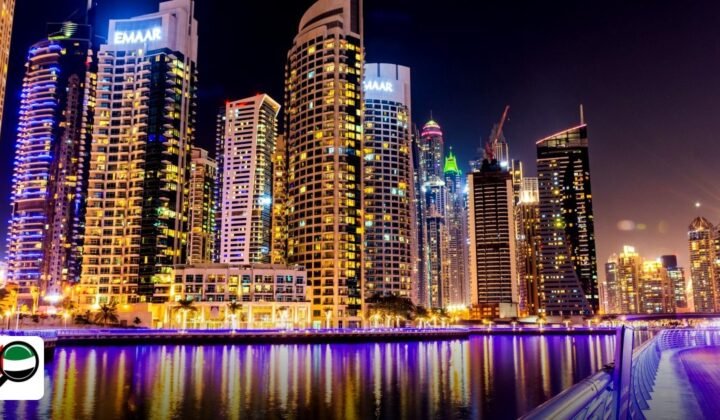
If you intend to open a physical coffee shop, a retail outlet, or a cleaning service that operates in residential areas like Dubai Marina or Downtown, you must have a mainland licence. A free zone licence will not allow you to rent retail space on the street or provide services directly to residents in mainland areas. For these businesses, the higher cost of mainland registration is simply a necessary cost of doing business in the target market.
E-commerce Businesses
E-commerce is a grey area. While you can hold an e-commerce licence in a free zone, delivering goods to customers in the UAE mainland technically requires a mainland agent or a third-party logistics (3PL) provider that is mainland-registered. Many startups begin in a free zone to save on initial costs and then transition to mainland or use a hybrid model as they scale.
What are the Hidden Costs of UAE Business Setup?
Many entrepreneurs are blindsided by “hidden” costs that aren’t listed on the initial quote. In 2026, these include:
- Corporate Tax Registration: Even if you are in a 0% tax bracket, you must register for Corporate Tax and file annual returns, which usually requires hiring an accountant (AED 5,000 – 15,000 per year).
- Medical and Emirates ID: These are separate from the visa fee and cost roughly AED 1,200 – 1,500 per person.
- Document Legalisation: If you are a corporate shareholder from abroad, legalising your home-country documents can cost AED 10,000+ at the UAE Embassy and Ministry of Foreign Affairs.
- VAT Registration: If your taxable turnover exceeds AED 375,000, you must register for VAT. While the registration is free, the compliance costs are not.
Final Verdict: Free Zone or Mainland?
The decision hinges on your client base. If your revenue comes from outside the UAE or from other free zone companies, the free zone vs mainland cost comparison heavily favours the free zone. You will benefit from lower setup costs, faster processing, and 100% ownership with minimal bureaucratic friction.
However, if your business strategy relies on government contracts, local retail, or providing services directly to the UAE public, the mainland is your only viable option. While the initial investment is higher—largely due to physical office requirements and market fees—the mainland licence offers the “unlimited” growth potential that a free zone cannot match within the local domestic economy.
Frequently Asked Questions
Can a free zone company have an office in mainland Dubai?
No, a free zone company is restricted to having its physical office within the boundaries of the free zone where it is licensed. However, many free zone companies use coworking spaces within the zone while their employees work remotely or visit clients in the mainland for meetings.
Do I need a local sponsor for a mainland company in 2026?
For most commercial and industrial activities, a local sponsor (UAE National holding 51%) is no longer required, allowing 100% foreign ownership. However, for “Professional” licences, you may still need a Local Service Agent (LSA) who does not own shares but acts as a liaison with government departments for a fixed annual fee.
Is VAT different for free zones and mainland?
Generally, no. Both are subject to the 5% VAT if they meet the registration threshold. However, certain “Designated Zones” (specific fenced-in free zones) are considered “outside the UAE” for VAT purposes for certain types of goods transfers, which can provide a cash-flow advantage.
Can I switch from a free zone to a mainland licence later?
You cannot “convert” a licence directly. You would typically need to incorporate a new mainland entity and then either liquidate the free zone company or keep it as a subsidiary/branch. This is a common path for businesses that start lean and expand into the local market later.
What is the cheapest free zone in the UAE for 2026?
The most cost-effective zones are usually found in the Northern Emirates, such as the Sharjah Media City (SHAMS), International Free Zone Authority (IFZA) in Dubai (operating under DSO), or RAKEZ in Ras Al Khaimah. These zones frequently offer “startup packages” starting around AED 12,500.
Ready to set up your UAE freezone? Get a free consultation →