If you’ve just started dreaming about launching a tech startup or a boutique consultancy in the UAE, the first thing that probably pops into your head is the tax picture. You’ve heard about the 0% corporate tax promise in free zones, but you also know the UAE introduced a federal corporate tax regime in 2023 that applies to many businesses. So, how does that impact a free‑zone company? Let’s unpack the reality behind the headline and see what it really means for you.
The good news is that free‑zone entities still enjoy a generous tax exemption, but the exemption isn’t blanket. Companies whose taxable profit exceeds AED 375,000 per year fall into the standard 9% corporate tax bracket, while those under that threshold keep the 0% rate. In practice, that means a small‑scale e‑commerce store generating AED 200,000 a year pays nothing, whereas a fast‑growing logistics firm crossing AED 500,000 will start paying 9% on the excess.
In our experience helping entrepreneurs set up in Dubai Internet City, we’ve seen a SaaS founder who kept her annual revenue under the threshold by strategically timing license renewals and deferring certain contracts. By doing so, she stayed in the 0% tier for the first two years, freeing cash to reinvest in product development. On the flip side, a manufacturing client in Sharjah Free Zone projected rapid growth, so we advised a proactive tax budgeting plan: allocate 9% of projected profit to a reserve fund, ensuring the corporate tax bill won’t surprise anyone.
Here are three actionable steps you can take right now to stay compliant and optimise your tax position:
- Calculate your expected taxable income before you register. If you’re likely under AED 375,000, you can safely choose the standard free‑zone license without extra tax filings.
- Set up a simple accounting system early – even a spreadsheet that tracks revenue vs. expenses helps you see when you cross the threshold.
- Consider a corporate‑tax registration early on. The UAE’s e‑services let you register online, and the process is explained in detail on our Corporate Taxation – UAE Free Zone Finder page.
Remember, corporate tax is calculated on net profit, not gross revenue, so every AED you can legitimately deduct – from office rent to employee salaries – reduces your liability. For example, a design studio that booked AED 400,000 in contracts but had AED 70,000 in allowable expenses paid tax only on AED 330,000, staying below the 0% threshold.
Does all this feel a bit overwhelming? It’s normal. The key is to treat tax planning as part of your business model from day one, not as an after‑thought. By keeping an eye on your profit margins, using the exemption wisely, and leaning on professional advice when you near the AED 375,000 line, you’ll avoid nasty surprises and keep more of your hard‑earned money.
TL;DR
Navigating uae corporate tax for free zone companies is simple once you know the 0% threshold, track profit, and register early if needed. Follow our quick checklist—estimate taxable income, set up basic accounting, and use UAE Free Zone Finder’s guidance—to stay compliant and keep more cash in your business today.
Overview of UAE Corporate Tax and Its Relevance to Free Zone Companies
When you first hear “corporate tax” it can feel like a wall of legalese, especially if you’re dreaming about setting up a boutique shop in Dubai Internet City. The good news? The UAE’s new tax framework is actually pretty transparent once you break it down.
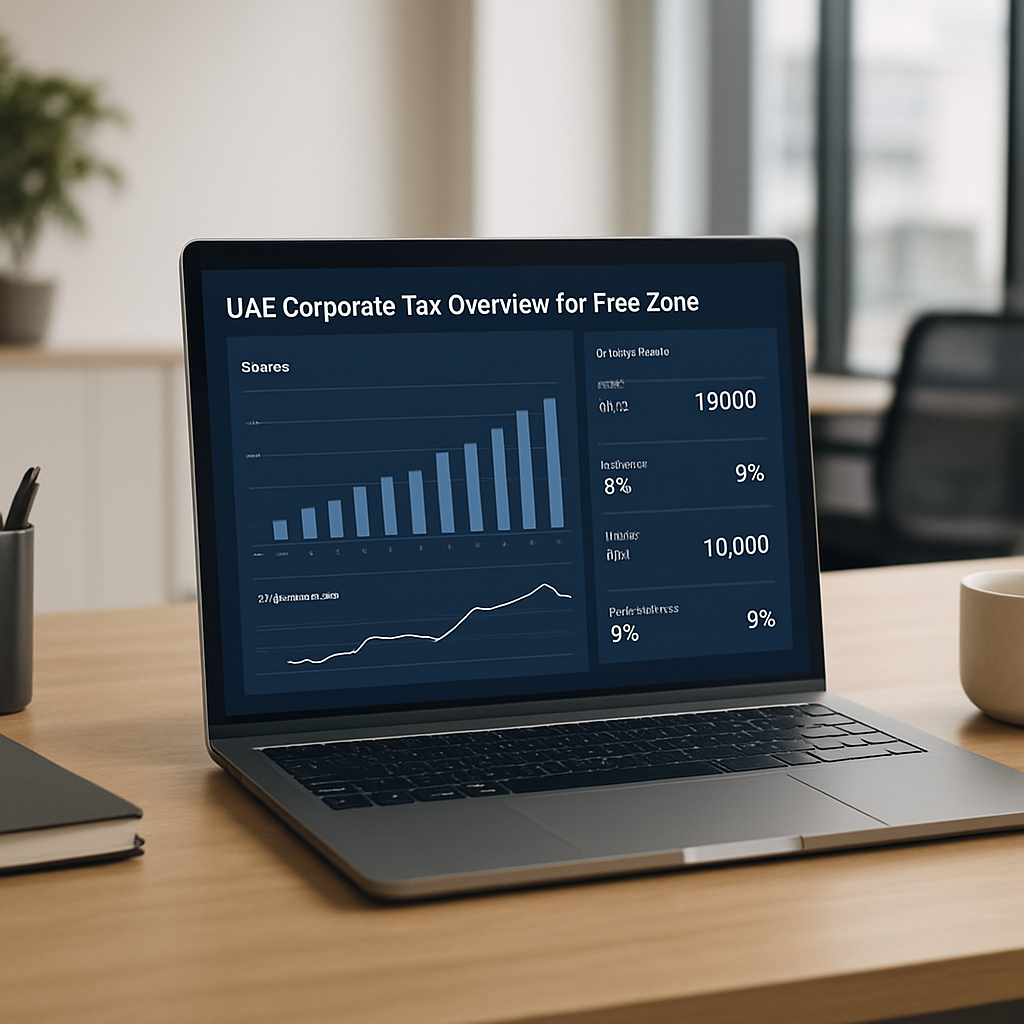
In 2023 the UAE introduced a federal corporate tax that applies to all businesses, but free‑zone companies still enjoy a special carve‑out. If your net profit stays below AED 375,000 per year, you sit comfortably in the 0 % bracket. Cross that line and the rate jumps to 9 % on the excess – nothing crazy, but it does mean you need to keep an eye on your numbers.
So, why does this matter for you, the entrepreneur? Imagine you’re launching a SaaS startup. In year one you forecast AED 300,000 in profit – you’re safe, no tax bill. Year two you land a big client and profit rockets to AED 500,000. Suddenly you owe tax on AED 125,000 (the amount above the threshold). That’s AED 11,250 you didn’t anticipate unless you planned for it.
Key things to watch
- Profit, not revenue: Tax is calculated on net profit after allowable deductions – office rent, salaries, marketing, even some tech expenses.
- Threshold monitoring: Set up a simple spreadsheet or use basic accounting software to flag when you’re approaching AED 375,000.
- Reserve fund: Allocate roughly 10 % of projected profit into a tax reserve once you think you’ll exceed the limit.
But you don’t have to figure this out solo. Corporate Taxation – UAE Free Zone Finder breaks down the registration steps, filing deadlines, and what documents you’ll need. It’s a quick read that saves you from a nasty surprise.
And here’s a practical tip: many free‑zone authorities now offer an online portal where you can pre‑register for corporate tax before you even get your trade license. Doing that early gives you a tax ID, which some banks require for opening a corporate account.
Still feeling a bit fuzzy about how to actually file? Think about it like filing a simple quarterly report you already do for your accountant – just one extra line for the tax amount. The UAE’s Federal Tax Authority (FTA) portal is user‑friendly; you upload your profit‑and‑loss statement, the system calculates the tax due, and you pay it online.
Now, let’s talk about making tax compliance less of a chore. Many entrepreneurs find that automating routine bookkeeping frees up mental bandwidth. Tools that handle receipt capture, expense categorisation, and even basic tax calculations can shave hours off your month. That’s where AI‑driven automation platforms come in handy. Check out Assistaix for a glimpse of how smart automation can keep your tax reporting on autopilot.
Once you’re tax‑compliant, the next challenge is getting your brand noticed. A solid SEO strategy is essential, especially when you’re competing with hundreds of other free‑zone startups. Rebelgrowth offers an automated content engine that helps you build backlinks and rank faster, so you can focus on growing your product instead of chasing traffic.
Bottom line: UAE corporate tax for free zone companies is simple as long as you stay under the AED 375,000 threshold or plan ahead for the 9 % rate. Track profit, set aside a reserve, use the free online portals, and consider automation tools for both compliance and marketing. With those basics in place, you’ll spend less time worrying about tax and more time scaling your business.
Ready to get started? Our team can walk you through the registration process and point you to the right tools for bookkeeping and SEO – just drop us a line.
Eligibility Criteria and Taxable Activities for Free Zone Entities
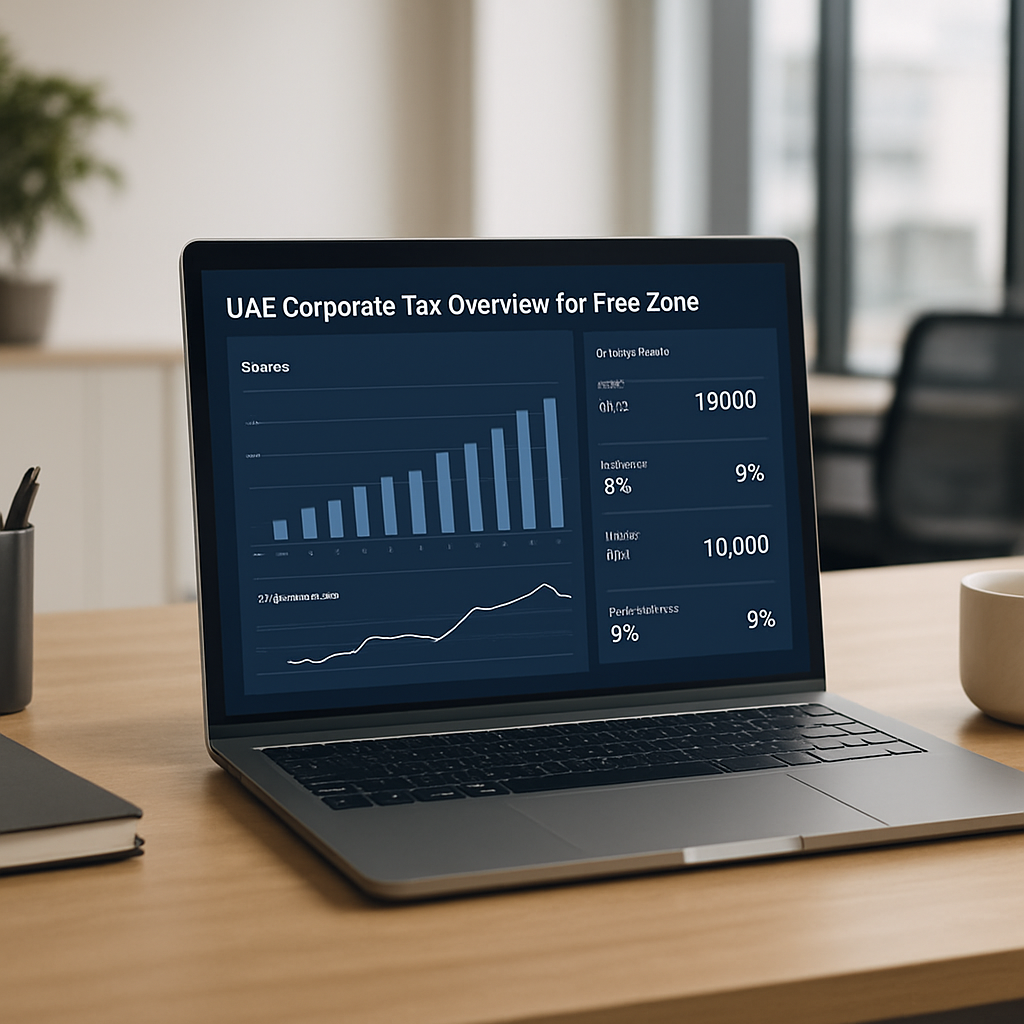
Let’s get straight to it: free‑zone 0% treatment isn’t automatic. You’ve got to meet conditions and stick to qualifying activities, or the FTA will treat income as taxable.
Who qualifies as a Qualifying Free Zone Person (QFZP)?
Core eligibility — the short list
In plain terms, a QFZP is a free‑zone company that is correctly registered, maintains its legal and economic link to the free zone, and earns income from qualifying activities with no mainland permanent establishment.
What does that mean in practice?
If you anchor staff, contracts, or sales in the UAE mainland — think a warehouse or a sales office generating domestic sales — you risk losing the QFZP status. FTA guidance explains this distinction in detail.
So, what activities are qualifying vs non‑qualifying?
Qualifying activities (examples you’ll like)
Typical qualifying income: international services, software export, consultancy to overseas clients, IP licensing to non‑UAE customers, and many B2B digital services sold cross‑border. If your invoices land offshore or to non‑UAE recipients, you’re in the safe bucket more often than not.
Real example: a SaaS startup in a Dubai free zone selling annual subscriptions to EU customers keeps that revenue as qualifying income, provided development, billing and contractual arrangements are clean and the company doesn’t have a mainland PE.
Another example: an e‑commerce seller storing stock in a free zone and shipping internationally — qualifying. But if that stock is placed in a UAE mainland warehouse for UAE customers, that income is likely non‑qualifying.
Non‑qualifying activities — watch out
Income from UAE domestic trade, rental from property located in the UAE, and activities performed through a mainland permanent establishment are usually non‑qualifying. Also, passive income that’s effectively connected to onshore activity can be excluded.
Case in point: a free‑zone consulting firm that has a staffed office on the mainland servicing UAE government clients will see that mainland revenue treated as taxable mainland income.
Want the official breakdown? The Federal Tax Authority’s bulletin on Free Zone Persons gives the formal rules and examples (it’s a good read when you’re doing your compliance checklist): FTA bulletin on qualifying free zone persons.
How do you practically prove qualification?
Practical steps you can take today
- Document client location and billing — show revenues are exported, not local.
- Keep contracts and invoices consistent with business activity — avoid mixed‑jurisdiction language.
- Track substance: where are decisions made, where are staff based, and where is IP developed?
- Set aside a reserve for the 9% tax on any non‑qualifying profit — assume the worst and budget.
Need a checklist that spells qualifying tests and documentation? Our readers often follow a deeper guide — see the practical requirements in our Qualifying Free Zone Person Requirements UAE: Complete Guide for Individuals for setup and compliance tips that match the FTA tests.
Still unsure whether your activity qualifies?
Here’s a quick litmus test: if the revenue would survive a scrutiny that asks “where was value created?” and the answer is the free‑zone entity (not the UAE mainland), you’ve got a good chance of qualifying. If the answer points to a mainland presence, start planning for 9% on that slice.
One more thing — keep records. If you can’t prove the source and nature of income, you can’t claim the 0% with confidence.
Bottom line: qualification is rules plus substance. Spend an afternoon mapping contracts, substance and invoices — that work saves you far more than it costs.
Filing Requirements and Compliance Timeline
Now that you’ve figured out whether your activity qualifies, the next hurdle is actually filing the return and staying on the regulator’s calendar.
The Federal Tax Authority (FTA) expects three core deliverables from every free‑zone company: a registration confirmation, an annual tax return, and, when applicable, a payment of the 9 % liability. Miss a deadline and you risk penalties that can quickly eat into your cash flow.
Here’s the timeline most businesses follow, broken down into four bite‑size phases.
Phase 1 – Pre‑registration (Months 1‑2)
Before you even think about filing, you need a Tax Registration Number (TRN). You can apply through the FTA’s e‑services portal – it’s a simple three‑step wizard: company details, activity code, and supporting documents (license, passport, and proof of address). The FTA usually issues the TRN within 5‑7 business days.
Action step: upload a copy of your free‑zone license and a one‑page “substance map” that shows where decisions are made, where staff sit, and where IP lives. This map will become the backbone of your later compliance file.
Phase 2 – Ongoing bookkeeping (Months 3‑11)
Throughout the fiscal year you must keep a tidy set of records that separates qualifying from non‑qualifying income. The LinkedIn guide on calculating corporate tax for free‑zone persons stresses allocating expenses on an arm‑length basis – for example, split your shared HR costs 70 % to the free‑zone side and 30 % to a mainland office if you have one.
Practical tip: use a cloud‑based accounting tool that tags each invoice with “qualifying” or “non‑qualifying.” At month‑end run a quick profit‑and‑loss split; if the qualifying side stays under AED 375,000 you’re still in the 0 % bucket.
- Record every invoice date, client location, and currency.
- Store contracts digitally and back them up in two locations.
- Reconcile bank statements monthly – mismatches are red flags for the FTA.
Phase 3 – Draft return preparation (Month 12)
When the financial year closes, pull the “qualifying income” report from your accounting software. The FTA’s return form (CT‑2023) asks for three numbers: total revenue, allowable deductions, and the split between qualifying and non‑qualifying profit.
Example: a digital marketing agency in Dubai Media City booked AED 420,000 in overseas contracts and AED 30,000 in local ad‑placement fees. After AED 90,000 of expenses, the qualifying profit is AED 330,000 (0 % tax) and the non‑qualifying profit is AED 0 – no tax due.
But if the same agency added a UAE‑based client for AED 80,000, the qualifying profit drops to AED 250,000 and the non‑qualifying profit rises to AED 70,000. The 9 % tax applies only to the AED 70,000 excess, resulting in a AED 6,300 liability.
Action step: run the “tax‑impact calculator” in your spreadsheet and set aside the exact amount in a separate bank account. This avoids the dreaded “I don’t have the cash” scramble.
Phase 4 – Filing & payment (Month 13‑14)
The FTA portal opens for filing 30 days after fiscal‑year‑end. Upload the completed CT‑2023 form, attach your financial statements, and submit the supporting “substance map.” If you owe tax, you have another 30 days to pay electronically.
Penalties are steep: a missed filing attracts a 5 % fine of the tax due, plus a daily 1 % surcharge after the second week. Late payment adds another 2 % per month. In short, a small oversight can balloon into a sizable bill.
Quick checklist before you click “Submit”:
- Confirm the TRN matches the license number.
- Verify the qualifying‑vs‑non‑qualifying split adds up to total profit.
- Attach the substance map and any inter‑company agreements.
- Run the FTA’s “validation” tool – it flags missing fields instantly.
- Schedule the payment in your cash‑flow forecast.
If you’re feeling overwhelmed, you’re not alone. In our experience, many entrepreneurs outsource the filing to a local accounting firm, but you can also do it yourself once the process is mapped out.
For a deeper dive into structuring your company to keep the 0 % rate, check out our Corporate Structuring – UAE Free Zone Finder guide. It walks you through entity options, share‑holding arrangements, and how to document substance without over‑complicating things.
Bottom line: the filing timeline is predictable; the real work is keeping your books clean throughout the year. Stick to the four phases, set reminders in your calendar, and the FTA will thank you – or at least won’t send you a fine.
Exemptions, Incentives, and Strategic Tax Planning
Why exemptions matter more than you think
When you first hear about the 0 % rate, it feels like a free lunch. But the devil is in the details – you only get that zero‑tax bite if you meet the Qualifying Free Zone Person (QFZP) criteria.
In our experience, entrepreneurs who assume the exemption is automatic end up with a surprise 9 % bill because one tiny revenue stream slipped through the qualifying‑income filter.
Key exemptions you can actually claim
PwC’s tax summary spells out that a QFZP enjoys a 0 % rate on qualifying income, while any non‑qualifying profit is hit with 9 %.1 The good news? The law offers a handful of carve‑outs you can deliberately structure around.
- De‑minimis rule: non‑qualifying revenue up to 5 % of total revenue or AED 5 million (whichever is lower) doesn’t tip you out of the exemption.
- IP income: royalties from intellectual property owned in the free zone are treated as qualifying, even if the licensee sits on the mainland.
- Intra‑group transfers: moving assets between entities inside the same qualifying group can be tax‑neutral, provided you respect the two‑year claw‑back period.
Think about it this way: a Dubai‑based SaaS firm can license its software to a UK client, count the royalty as qualifying, and keep the 0 % rate – as long as the development team stays inside the free zone.
Real‑world examples that illustrate the savings
Example 1 – A design studio in Dubai Media City: The studio booked AED 420 000 in overseas projects and AED 30 000 in a local ad‑placement. By allocating the local work to a separate mainland subsidiary, the free‑zone entity’s profit stayed under the AED 375 000 threshold, saving roughly AED 10 500 in tax.
Example 2 – A logistics start‑up in RAK Economic Zone: The company shipped goods from a designated zone, but a portion of the cargo moved through a mainland warehouse. By re‑routing that 5 % of volume back through the free zone and documenting the change, they kept non‑qualifying revenue under the de‑minimis limit and avoided a AED 12 000 tax hit.
Strategic tax‑planning steps you can start today
- Map every revenue stream: Tag invoices in your accounting software as “qualifying” or “non‑qualifying.” This simple habit lets you see at a glance where you stand.
- Run a de‑minimis test each quarter: Add up all non‑qualifying income. If it exceeds 5 % of total revenue, consider restructuring that line‑item – maybe outsource it to a mainland entity.
- Build a reserve fund: Even if you’re safely under the threshold, set aside 5‑10 % of projected profit. It’s a safety net for the year you finally cross the line.
- Leverage IP incentives: Register patents or software copyrights within the free zone. The resulting royalty income is automatically qualifying.
- Document substance rigorously: Keep a “substance map” that shows where core income‑generating activities happen, who makes key decisions, and where assets sit. The FTA will ask for this if you ever get audited.
And don’t forget to revisit your plan whenever you add a new client or launch a product. A quick quarterly review can catch a drift before it becomes a tax liability.
Expert tip: use the de‑minimis exemption wisely
Because the rule caps non‑qualifying revenue at the lower of 5 % of total revenue or AED 5 million, a small‑scale exporter can afford a modest domestic project without losing the 0 % rate. For instance, a consulting firm with AED 200 000 of overseas work can safely take on up to AED 10 000 of UAE‑based work and still stay exempt.
When you’re ready to dig deeper into how the exemption works in practice, check out the RAK Economic Zone guide. It walks through real‑world setups and shows exactly how to align your contracts with the qualifying‑income definition.
Bottom line
Exemptions and incentives aren’t a magic wand; they’re a set of rules you can bend to your advantage with a bit of foresight. By tracking every income line, using the de‑minimis carve‑out, and keeping solid substance documentation, you turn “maybe I’ll pay tax” into “I’m confidently staying in the 0 % bucket.”
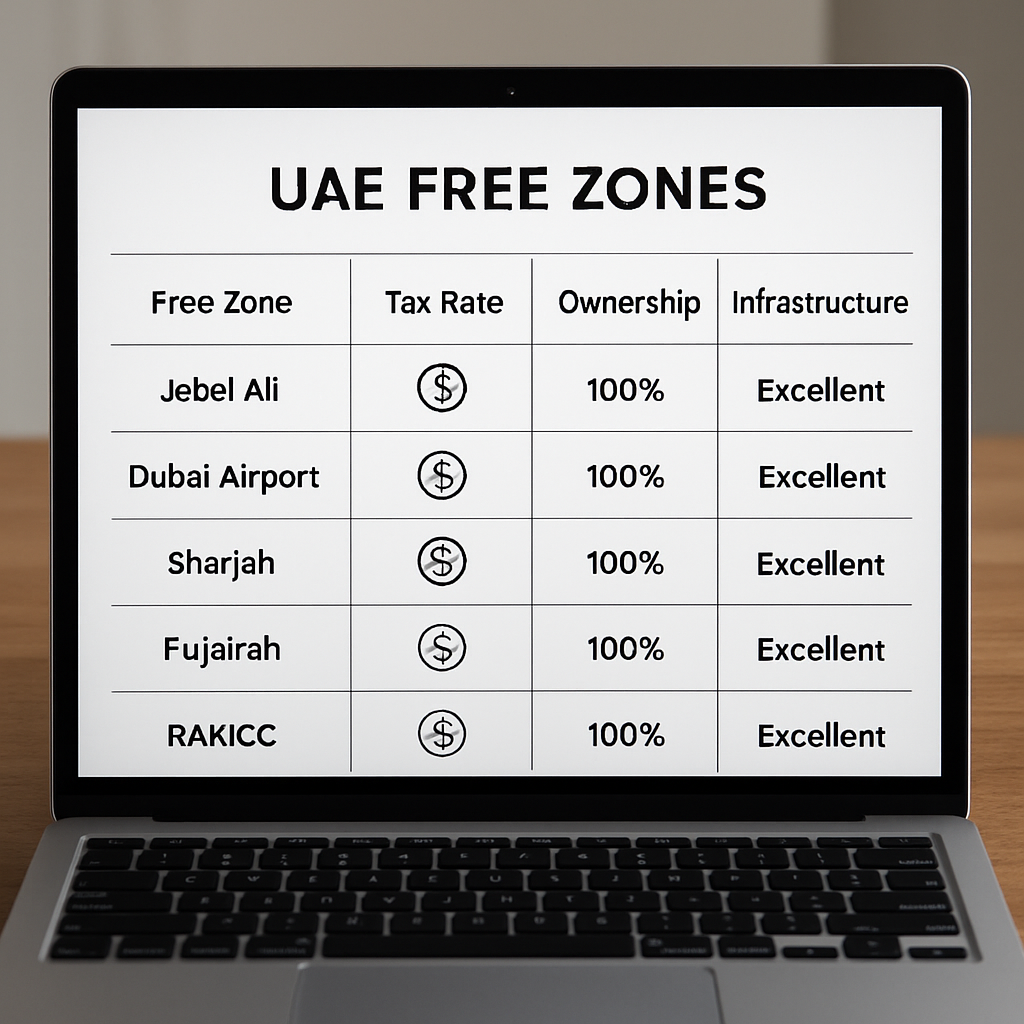
Comparative Table: Tax Rates & Benefits Across Major UAE Free Zones
Okay, you’ve been juggling thresholds and de‑minimis rules, and now you’re wondering which free zone actually gives you the best tax playground. It’s a fair question – after all, every entrepreneur wants the sweet spot where the 0 % rate meets real‑world perks.
Let’s break it down with a quick look at three of the most popular zones. We’ll compare the headline corporate tax rate, the core benefits they market, and a couple of practical notes you might have missed.
What the numbers really mean
Under the Federal Decree‑Law No. 60, a qualifying free‑zone company (QFZP) enjoys a 0 % corporate tax on qualifying income, but non‑qualifying profit gets hit with 9 %.
That baseline is the same across the UAE, but each free zone adds its own incentives – from 100 % foreign ownership to fast‑track licensing. The table below pulls those pieces together.
| Free Zone | Standard Corporate Tax Rate (QFZP) | Key Benefits |
|---|---|---|
| Dubai Internet City (DIC) | 0 % on qualifying income, 9 % on excess | 100 % ownership, dedicated tech ecosystem, easy access to talent pools |
| Ras Al Khaimah Economic Zone (RAKEZ) | 0 % on qualifying income, 9 % on excess | Low setup fees, flexible office options, strong logistics links |
| Abu Dhabi Global Market (ADGM) | 0 % on qualifying income, 9 % on excess | Robust regulatory framework, international banking hub, fast licence approval |
Notice how the tax column looks identical? That’s because the federal law levels the playing field. The real differentiator is what each zone bundles on top of the tax exemption.
So, which one lines up with your business model? If you’re a SaaS startup chasing a global client base, DIC’s tech‑centric community might shave weeks off your hiring timeline. If you need warehousing and cost‑effective space, RAKEZ’s logistics focus could keep your overhead low. And if you’re handling cross‑border finance or need a reputation boost with international investors, ADGM’s regulatory clout is hard to ignore.
Quick checklist to match zone to need
- Does your revenue mainly come from overseas services? All three give the 0 % rate, but DIC’s networking events are tailored for digital firms.
- Do you need cheap, flexible office space or a warehouse? RAKEZ offers modular facilities that can grow with you.
- Is your business in fintech or fund management? ADGM’s legal framework mirrors major global standards.
And here’s a tip most people overlook: the “benefits” column often includes hidden cost savings. For example, DIC’s on‑site incubators can waive part of your office rent for the first year. RAKEZ’s shared services center cuts back‑office expenses by up to 30 %. ADGM’s streamlined licensing can shave days off the registration process, which means you start earning sooner.
Want to double‑check the corporate tax rules that underpin all this? The PwC corporate tax summary breaks down the federal rates and the de‑minimis carve‑out in plain language.
On the benefits side, the Ministry of Economy’s free‑zone overview highlights the 100 % foreign ownership and fast‑track setup that every zone advertises. You can see the full list of zones and their core advantages on the UAE Ministry of Economy free zones page.
Bottom line: the tax rate itself isn’t the deciding factor – it’s the extra value each zone packs in. Map your business priorities against the table, run a quick cost‑benefit calculation, and you’ll land on the zone that keeps your 0 % tax promise intact while boosting your operational efficiency.
FAQ
What exactly is “UAE corporate tax for free zone companies” and who does it affect?
In plain English, the UAE corporate tax law applies to every legal entity operating in the country, but free‑zone companies enjoy a special treatment. If you’re registered inside a recognised free zone and meet the Qualifying Free Zone Person criteria, the first AED 375,000 of net profit is taxed at 0 %. Anything above that falls into the standard 9 % rate. The rule covers both newly‑founded startups and established firms that have moved into a free‑zone environment.
How can I know whether my business qualifies for the 0 % exemption?
The key is to check three things: (1) your licence is issued by a UAE free zone, (2) your income comes from qualifying activities – typically services or goods exported outside the UAE, and (3) you don’t have a permanent establishment on the mainland. Keep a simple spreadsheet that tags each invoice as “qualifying” or “non‑qualifying.” If all your revenue streams pass the test, you stay in the 0 % bucket.
What is the profit threshold and how is tax calculated if I exceed it?
The law sets a flat AED 375,000 exemption. Say your net profit is AED 500,000. First AED 375,000 is tax‑free, the remaining AED 125,000 is taxed at 9 %, giving a liability of AED 11,250. The calculation is linear – you don’t pay 9 % on the whole amount, only on the excess. Running this math in a basic spreadsheet each quarter helps you spot a looming tax bill early.
Can I use legitimate deductions to keep my profit under the threshold?
Absolutely. Allowable expenses include office rent (including co‑working space), employee salaries, software licences, professional fees and even certain depreciation items. By recording every cost in your accounting tool, you shrink the taxable profit line. For example, a design studio that booked AED 420,000 in revenue but claimed AED 90,000 in rent and salaries ends up with AED 330,000 profit – comfortably below the exemption limit.
What are the key filing deadlines and penalties I should watch out for?
The Federal Tax Authority issues three core deliverables: (1) obtain a Tax Registration Number within 5‑7 business days of incorporation, (2) file the annual corporate‑tax return within 30 days after fiscal‑year‑end, and (3) pay any tax due within a further 30 days. Missing the filing date triggers a 5 % fine of the tax owed, plus a 1 % daily surcharge after the second week. Late payment adds a 2 % monthly penalty, so it’s cheaper to file on time even if you owe nothing.
How often should I review my revenue mix to avoid surprise tax charges?
We recommend a quarterly check‑in. Pull the “qualifying vs non‑qualifying” report from your accounting system, add up total profit, and compare it to the AED 375,000 line. If you’re within 10 % of the limit, consider delaying a large contract or reallocating expenses to keep the profit under the cap for that fiscal year. A quick spreadsheet view every three months is all it takes.
Where can I find reliable help to prepare my corporate‑tax return?
Many entrepreneurs partner with a local accounting firm that understands free‑zone nuances, but you can also do it yourself if you keep tidy records. Start by gathering your licence, TRN, financial statements and the substance map you built during registration. The FTA portal walks you through each field, and the built‑in validation tool flags missing items before you submit. If you hit a snag, a brief consult with a tax adviser can save you from costly penalties.
Conclusion
We’ve walked through the basics of uae corporate tax for free zone companies, from the 0 % threshold to the 9 % bite once you cross AED 375,000.
Remember, the biggest win is staying ahead of the line‑item. A quarterly profit‑check, tagging each invoice as qualifying or not, and a tiny reserve fund can turn a surprise bill into a non‑event.
So, what should you do next? Grab a simple spreadsheet, list every revenue stream, and flag the ones that fall outside the free‑zone definition. If non‑qualifying income nudges above 5 % of total, consider shifting that work to a mainland subsidiary or re‑routing the contract.
In our experience, entrepreneurs who treat tax planning like a regular board meeting never get hit with penalties. The Federal Tax Authority’s validation tool is forgiving when your paperwork is tidy, but it’s unforgiving when you miss a deadline.
Finally, you don’t have to figure it all out alone. Platforms like UAE Free Zone Finder break the process into bite‑size steps and even offer a quick WhatsApp chat for instant guidance.
Take action today: run that profit forecast, set aside a small reserve, and keep your 0 % shelter intact. Your future‑self will thank you. Start today, and let the tax advantage fuel your growth journey.