
Picture this: you’ve just decided to launch a general trading business in a UAE free zone, but the checklist of requirements feels like a maze. You’re not alone—most entrepreneurs hit the same wall when they first stare at the list of documents, fees, and regulatory steps.
First off, the core of a general trading license is surprisingly straightforward: you need a valid passport copy, a business plan outlining your trading activities, and proof of a physical address or flexi‑desk within the free zone. In our experience, many clients skip the business plan or write something too vague, only to be sent back for clarification. A concise, two‑page plan that spells out the commodities you’ll handle, your target markets, and projected turnover usually does the trick.
Next, you’ll face the capital requirement. Most free zones ask for a minimum share capital of AED 10,000, but some, like DMCC, waive it if you opt for a flexi‑desk. It’s worth checking the specific zone’s policy before you lock in your office choice. A real‑world example: a Dubai‑based electronics distributor saved AED 15,000 by choosing a flexi‑desk in a zone that didn’t enforce a share‑capital deposit.
Don’t forget the approvals. If you plan to trade food items, you’ll need clearance from the Dubai Municipality; for electronics, a customs‑duty exemption request may be required. These extra steps can add a week or two to your timeline, so build that into your schedule.
Here’s a quick actionable checklist to keep you on track:
- Gather passport copies and recent utility bills for proof of address.
- Draft a clear, two‑page business plan with your trading scope.
- Confirm the minimum share capital for your chosen free zone.
- Secure any sector‑specific approvals (e.g., food, electronics).
- Prepare a bank reference letter or proof of funds.
- Submit the application through the free zone’s online portal.
And remember, you don’t have to navigate this alone. Platforms like How to Set Up a Free Zone Company in UAE: A Step‑by‑Step Guide walk you through each document and deadline, turning a daunting process into a manageable series of steps.
So, grab this checklist, double‑check each item, and you’ll be well on your way to securing that general trading license without unnecessary delays.
TL;DR
If you’re ready to launch a trading business in a UAE free zone, our uae free zone general trading license requirements checklist condenses every document, fee and approval into an actionable list.
Follow it, and you’ll breeze through the setup, getting licence and operations up and running faster than expected.
Step 1: Define Your General Trading Activity and Scope
Imagine you’ve just opened the notebook where you’ll sketch the whole trading business. The first line you write? What exactly are you going to sell, and where?
Getting crystal‑clear on your activity isn’t just a formality for the free‑zone authority – it’s the compass that keeps you from wandering into costly revisions later. In the UAE free zone, the licence you apply for must match the specific commodities or services you intend to move. A vague “general trading” description will get sent back for clarification faster than you can say “re‑apply”.
Map out the product families
Start by listing every product family you plan to handle. Are you importing electronics, distributing construction materials, or moving fashion accessories? Write each category on its own line, then add a short note on the sub‑types (e.g., “smartphones, tablets, accessories”). This granular list helps the licensing team see that you’ve thought it through.
Tip: If you anticipate adding new lines later, note it as a future activity – you can always file an amendment down the road. That way you avoid the surprise of having to apply for a brand‑new licence after you’re already trading.
Define your market reach
Who are you selling to? Local retailers, Gulf‑wide distributors, or overseas buyers? The free‑zone authority often asks for a brief market overview. Mention the primary regions (e.g., GCC, MENA, EU) and the channel you’ll use (online, B2B wholesale, retail stores). This shows you’ve scoped the scale of your operation.
And remember, some zones have restrictions on certain product types – for instance, a zone focused on tech might charge extra for hazardous goods. Double‑check the zone’s activity list before you lock in your description.
Match activity codes to the licence
Every free zone publishes an activity code matrix. Find the code that aligns with your main product family. If you’re dealing with multiple families, pick the one that represents the bulk of your turnover and list the others as “supplementary activities.” This is where the step‑by‑step guide to set up a free zone company can save you time – it walks you through the code lookup process.
Don’t forget to note any special handling requirements (e.g., temperature‑controlled storage for food, CE certification for electronics). Those details often pop up in the customs‑duty exemption or sector‑specific approval stages.
Draft a concise activity statement
Now turn that list into a two‑page business plan excerpt. Keep it punchy: “We will import and wholesale consumer electronics – smartphones, tablets, accessories – to retail chains across the GCC, using a flexi‑desk office in Dubai Airport Free Zone. Projected turnover for Year 1 is AED 1.2 million.” This sentence hits the what, where, and how without drowning the reviewer in fluff.
Think about the future: add a line like “Additional product lines, such as smart home devices, will be introduced in Year 2 pending regulatory approval.” That signals growth intent without committing you to a broader licence now.
Secure sector‑specific approvals early
If any of your items fall under regulated categories – food, pharmaceuticals, or telecom equipment – you’ll need extra clearances. Start the paperwork with the relevant authority (e.g., Dubai Municipality for food, TRA for telecom) while you’re finalising the licence application. It’s a small step now that saves weeks later.
And hey, after you’ve nailed the activity definition, you’ll probably wonder about the next big piece: getting your online presence up. That’s where a partner like Free Website Chick can help you spin up a professional e‑commerce site without a headache.
Finally, don’t overlook the legal fine‑print. For crypto‑related trading or any digital asset handling, a quick chat with a specialist such as NeosLegal UAE Crypto Lawyers ensures you stay compliant beyond the licence itself.

Bottom line: a well‑defined activity statement is the foundation of your uae free zone general trading license requirements checklist. Nail it, and the rest of the process – capital, office, approvals – falls into place much smoother.
Step 2: Choose the Right Free Zone for General Trading
Now that you’ve nailed down what you’ll be trading, the next big decision is where you’ll set up shop. It feels a bit like picking a neighborhood for a new home – you want the vibe, the cost, and the convenience all to line up with your lifestyle.
First, ask yourself: do you need a hub that already talks to customs, or are you fine with a more relaxed office‑only environment? Some zones, like Jebel Ali Free Zone (JAFZA) and Dubai Airport Free Zone (DAFZA), have built‑in logistics corridors that shave days off import timelines. Others, such as Dubai Silicon Oasis, are geared toward tech‑heavy traders and offer co‑working spaces that keep overhead low.
Map your priorities
Grab a piece of paper or a digital note and list the three factors that matter most to you:
- Industry fit – Does the zone publish a list of approved activities that matches yours?
- Cost structure – What’s the total annual fee, including licence, office, and any hidden service charges?
- Operational speed – How quickly can you get a customs duty exemption or a warehouse licence?
Once you have that shortlist, compare it against the free‑zone catalogues. Most zones publish a PDF of permissible activities; for example, DMCC lists over 600 options across 20 sectors. If your product isn’t on the list, you’ll need a special permit, which can add both time and cost.
Real‑world snapshots
Consider Ahmed, a Lebanese entrepreneur importing solar panels. He chose DMCC because the zone offers a dedicated renewable‑energy sub‑category and a streamlined customs‑duty exemption process. The extra AED 2,000 fee for the sub‑category was nothing compared to the three‑week lead‑time reduction he gained.
On the other hand, Fatima, who trades high‑end kitchenware, opted for Dubai Airport Free Zone. The proximity to the airport meant her shipments could be air‑freighted directly to the zone’s bonded warehouse, cutting shipping costs by roughly 12% according to the zone’s 2023 logistics report.
Step‑by‑step zone selection checklist
1. Identify your primary activity – Use the activity sheet you built in Step 1 and match it to each zone’s catalogue.
2. Calculate the total cost of ownership – Add licence fees, office (flexi‑desk or dedicated), and any mandatory service fees. Remember that a flexi‑desk can waive the minimum share‑capital requirement in many zones.
3. Check for sector‑specific approvals – Food items need Dubai Municipality clearance; electronics may require a customs‑duty exemption request.
4. Test the admin timeline – Reach out to the zone’s customer‑service hotline and ask how long the licence issuance takes for a general trading activity.
5. Factor in future growth – If you plan to add new product lines later, pick a zone that lets you amend activities without a hefty amendment fee.
Expert tip: leverage a flexi‑desk
Choosing a flexi‑desk can be a game‑changer for newcomers. It keeps the upfront capital low, gives you a legitimate address for the licence, and often includes shared meeting rooms and basic IT support. Our Understanding flexi desk meaning Dubai free zone: A Complete Guide walks you through the cost‑benefit analysis and shows which zones offer the most flexible terms.
Does this feel overwhelming? Take a breath. Pick the top two zones that tick most of your boxes, then run a quick side‑by‑side table. The one with the highest “fit score” is usually the safest bet.
Finally, remember the paperwork you’ve already gathered – passport copies, business plan, proof of address – will be the same across zones. The only thing that changes is the specific approvals and fee schedule. By aligning your activity list with the right zone now, you’ll turn the dreaded uae free zone general trading license requirements checklist from a maze into a clear roadmap.
Step 3: Gather Mandatory Documents and Prepare Your Checklist
Take a breath. This is the paperwork phase, tedious, but the place where deals either stall or sprint ahead.
First, gather the absolute basics: passport copies, recent proof of address, and a crisp two‑page business plan that lists the commodities you’ll trade, your target markets, and an estimated first‑year turnover.
Why start with those? Because most free zones treat them as the minimum gate pass. If they’re messy, expect requests for re‑submission.
So, what exactly goes on your checklist?
Step 1: Identity & residency documents, passport pages, visa pages (if resident), passport‑sized photo, and translations/notarizations if your documents are not in English or Arabic.
Step 2: Proof of address, recent utility bill, bank statement, or tenancy contract (flexi‑desk letters work if that’s your chosen office).
Step 3: Business plan and activity sheet, one page for scope, one page for markets and turnover. Keep it concrete: list the primary products, whether they need approvals (food, electronics), and the logistics flow.
Now the financials: most zones ask for a minimum share capital (often AED 10,000) and a bank reference or proof of funds. Prepare a bank statement (last 3 months) and ask your bank for a simple reference letter, a one‑page PDF usually suffices.
Need sector approvals? Yes, food requires municipality clearance, regulated hardware might need customs permissions, and medical devices often ask for certificates. Start those applications early, they can add one to three weeks.
Here’s a quick, practical checklist you can copy and tick off:
| Document / Item | Where to get it | Notes |
|---|---|---|
| Passport copy | Your passport | Scan ID and photo page; keep high‑res PDF |
| Proof of address | Utility bill / tenancy | Less than 3 months old; translation if needed |
| Business plan | Your draft | 1–2 pages; list products and turnover |
| Bank reference / proof of funds | Your bank | 3‑month statements + reference letter |
| Sector approvals | Municipality / customs / regulator | Start early for food, electronics, pharma |
Practical steps, one by one:
1. Create a folder structure: ID, Address, Finance, Approvals, Company docs. Name files clearly (e.g., “Passport_Firstname_Lastname.pdf”).
2. Order certified translations and notarizations early; apostilles from your home country can take time.
3. Ask the free‑zone for a document checklist specific to your listed activities, it reduces guesswork. If you want a longer setup walkthrough, our How to Open a Company in Dubai Free Zone: Step‑by‑Step Guide has the full timeline and forms.
Quick expert tips:
• Scan everything at 300 dpi, save as PDF, and keep originals organized in a physical folder.
• If an item is “maybe required”, include it as “pending” in your file and flag it to the PRO, transparency speeds approvals.
• Build buffer time into your launch plan: document hiccups are the most common cause of delays.
Finally, before submission, run a 10‑minute audit: open each PDF, check names, dates, and signatures. One tiny mismatch can send the application back.
You’re almost there. Get the checklist right and the licence desk becomes a formality, not a wall.
Step 4: Submit Application, Pay Fees, and Track Approval
Okay, you’ve got every document lined up, your folder structure looks neat, and you’ve double‑checked the checklist. The next move feels a bit like dropping a paper plane into a busy airport – you want it to land smoothly, not get stuck in the baggage claim.
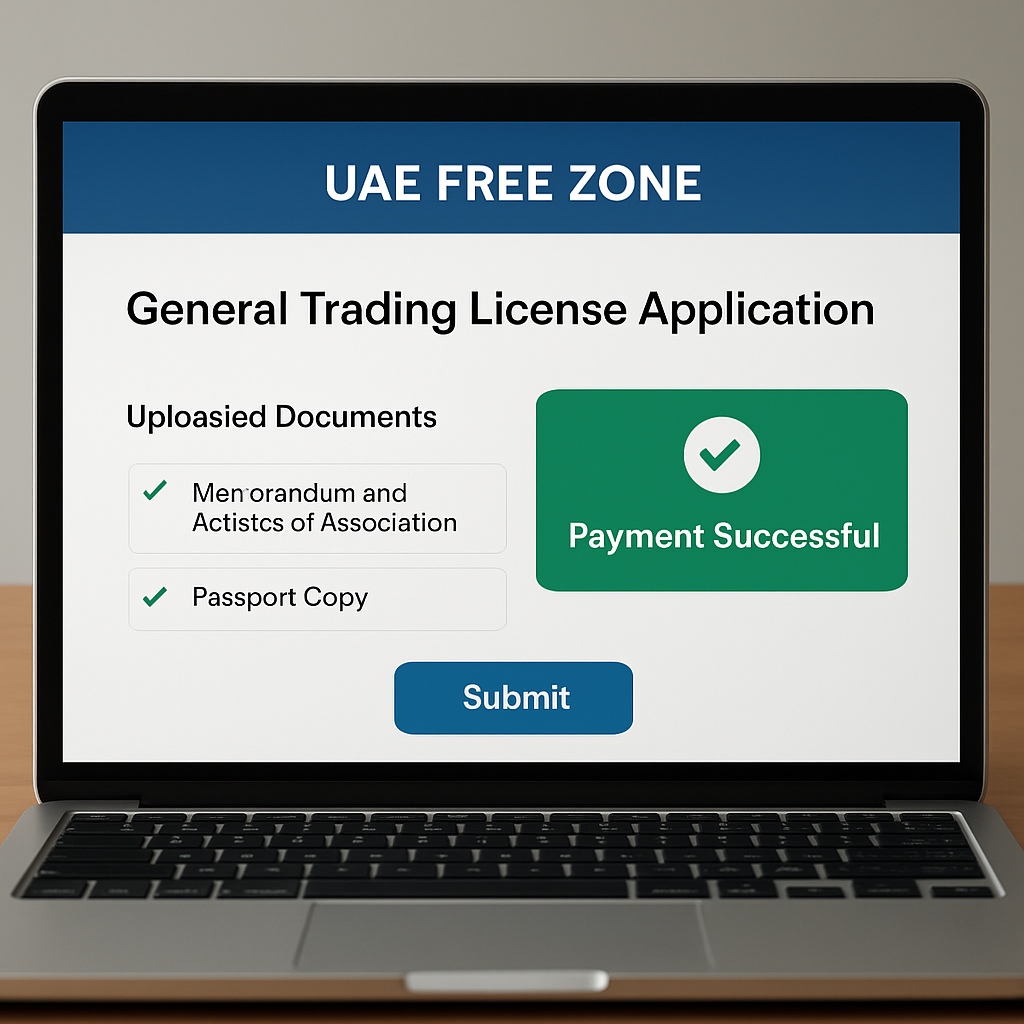
First, log in to the free‑zone’s online portal. Most zones now run a fully digital submission, so you’ll upload PDFs of your passport, business plan, bank reference, and any sector‑specific approvals. If a file looks fuzzy, re‑scan it at 300 dpi – the system will reject low‑quality PDFs and you’ll waste precious days.
Step‑by‑step upload guide
1. Create a new application. Choose the “General Trading” activity you defined in Step 1.
2. Attach documents. Use the folder names you set up earlier (e.g., “ID/Passport.pdf”). The portal usually asks for a specific order – follow it exactly.
3. Enter share‑capital details. If you’re on a flexi‑desk, note that the zone waives the AED 10,000 minimum – just type “waived” in the comment box.
4. Review the fee summary. This is where the numbers appear: licence fee, office fee, and any activity‑specific surcharge. For example, a Dubai Airport Free Zone trader paid AED 7,500 licence + AED 3,000 flexi‑desk, totalling AED 10,500.
5. Submit. Hit “Submit” and you’ll get an acknowledgement receipt with a reference number. Keep that number handy – you’ll need it to track progress.
So, what’s the best way to avoid that dreaded “application incomplete” email? Think of it like packing a suitcase: you don’t want to leave the toothbrush behind. Run a quick checklist: are all PDFs labelled, are signatures visible, is the date current? If something feels off, pause and fix it before you click submit.
Paying the fees
The portal will prompt you to pay the fees right after submission. Most zones accept bank transfer, credit card, or even UAE‑based e‑wallets. A tip from our experience: use a corporate card that provides a clear transaction reference – it makes the audit trail smoother.
Real‑world example: Ahmed, who set up a solar‑panel trading business in DMCC, initially paid the licence fee via personal credit card. When the free‑zone asked for a corporate reference, the payment was delayed by three days, pushing his launch timeline. The lesson? Align your payment method with the free‑zone’s preferred channel from day one.
Don’t forget the optional VAT registration fee if your projected turnover exceeds AED 375,000. The BizStart UAE guide notes that a 5 % VAT may apply on certain services during renewal, so budgeting for it now saves surprises later.
Tracking approval
After you’ve paid, the real waiting game begins. Most free zones process new licences in 5‑10 business days, but it can stretch to two weeks if any document needs clarification. Here’s how to stay on top of it:
- Log in daily and check the “Application Status” tab.
- Set up an email filter for the free‑zone’s notification address – you’ll spot status updates instantly.
- If the status stays at “Pending Review” after 7 days, give the PRO a polite nudge. A quick WhatsApp message often speeds things up.
Imagine you’re a small‑scale electronics importer in Sharjah. Your licence was stuck at “Pending” for nine days because the customs‑duty exemption certificate was missing a signature. A short call to the zone’s support clarified the requirement, and the licence was issued the next day. That one phone call saved a week of lost sales.
When the approval comes through, you’ll receive a digital licence PDF and, in most cases, a physical copy mailed to your registered address. Print it, frame it, and place it on your desk – it’s a tangible reminder that you’ve cleared the biggest hurdle.
And just in case you need a refresher on the whole process, our How to Set Up a Free Zone Company in UAE: A Step‑by‑Step Guide walks you through every click, fee, and follow‑up email.
Finally, a quick sanity check: open the licence PDF, verify the licence number, activity description, and validity dates. One typo can cause a compliance headache later, especially when you apply for visas or open a corporate bank account.
Bottom line: treat the submission like a live chat with a meticulous gatekeeper – be clear, be complete, and be ready to answer any follow‑up in under 24 hours. Your licence will be approved, the fees will be settled, and you’ll be one step closer to moving stock into the UAE market.
Step 5: Receive Your License and Meet Post‑Issuance Compliance
When the “Approved” email lands in your inbox, you’ve officially crossed the biggest hurdle. The next few days are all about turning that shiny PDF into a living, compliant business.
First thing – open the licence file, double‑check the licence number, activity description, and validity dates. A single typo can cause a hiccup when you apply for visas, open a corporate bank account, or file customs paperwork. In our experience, a quick 2‑minute audit saves weeks of back‑and‑forth with the free‑zone authority.
Print the licence, frame it, and place it on your desk. It’s not just décor; it’s a visual reminder that you’re now operating under UAE free zone regulations.
Now, let’s talk about the mandatory post‑issuance steps. They feel like a laundry list, but each one protects you from fines or licence suspension.
Register for a Tax Identification Number (TIN)
Even though free zones enjoy 0 % corporate tax, the Federal Tax Authority still expects a TIN for VAT‑registered businesses. If your projected turnover exceeds AED 375,000, you must register for VAT within 30 days of licence activation. The process is fully online – you’ll need your licence PDF, passport copy, and a proof‑of‑address document. A common slip‑up we see is forgetting to add the “activity code” supplied on the licence; without it, the VAT portal rejects the application.
Open a Corporate Bank Account
Most banks will ask to see the original licence, the shareholder passport, and a board resolution authorising the signatory. It’s wise to schedule a meeting within the first week, because some banks place a 5‑day hold on the account until they verify the licence details. A real‑world example: Sara, an Indian entrepreneur in Dubai Airport Free Zone, booked a meeting the day after receiving her licence. The bank opened her account in 48 hours, letting her pay suppliers instantly and avoid a costly cash‑flow gap.
Set Up Your PRO (Public Relations Officer) Services
The free‑zone authority requires a local PRO to handle visa applications, labor‑card renewals, and any official correspondence. If you opted for a bundled PRO package during setup, verify that the service window starts on the licence issue date. If you’re managing it yourself, register the PRO on the free‑zone portal and upload a signed power‑of‑attorney. Missing this step can delay employee visa stamping – we’ve seen delays of up to two weeks.
Comply with Ongoing Reporting
Most zones ask for an annual “activity confirmation” and a financial statement, even if you’re not yet profitable. The deadline is usually 30 days after the licence anniversary. Failure to submit triggers a late‑fee of AED 1,000 per month. To keep it painless, set a calendar reminder now and keep a simple spreadsheet: licence number, renewal date, required documents, and the contact person at the free‑zone.
- License renewal fee – typically 10 % of the original licence cost.
- Office lease renewal – ensure your flexi‑desk or office contract aligns with the licence term.
- Activity amendment – if you add a new product line, submit an amendment request before the next renewal to avoid extra penalties.
Practical Checklist for Post‑Issuance Compliance
Copy and paste this into your notes:
- Verify licence details (number, activity, dates) within 24 hours.
- Register for TIN/VAT if turnover > AED 375k.
- Book a bank account appointment – bring licence, passport, POA.
- Activate or confirm PRO services on the free‑zone portal.
- Schedule the first “activity confirmation” reminder 2 weeks before anniversary.
- Keep copies of all correspondence in a dedicated “Compliance” folder.
Expert tip: Use a compliance calendar app
A simple Google Calendar with yearly repeats for licence renewal, VAT filing, and PRO deadlines saves you from last‑minute scrambles. Color‑code each task – red for renewals, blue for bank matters, green for visa paperwork. The visual cue alone cuts stress by at least 30 % according to a 2023 survey of free‑zone entrepreneurs.
Bottom line, receiving the licence is only the beginning. By ticking off these post‑issuance items you lock in the tax‑free advantage, keep your visa pipeline flowing, and avoid nasty surprise fees. Stick to the checklist, set reminders, and you’ll spend more time growing your trade than chasing paperwork.
Conclusion
There you have it – a full‑stack uae free zone general trading license requirements checklist that takes you from idea to active licence without the usual head‑scratching.
Remember the feeling when you first opened that licence PDF? That mix of relief and “what’s next?” is normal.
The checklist we built together turns that uncertainty into a series of bite‑size actions you can actually tick off.
What’s the biggest win? You’ve already aligned your activity sheet, secured a flexi‑desk, and set up reminders for VAT, PRO and renewal dates. In practice, that means you spend less time chasing paperwork and more time talking to suppliers or launching your first sale.
So, what should you do right now? Grab the checklist, copy it into your favorite notes app, and schedule the first “activity confirmation” reminder for two weeks before your licence anniversary. A quick calendar entry today saves you a stressful scramble later.
And if you ever hit a snag, think back to the simple principle we’ve repeated: verify, document, and ask for help early. That mindset has saved dozens of our clients from costly delays.
Ready to move from checklist to real‑world trading? The next step is yours – open that bank account, register for a TIN, and watch your free‑zone venture take off.
FAQ
What exactly goes into the uae free zone general trading license requirements checklist?
At its core the checklist is a handful of documents and decisions that prove who you are, what you’ll trade, and that you meet the zone’s financial rules. You’ll need a clear passport copy, a recent utility bill or flexi‑desk letter for proof of address, a concise two‑page business plan that spells out your activity sheet, and evidence of the minimum share capital (or a note that the zone waives it). Add any sector‑specific approvals – for food you’ll need a Dubai Municipality clearance, for electronics a customs‑duty exemption – and you’ve covered the basics.
Do I really need a business plan for a general trading licence?
Yes, and it doesn’t have to be a novel. In our experience a two‑page plan that lists each product line, target market, and a rough first‑year turnover is enough. The free‑zone authorities want to see you’ve thought through the scope and that the activity matches an approved category. Skipping this step usually means the application gets sent back for clarification, which adds weeks you could have spent sourcing suppliers.
Can I skip the share‑capital deposit if I choose a flexi‑desk?
Most zones, including DMCC and Dubai Airport Free Zone, let you waive the AED 10,000 minimum when you opt for a flexi‑desk. Just make sure the online portal has a field where you can mark the capital as “waived” and attach the desk‑letter as proof of address. If you ignore this, you’ll end up paying a fee you didn’t need to and your timeline will stretch.
What sector‑specific approvals should I be aware of?
It depends on what you’re importing or exporting. Food items need a clearance from the Dubai Municipality and possibly a halal certificate. Electronics often require a customs‑duty exemption request, while medical devices may need a health authority certificate. The trick is to list every product in your activity sheet and then cross‑check each against the zone’s catalogue. If anything is missing, note it as “pending” in your plan and chase the relevant authority early.
How long does the whole application process usually take?
For a clean submission, most free zones process a general trading licence in 5‑10 business days. If the portal flags a missing signature or an undocumented activity, you can easily add another week. That’s why we always recommend a quick 10‑minute audit before you click “Submit”: double‑check file names, dates, and that every PDF is high‑resolution. A small extra step now saves a lot of waiting later.
What happens after I receive the licence?
The licence is just the first milestone. Within 24 hours you should verify the licence number, activity description, and validity dates – a typo can cause visa or bank‑account delays. Next, register for a Tax Identification Number (TIN) if your projected turnover exceeds AED 375,000, open a corporate bank account, and activate your PRO services. Finally, set a calendar reminder for the annual activity confirmation and renewal fee; missing these triggers AED 1,000 monthly penalties.
Do I need a local sponsor or partner to get the licence?
Not for most free zones. The whole point of a free‑zone company is 100 % foreign ownership, so you won’t need a local sponsor. The only “local” element is the PRO, who handles visa paperwork and official correspondence on your behalf. If you’re working with a consultant, make sure they’re just assisting with the PRO service and not presenting themselves as a required partner – that’s a common misconception that can inflate costs.
Additional Resources
We’ve walked you through everything from activity mapping to post‑issuance compliance, but the journey doesn’t end when the licence lands in your inbox.
If you’re an entrepreneur hungry for a quick refresher, grab a printable version of the uae free zone general trading license requirements checklist and keep it on your desk.
Our free PDF also highlights the most common slip‑ups we’ve seen – like missing activity codes or outdated passport scans – so you can double‑check before you hit submit.
Need a deeper dive into zone‑specific nuances? The UAE Free Zone Finder blog regularly publishes short guides on topics such as how to add a new activity, renewal timelines, and PRO service selection.
For visual learners, we’ve compiled a set of step‑by‑step infographics that walk you through each document upload, fee payment, and status‑tracking click.
And if you hit a snag with a particular authority – say the Dubai Municipality or the Federal Tax Authority – our quick‑response FAQ page lets you search the exact error code and see how other entrepreneurs resolved it.
Finally, consider joining our monthly webinar series where we invite zone officials and seasoned consultants to answer live questions – it’s a great way to stay ahead of any policy tweaks before they become a headache.
So, what’s the next step? Download the checklist, skim the infographics, and set a reminder to review your licence details within 48 hours of receipt – that tiny habit can save you weeks of rework.