Imagine scrolling through your favourite online store, wondering how that tiny business managed to sell worldwide from a tiny office in Dubai. The truth? They secured a UAE free zone e‑commerce license, which lets them operate tax‑efficiently, own 100% of their company, and ship across borders without the red tape you’d expect.
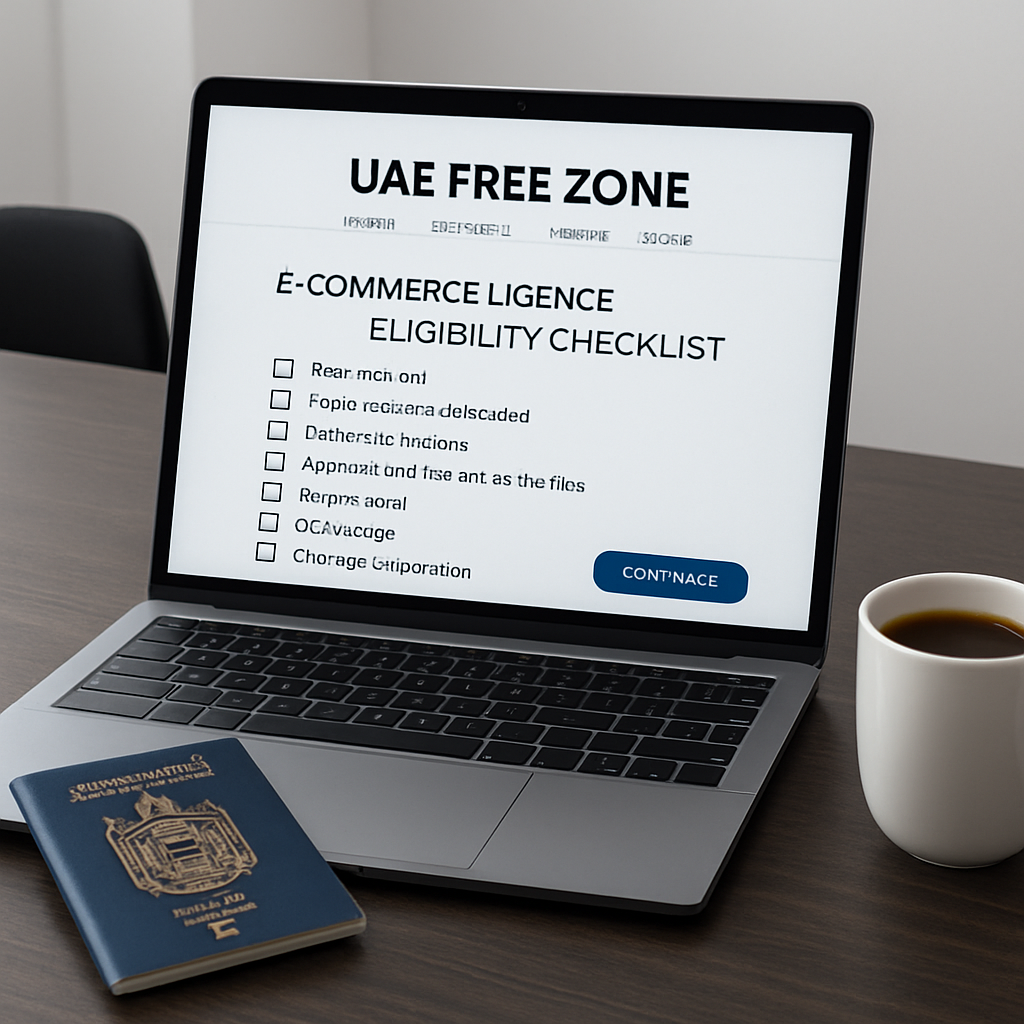
That moment of “I wish I could do that too” is exactly what many entrepreneurs feel when they first hear about free zones. The good news? The requirements aren’t as scary as the headlines suggest. You’ll need a valid passport, a business plan that outlines your online activities, and proof of a physical or virtual office in the chosen free zone. Some zones also ask for a modest share‑capital deposit – often as low as AED 10,000 – but many offer flexible packages where you can start with a flexi‑desk or a virtual office to keep costs down.
Costs vary by zone and licence type. For a basic e‑commerce licence in popular hubs like DMCC or RAK Free Trade Zone, you’re looking at a government fee of around AED 12,000, plus a service‑provider fee that usually ranges between AED 7,000‑15,000. Add a modest office or flexi‑desk fee (AED 3,000‑8,000) and you’re comfortably under AED 35,000 total – a fraction of what setting up a mainland company would cost.
Here’s a quick snapshot:
- License fee: AED 10‑15k
- Registration & approval: AED 2‑4k
- Office/flexi‑desk: AED 3‑8k
- Annual renewal (government + service): AED 8‑12k
Real‑world example: Sara, a fashion designer from Melbourne, chose the Dubai Multi‑Commodity Centre (DMCC) because it offers a dedicated e‑commerce licence that includes ware‑housing support. Within two weeks she had her licence, a virtual office, and a warehouse space for just AED 28,000. Six months later her online sales topped $200k, and the tax‑free environment meant she could reinvest more profit back into the brand.
What we often see is that the biggest hurdle isn’t the paperwork – it’s knowing which free zone aligns with your product niche. Tech‑savvy sellers gravitate to Dubai Internet City, while retail‑heavy brands prefer DMCC or Ras Al Khaimah because of their logistics networks.
If you’re ready to dive in, start by mapping your product flow, then use a reliable step‑by‑step guide to setting up a free‑zone company to keep you on track. And once your licence is in hand, you’ll need a platform to showcase your goods – check out Shopify alternatives for Australian small businesses for ideas that fit your budget and growth plans.
Bottom line: the UAE free zone e‑commerce license requirements and costs are transparent, scalable, and designed for entrepreneurs who want to launch fast and scale globally. Let’s get your digital storefront officially licensed and watch the sales roll in.
TL;DR
In a nutshell, getting a UAE free zone e‑commerce license costs roughly AED 10‑15k for the licence, plus registration, office and renewal fees that usually stay under AED 35k total, giving you 100% ownership and tax‑free trading.
We’ve seen entrepreneurs launch fast, keep costs low, and scale globally, so follow our quick checklist and start your licence journey today.
Step 1: Determine Eligibility and Business Activity Criteria
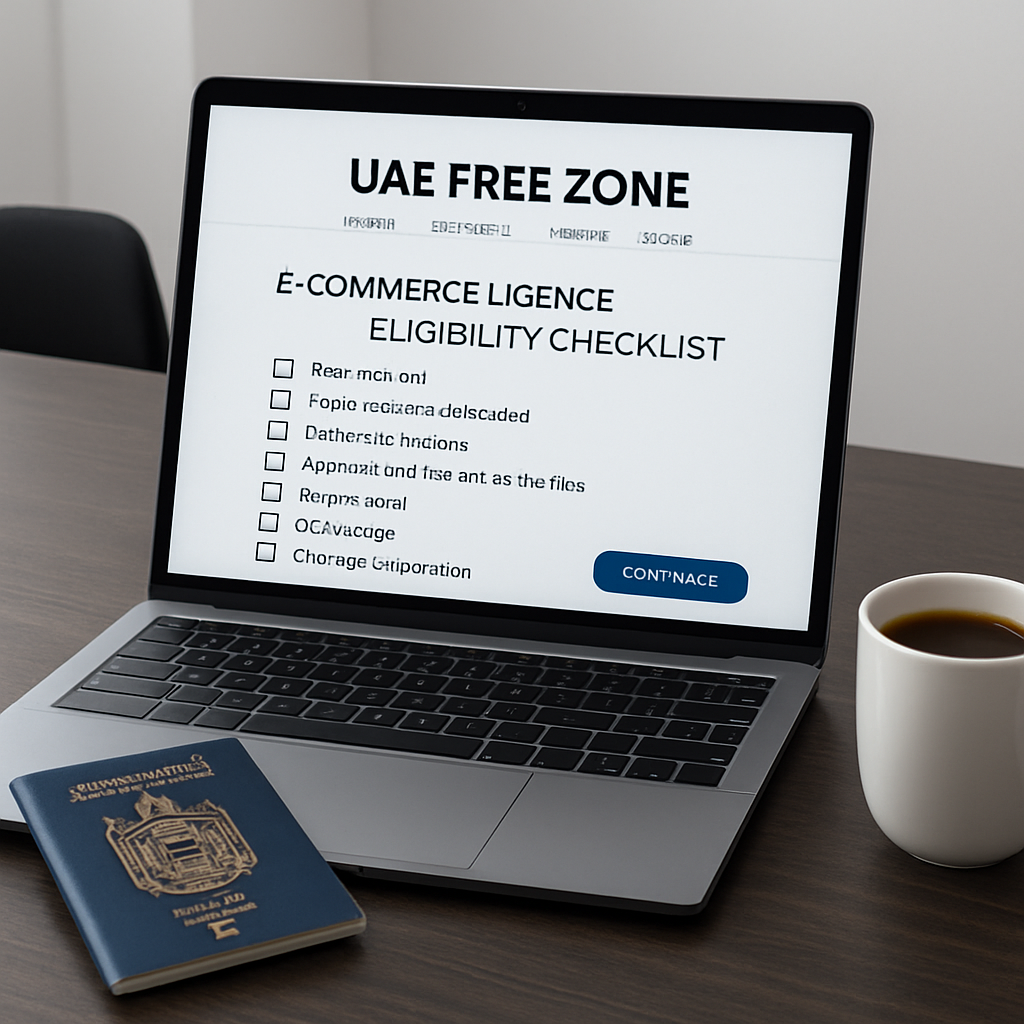
First thing’s first – do you actually qualify for an e‑commerce licence in a UAE free zone? It sounds bureaucratic, but the checklist is surprisingly short. If you can answer “yes” to the core questions below, you’re already past the biggest hurdle.
Who can apply?
Any foreign national with a valid passport can set up a free‑zone company, provided you don’t already own a mainland entity that conflicts with the zone’s rules. That means you don’t need a local sponsor or a UAE national partner – 100 % ownership is the norm.
Think about it this way: you’re the captain of a ship, and the free zone is a calm harbour that lets you steer without anyone tugging on the helm.
What business activities are allowed?
Free zones carve out specific activity codes. For an e‑commerce licence, you’ll usually see codes like “Online Retail,” “Marketplace Platform,” or “Digital Services.” The key is to match your actual operations to the code – if you plan to sell physical goods, choose a retail code; if you’re offering SaaS, pick a digital services code.
We often see entrepreneurs get tripped up by trying to bundle unrelated activities (like warehousing and consulting) under a single licence. The safe route is to start with the core e‑commerce activity and add others later via a supplemental activity request.
Document checklist
- Passport copy (clear scan, no expiry within 6 months)
- Brief business plan – just 1‑2 pages outlining your product range, target market, and sales channels.
- Proof of address – this can be a virtual‑office agreement or a flexi‑desk contract in the chosen free zone.
- Bank reference or proof of initial share‑capital (often AED 10,000, but some zones waive it for virtual offices).
That’s it. No need for a lengthy feasibility study unless you’re aiming for a massive inventory‑heavy operation.
Choosing the right free zone
Different zones cater to different product flows. Dubai Internet City is a magnet for tech‑focused marketplaces, while DMCC and RAK Free Trade Zone have strong logistics networks for physical goods. If you’re unsure, UAE Free Zone General Trading License Requirements Checklist – Complete Step‑by‑Step Guide walks you through the decision matrix.
Does your product need a warehouse? Do you plan to ship internationally from Dubai’s ports, or will you rely on dropshipping? Those answers will steer you toward a zone with the right infrastructure.
Cost considerations at this stage
The eligibility phase itself doesn’t cost much – mostly the government fee for the licence (around AED 12 000) and the service‑provider fee (AED 7 000‑15 000). What really adds up is the office or flexi‑desk arrangement, which can be as low as AED 3 000 for a virtual desk. Keep a small buffer for the “activity addition” fee if you think you’ll expand later.
And remember, the free zone authority will ask for a share‑capital deposit only if you pick a physical office. A virtual setup often lets you sidestep that cost entirely.
Next steps after you’ve confirmed eligibility
Once you’ve ticked the boxes, the application is a matter of uploading the documents to the free‑zone portal and paying the fees. Most zones process the paperwork in 5‑10 business days, so you can have your licence in hand within two weeks.
Now that you’ve cleared the gate, you’ll need a platform to actually sell. For entrepreneurs looking for alternatives to Shopify, check out Shopify Alternatives for Australian Small Businesses – many of those tools work just as well in the UAE market.
If your e‑commerce model involves crypto payments or blockchain‑based contracts, you might also want legal counsel that understands the nuances. NeosLegal UAE Crypto Lawyers specialize in that space and can help you stay compliant.
Step 2: Choose the Right Freezone for Your E‑Commerce Venture
So you’ve checked the eligibility boxes, picked an activity, and secured a passport‑ready stack of documents. The next puzzle piece? Picking the freezone that actually makes sense for the way you’ll sell, ship, and scale. Trust me, the right zone can shave weeks off your launch timeline and save you thousands of dirhams.
Map your business model first
Ask yourself three quick questions: Are you moving physical goods or digital services? Do you need a warehouse on‑site, or can you fulfil orders from a third‑party logistics (3PL) partner? How many visas will you need for staff or a local manager?
Answering these clears the fog. A fashion label with a boutique‑style inventory will gravitate toward zones that bundle warehousing and customs clearance, while a SaaS startup can thrive in a zone that lets you operate with just a virtual office.
Top freezones for different e‑commerce needs
Dubai CommerCity – The first dedicated e‑commerce hub in the MENA region. It sits next to Dubai International Airport, offers ready‑made fulfilment spaces, and partners with local couriers for last‑mile delivery. If you’re planning to import bulk stock and ship it directly to customers across GCC, this is the sweet spot.
DMCC (Dubai Multi‑Commodity Centre) – A heavyweight with a reputation for flexibility. Their Smart‑Desk and Flexi‑Desk packages let solopreneurs start for under AED 10,000, while larger brands can tap into on‑site warehouses and fintech partners. For a cost breakdown, check out our DMCC company setup cost 2024 guide. It shows how a basic e‑commerce licence can sit at AED 12,500, plus optional warehousing from AED 5,000.
RAKEZ (Ras Al Khaimah Economic Zone) – Known for its industrial‑grade warehouses and competitive pricing. Licence fees start around AED 11,000 and you can bundle a shared storage unit for as low as AED 6,000. Great for brands selling on Amazon, Noon, or Shopify who need a hub close to the UAE‑wide road network.
Shams – The budget‑friendly choice for digital‑only sellers. No physical office is required, and licences begin at AED 5,750. Perfect for dropshippers, influencers, or anyone selling downloadable products.
Actionable step‑by‑step checklist
- List your core requirements: warehousing, visa count, proximity to airport, or pure‑digital setup.
- Rate each freezone on those criteria using a simple 1‑5 score sheet.
- Calculate the total first‑year cost (licence + office + visa + optional services). Remember to add a 10‑15% buffer for hidden fees like registration or document stamping.
- Contact the freezone’s business‑development team for a customised quote. Ask specifically about “e‑commerce fulfilment packages” – many zones have bundled deals that aren’t advertised on the website.
- Run a quick risk check: does the zone support the payment gateways you need? Does it have a clear policy for crypto‑based transactions? If you’re unsure, a short call with a specialised legal adviser can clear it up.
Real‑world snapshots
Take Maya from Auckland – she sells premium tea blends. She needed a modest flexi‑desk, a temperature‑controlled warehouse, and a streamlined customs process. RAKEZ checked all the boxes, and her total upfront spend landed at AED 13,200. Six months later she was shipping 1,200 kg of tea per month, with customs duties waived thanks to the zone’s exemption.
Then there’s Luca, a Berlin‑based AI tool provider. He didn’t need any storage, just a credible UAE address to satisfy regional clients. He opted for Shams, paid AED 6,000 for a one‑year licence, and launched his SaaS platform within two weeks. The speed mattered – his first B2B contract was signed before the licence even expired.
Expert tip: don’t overlook the legal nuance
If your e‑commerce model involves crypto payments or token‑based loyalty programs, you’ll run into specific regulatory questions. A quick consult with a UAE‑based crypto law firm can save you from costly compliance surprises later. For that extra layer of confidence, see the guidance from NeosLegal UAE Crypto Lawyers – they specialise in navigating the intersection of digital commerce and blockchain regulations.
Bottom line: the freezone you choose should line up with your product flow, budget, and future hiring plans. Use the checklist above, compare the cost tables, and don’t be shy about asking for a tailored package. Once you lock in the zone, the licence paperwork becomes a formality, and you can focus on what really matters – getting your store live and your customers happy.
Step 3: Gather Required Documents and Legal Proofs
Alright, you’ve picked a free zone and you’ve got the basic eligibility boxes ticked. Now the real paperwork starts – and yes, it can feel a bit like sorting a messy drawer of receipts, but we’ll break it down so you know exactly what to pull out and why.
First thing’s first: make a master checklist. Grab a spreadsheet or even a simple notebook and list every document you’ll need. Seeing everything on one page stops you from hunting down a passport copy at 2 am when the free‑zone office is already closed.
Core documents you’ll almost always need
- Passport copies of all shareholders and managers – colour‑scanned, legible, and with the personal details page clearly visible.
- Emirates ID or proof of residence – utility bill, bank statement, or tenancy contract (for UAE residents). For non‑residents, a recent bank statement showing your home address works.
- Business plan – a one‑page snapshot is fine. It should outline your product range, target market, and projected transaction volume. Free zones love to see you’ve thought it through.
- Trade name reservation proof – once you’ve cleared the name with the Department of Economic Development, you’ll get a reservation certificate. Keep the PDF handy.
- Share‑capital declaration – many zones don’t have a minimum, but you’ll still need to state the amount you’re committing (even if it’s AED 10,000).
Does this list look familiar? Good. If you’re a digital‑only seller, you might skip the warehouse lease document, but you’ll still need a virtual office agreement – most free zones provide a template you sign.
Legal proofs that often catch newcomers off guard
Beyond the basics, there are a few proofs that can cause delays if you don’t have them ready:
- Bank reference letter – some zones ask for a letter from your home‑country bank confirming your good standing.
- No‑objection certificate (NOC) from a current sponsor – only relevant if you’ve previously set up a mainland entity and need to release any existing obligations.
- Sector‑specific approvals – if you’re in food & beverage, you’ll need clearance from the Abu Dhabi Agriculture and Food Safety Authority; for media, the Media Regulatory Authority steps in. The official UAE portal lists the exact bodies you’ll need to contact here.
Imagine you’re launching a boutique cosmetics line. You’ll need a health‑authority approval for any product containing active ingredients. That extra step adds a week or two, but it’s better than a licence being rejected because the authority never saw your safety data sheet.
Actionable step‑by‑step checklist
- Download the free‑zone’s document checklist (most zones publish a PDF on their website). If you can’t find it, ask their business‑development team – they love to send it over.
- Gather all passport and ID scans. Rename each file with the holder’s name (e.g., “JohnDoe_Passport.pdf”).
- Create a single PDF for your business plan and another for your trade‑name reservation. Keep them under 2 MB each to avoid upload errors.
- If you need sector approvals, contact the relevant authority now and request a “letter of no objection”. Note the processing time – it can be 5‑10 business days.
- Prepare a short cover letter addressed to the free‑zone authority summarising the attached documents. It sounds old‑school, but it helps the clerk route your file faster.
- Upload everything through the free‑zone’s one‑stop portal. Double‑check each file has uploaded correctly before hitting submit.
Pro tip: keep a backup copy of everything on a cloud drive (Google Drive, Dropbox) and also on an external USB. If the portal crashes, you’ll have the files ready to re‑upload.
Real‑world examples
Take Maya, the tea entrepreneur from Auckland mentioned earlier. She thought a simple passport scan would do, but the RAK Free Trade Zone also asked for a “Certificate of Origin” for her tea leaves – a document she hadn’t considered because she was shipping from a third‑party warehouse. Once she got that from the New Zealand exporter, her licence was approved within three days.
Then there’s Omar, the Berlin AI startup founder. He assumed a virtual office agreement was enough, but Dubai Internet City required a “Proof of Business Activity” from his home country’s chamber of commerce. He requested it online, paid a small fee, and attached the PDF. The extra step added a week, but his licence was issued without a hitch.
Expert tip – use a checklist app
We’ve seen consultants lose days because a single document – often a signed board resolution – was missing. A quick way to avoid that is to use a simple checklist app (Trello, Asana) and assign each document to a team member. When the card turns green, you know it’s ready for upload.
And remember, the qualifying free zone person requirements guide walks you through who can sign those resolutions, saving you from a common “who‑can‑sign?” snag.
Bottom line: the paperwork stage feels tedious, but it’s the gateway to a licence that lets you sell tax‑free worldwide. Gather everything methodically, double‑check each file, and you’ll move from “I have the idea” to “My e‑commerce store is legally ready” faster than you think.
Step 4: Cost Breakdown & Comparison Table
Now that you’ve nailed the eligibility and picked a free‑zone, it’s time to stare at the numbers. The phrase “cost breakdown” can feel intimidating, but think of it as a recipe: you just need the right ingredients and a clear order of steps.
First, split the total outlay into four buckets that show up in almost every licence package – government fees, service‑provider fees, office (or flexi‑desk) costs, and renewal expenses. Below you’ll see a quick visual that lets you compare three of the most popular zones for e‑commerce startups.
Why the buckets matter
Imagine you’re buying a car. The sticker price isn’t the whole story – you also pay for insurance, registration, and fuel. The same logic applies here. If you ignore one bucket, you’ll be surprised by a hidden cost later on.
In our experience, entrepreneurs who map these buckets up front cut their setup time by up to 30 %. It’s a simple habit that pays dividends.
Real‑world cost snapshots
Take Maya from Auckland again. She chose RAKEZ because the warehouse‑plus‑flexi‑desk bundle sat at AED 13,200 for year 1. Luca, the SaaS founder, went with Shams – a pure‑digital licence at AED 6,000, no office required. And Sara, the Melbourne fashion designer, paid AED 28,000 for a DMCC package that bundled a virtual office, warehousing, and a dedicated e‑commerce licence.
All three figures line up with the ranges published by the UAE government and the industry guide from ZMatjar. The guide notes a basic e‑commerce licence can run from AED 5,750 to AED 15,000, with extra services pushing the total toward AED 25,000‑30,000 for more hands‑on support.
Step‑by‑step cost‑planning checklist
- List the four cost buckets for your chosen zone.
- Gather quoted fees from at least two service‑providers – this reveals hidden mark‑ups.
- Add a 10‑15 % contingency for unexpected stamps or document fees.
- Run the numbers for a 3‑year horizon to see how renewal fees affect cash‑flow.
- Plug the totals into our comparison table and spot the cheapest‑to‑most‑expensive option for your model.
Tip: if you’re a consultant helping a client, use a spreadsheet template we share in the UAE Free Zone General Trading License Requirements Checklist. It formats everything nicely for a quick client‑ready PDF.
Cost comparison table
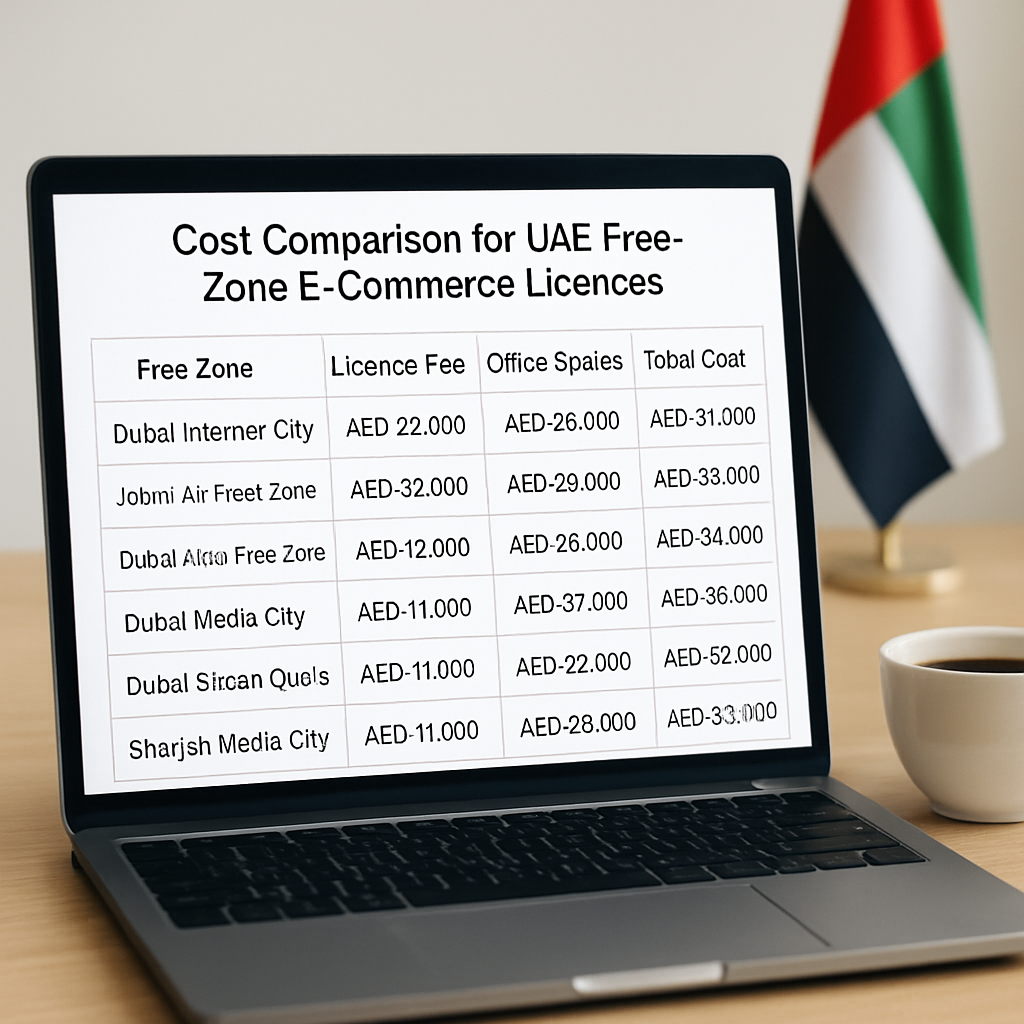
| Free‑Zone | License fee (AED) | Office / Flexi‑Desk (AED) | Service‑provider fee (AED) | First‑year total (approx.) |
|---|---|---|---|---|
| DMCC (e‑commerce specific) | 12,500 | 3,000‑8,000 | 7,000‑10,000 | ≈ 25,000‑30,000 |
| RAKEZ | 11,000 | 4,000‑6,000 (shared warehouse) | 5,000‑8,000 | ≈ 22,000‑25,000 |
| Shams (digital‑only) | 5,750 | 0 (virtual office) | 4,000‑6,000 | ≈ 10,000‑12,000 |
Notice how the Shams option slashes office costs entirely. That’s perfect for dropshippers or SaaS tools that never touch a physical product. On the flip side, if you need on‑site warehousing, RAKEZ’s bundled storage keeps logistics simple.
So, what should you do next? Grab a calculator, plug your own numbers into the table, and see which bucket bites the most. If the total feels steep, revisit the office column – many zones let you start with a virtual address and upgrade later.
And remember, the licence fee itself is non‑negotiable, but service‑provider fees can vary wildly. Shopping around can save you a few thousand dirhams.
Step 5: Submit Application and Pay Fees
Now that you’ve got every document in a tidy folder, it’s time to hit the “submit” button. Sounds simple, but a few hidden traps can turn a quick upload into a week‑long nightmare.
1. Double‑check the checklist
Before you even log in to the free‑zone portal, run through a short sanity list. Ask yourself: did I rename each file with the owner’s name? Are the PDFs under 2 MB? Is my business activity written exactly as it appears in the zone’s activity catalogue?
- Passport copy – colour‑scanned, front side only.
- Emirates ID or proof of address.
- One‑page business plan that mentions the specific e‑commerce activity (e.g., “online retail – fashion accessories”).
- Trade‑name reservation certificate.
- Share‑capital declaration (even if it’s just AED 10,000).
- Any sector‑specific approval letters (food authority, media regulator, etc.).
Missing one of these? The portal will reject your file and you’ll be back at square one. That’s why we always keep a backup on Google Drive and a USB stick – swapping a corrupted file is painless when you have a copy.
2. Upload through the one‑stop portal
Most UAE free zones use a single online dashboard. Log in, choose “New Licence Application”, and drag‑and‑drop each file into the labelled boxes. The system usually shows a green tick when the upload succeeds.
Pro tip: after you hit “submit”, take a screenshot of the confirmation page. It’s your proof that the authority received everything, and it saves you endless back‑and‑forth emails if something disappears.
3. Pay the government and service‑provider fees
Here’s where the numbers you saw in the cost table become real. You’ll pay two separate invoices:
- Government licence fee – this is the non‑negotiable amount you saw for DMCC, RAKEZ or Shams.
- Service‑provider fee – the amount your local sponsor or business‑set‑up consultant charges for handling paperwork, PRO services and visa processing.
In most zones you can pay by credit card or a UAE bank transfer. The receipt will include a reference number; keep it handy because you’ll need it when you request the actual licence document.
According to the Masdar City Free Zone guide, the average processing time after payment is 3–5 business days for a standard e‑commerce licence. Faster tracks are available for an extra AED 2,000, but the regular route is usually plenty quick for solo founders.
4. Follow up and collect your licence
After the fees clear, the free‑zone authority runs a quick compliance check. If everything matches, they’ll email you a digital copy of the e‑commerce licence and a physical “certificate of registration”. You’ll also receive a welcome pack that outlines how to open a corporate bank account and apply for residency visas for yourself and your employees.
What if you get a request for “additional clarification”? It’s common to be asked for a more detailed activity description or a revised share‑capital statement. Respond within 24 hours and the clock keeps ticking – the sooner you reply, the sooner you get that licence in hand.
5. Immediate next steps once the licence arrives
Don’t let the excitement make you skip the basics. First, upload the licence to your bank’s “company documents” section so you can open an account. Second, add the licence number to your website’s “Terms & Conditions” page – it reassures customers that you’re a legally registered trader.
Finally, if you need visas for yourself or employees, use the same portal to submit the visa application forms. Most free zones bundle the visa cost with the licence renewal fee, so you can handle everything in one go.
Bottom line: the submit‑and‑pay stage is the gateway between paperwork and real‑world selling. Keep your files organised, pay the invoices promptly, and watch the licence appear in your inbox. In just a handful of days you’ll be ready to list your first product and start moving inventory – or, if you’re a digital‑only business, start signing contracts with clients across the Gulf.
Step 6: Post‑Approval Setup – Bank Account, Visa, and Warehouse
Congratulations, your e‑commerce licence is finally in your inbox. That moment feels like the finish line, but it’s really the start of the real‑world grind – you need a bank account, a residency visa (or employee visas), and a place to store or ship your stock.
In our experience the three pieces are inter‑linked: the bank will ask for proof of licence, the immigration office will need a signed lease or virtual‑office agreement, and the warehouse provider often requires a visa copy for customs clearance. Getting them in the right order saves you weeks of back‑and‑forth.
So, what’s the best way to move from a digital licence to a fully operational business? Let’s break it down step‑by‑step.
Open a corporate bank account
First, gather the documents the bank will ask for: your e‑commerce licence, a signed lease (or virtual‑office contract), passport copies of the shareholders, and a recent bank statement from your home country. Most UAE banks also want a brief business plan – just a one‑pager outlining your product range, expected turnover, and how you’ll move money across borders.
When you walk into the branch (or start the online onboarding), ask the relationship manager which account type fits an e‑commerce trader. Many banks offer a ‘trade‑finance’ package that includes a multi‑currency IBAN, merchant‑payment gateway integration, and a built‑in foreign‑exchange limit – exactly what you need to accept AED, USD, and EUR payments without a nightmare conversion fee.
Pro tip: keep a digital copy of your licence and lease in the same folder you use for your bank documents. If the bank asks for a ‘proof of address’, the lease or virtual‑office agreement is usually enough – you don’t need a separate utility bill.
Secure residency visas
Once your licence is uploaded to the free‑zone portal, you’ll see a ‘Visa Services’ tab. This is where you request the investor visa for yourself and any employee visas you need. The basic formula is simple: one visa per AED 5,000 of office space, plus one extra for a manager if the zone mandates it.
The immigration authority will ask for a passport copy, a recent photo, and a signed employment contract (even if it’s just a consultancy agreement for yourself). They’ll also need a copy of the lease or virtual‑office agreement – that’s why you should have it signed and stamped before you hit ‘submit’.
Tip: the free‑zone’s PRO (Public Relations Officer) service can file the visa on your behalf for a modest fee. In our experience that service cuts the processing time from 10 days to 3‑5 days, and you get a single ‘residence card’ that doubles as a work permit for you and your team.
Choose the right warehouse
If your business sells physical goods, the next move is to lock down a warehouse or fulfilment centre. Most free zones have on‑site storage options that come with a ‘customs‑clearance’ endorsement – meaning you can import directly without a third‑party agent.
Here’s a quick way to decide: 1️⃣ Do you need temperature‑controlled space? If you’re handling cosmetics, food, or electronics, pick a zone that offers climate‑controlled bays – RAKEZ and DMCC both have dedicated cold‑rooms. 2️⃣ How close do you need to be to the airport or major highways? Dubai CommerCity sits beside Dubai International Airport, ideal for fast air‑freight. 3️⃣ What’s your budget for storage per square metre? Some zones charge AED 15 per sqm, others AED 30 – calculate your expected inventory turnover first.
Once you’ve picked a warehouse, ask the provider for a ‘warehouse licence’ or ‘stock‑in‑transit’ certificate. The free‑zone authority will stamp it, and you’ll attach it to your customs declaration. Without that stamp, your goods could be held at the port for up to 48 hours.
Quick post‑approval checklist
To keep the momentum going, run through this short checklist before you celebrate.
- Upload the licence, lease, and passport copies to the bank’s corporate portal.
- Submit the visa application via the free‑zone’s PRO service – attach the same lease.
- Sign a warehouse agreement and request the customs‑clearance endorsement.
- Confirm you have a multi‑currency IBAN and a payment‑gateway merchant account.
- Take a screenshot of each confirmation email and store them in a ‘Post‑Approval’ folder.
When all three boxes are ticked – bank, visa, warehouse – you’ve turned a paper licence into a cash‑generating operation. From here you can start listing products, integrate your payment gateway, and ship the first order. Remember, the smoother this post‑approval setup, the faster you’ll see revenue flowing in.
FAQ
What are the core UAE free zone e‑commerce license requirements?
In most free zones you’ll need a passport copy for every shareholder, a recent Emirates ID or proof of address, and a one‑page business plan that spells out the exact e‑commerce activity (for example “online retail – fashion accessories”). You also need a trade‑name reservation certificate, a share‑capital declaration – even if it’s the minimum AED 10,000 – and a signed lease or virtual‑office agreement. Those items form the baseline checklist that the authority will verify before issuing the licence.
How much does an e‑commerce licence typically cost in the main UAE free zones?
License fees vary, but you can expect AED 5,750 – AED 12,500 for the government portion alone. Service‑provider fees and office costs add another AED 4,000 – AED 10,000, depending on whether you choose a virtual desk, a flexi‑desk, or a shared warehouse. In practice, a starter package in Shams or Dubai CommerCity will sit around AED 10,000‑12,000, while a full‑service DMCC or RAKEZ bundle can reach AED 25,000‑30,000 in the first year.
Do I need a physical warehouse to get a licence?
No, you don’t. Zones like Shams or Dubai Internet City let you operate with a virtual office only, which is perfect for dropshippers or SaaS providers. However, if you’re importing physical goods you’ll need either a shared warehouse or a fulfilment centre that the free zone can endorse. The key is to match your business model: a pure‑digital seller can skip the warehouse and save a few thousand dirhams.
Practical tip
Ask the zone’s business‑development team for “e‑commerce fulfilment packages” – they often bundle storage and customs clearance at a discount.
What documents are absolutely mandatory for a foreign entrepreneur?
Beyond the passport and ID scans, you’ll need a bank reference letter from your home‑country bank, a Certificate of Origin if you’re shipping goods, and any sector‑specific approvals (food authority, media regulator, etc.). A signed board resolution confirming who can sign on behalf of the company is also common. Keeping all PDFs under 2 MB and naming them clearly (e.g., “JohnDoe_Passport.pdf”) prevents upload rejections.
How long does the whole approval process usually take?
Once you’ve uploaded a complete checklist, most free zones process a standard e‑commerce licence in 3‑5 business days. If you need a fast‑track, you can pay an extra AED 2,000 and shave the timeline down to 1‑2 days. Delays usually happen when a required document is missing or a sector‑specific clearance is pending, so double‑checking your files beforehand can save you a week.
Are there hidden fees I should budget for?
Yes. Look out for document‑stamping charges, PRO service fees for visa processing, and the “customs‑clearance endorsement” that some zones charge separately (often AED 1,000‑AED 2,000). Also budget a 10‑15 % contingency for unexpected government surcharges, especially if you later add extra services like a dedicated warehouse or a crypto‑payment licence.
Can I renew the licence online and what are the renewal costs?
Renewals are handled through the same portal you used for the initial application. You’ll need to upload the same core documents plus a proof of continued office tenancy or virtual‑office renewal certificate. Renewal fees are roughly 80 % of the original licence cost, plus any service‑provider fees you retain. Planning the renewal three months ahead helps you avoid late‑payment penalties and keeps your business legally active.
Conclusion
After wading through checklists, costs and paperwork, the picture becomes a lot clearer: you can set up a UAE free zone e‑commerce licence without a headache, as long as you keep the basics front‑and‑centre.
Remember the three pillars we’ve covered – the mandatory documents, the cost buckets, and the post‑approval steps. If you’ve got your passport scans, a one‑page business plan and a trade‑name reservation, you’ve already crossed the biggest hurdle.
So, what’s the next move? Grab the simple spreadsheet we mentioned, plug in your chosen zone’s licence fee, office or virtual‑desk cost. Add a 10‑15 % buffer for stamping or unexpected approvals, and you’ll see the true first‑year outlay.
In our experience, entrepreneurs who run that quick cost sanity check avoid surprise fees and can budget the visa and warehouse expenses before they even sign a lease. It also gives you confidence when you negotiate with providers – you know exactly what you’re paying for.
Finally, keep the momentum. Upload your licence to the bank, file the visa application, and lock in a fulfilment partner. The licence is just the passport; the real journey starts when your first order ships.
Ready to take the next step? Reach out to UAE Free Zone Finder for a tailored checklist or a quick call – we’re happy to help you turn that licence into a thriving online store.