How to Set Up a Free Zone Company in Dubai: A Practical Step-by-Step Guide

How to Set Up a Free Zone Company in Dubai: A Practical Step-by-Step Guide
Picture this: you’ve just landed in Dubai, coffee in hand, and the idea of launching your own venture is buzzing in your head. The city’s skyline promises opportunity, but the paperwork feels like a maze. You’re not alone—many entrepreneurs feel that mix of excitement and overwhelm when they first hear about free zone company formation.Let’s break it down together. The biggest draw of a Dubai free zone is the 100% foreign ownership—no local sponsor needed, which means you keep every profit. Add to that zero import/export taxes, streamlined visa processes, and a business environment that can get you licensed in as little as two weeks. That’s why you hear stories like Sarah, a tech startup founder from Berlin, who set up in Dubai Internet City and was issuing employee visas within ten days, letting her focus on product development instead of bureaucracy.So, where do you start? Here’s a quick snapshot:
- Pick the right free zone for your industry (e.g., logistics in Jebel Ali, media in Dubai Media City).
- Choose a company name and get it pre‑approved.
- Gather essential documents: passport copies, a business plan, and sometimes a No‑Objection Certificate from your home country.
- Submit your application and pay the licensing fee—typically ranging from AED 10,000 to AED current published amount depending on the zone and activity.
- Once approved, you’ll receive your trade license, can open a corporate bank account, and apply for residence visas.
One tip that often gets missed: engage a local PRO service early on. They handle document attestation, immigration paperwork, and can even speed up your bank account opening. Think of it as a shortcut that saves you weeks of back‑and‑forth.And if you’re wondering how to navigate the whole process step‑by‑step, check out our detailed guide How to Open a Company in Dubai Free Zone: Step‑by‑Step Guide. It walks you through every form, fee, and timeline with real examples.Finally, once you’re set up, consider automating routine tasks—like invoicing or CRM updates—with an AI business automation platform. It can shave hours off daily operations, letting you focus on growth instead of admin.Ready to turn that spark into a thriving Dubai free zone company? Let’s dive in and make it happen.
TL;DR
Setting up a free zone company in Dubai lets you keep 100% ownership, secure a fast‑track license, and obtain visas for you and your team. Follow our step‑by‑step checklist—choose a zone, prep documents, submit the application, and activate your bank account—so you can launch effortlessly in weeks, not months, smoothly.
Step 1: Choose the Right Free Zone for Your Business
Imagine you’ve just picked a name, paid the flight, and now you’re staring at a list of Dubai’s free zones wondering which one actually fits you. That moment of “too many choices” is totally normal, but it’s also where you can turn the whole process from daunting to downright exciting.Every free zone is built around a specific ecosystem – think tech hubs, logistics corridors, media clusters, or finance corridors. The trick is to line up your business model with the zone’s DNA, so you’re not just another tenant, but a player that actually benefits from the community.
Know your industry, then match the zone
Start by asking yourself: What does my company need to thrive? If you’re a fintech startup, Dubai International Financial Centre (DIFC) offers a regulatory sandbox and a network of banks. If you’re a creative agency, Dubai Media City gives you access to production studios and a talent pool that already speaks the language of media.Even something as simple as proximity to ports can matter. Logistics firms love Jebel Ali Free Zone (JAFZA) because it sits right next to the world‑class container terminal. On the other hand, an e‑commerce platform might prefer Dubai Silicon Oasis for its tech‑focused infrastructure and affordable office spaces.
License types and activity approvals
Each zone has its own licensing matrix. Some issue a generic commercial license that covers a wide range of activities, while others require you to pick a very specific activity code. It’s worth pulling the latest list from the zone’s website and cross‑checking it with your business plan.If you’re unsure, a quick call to the zone’s business development team can clear things up. They’ll tell you whether a “service” license covers consulting, or if you need a separate “trading” license to import hardware.
Cost, facilities, and support services
Fees can vary dramatically – from AED 10,000 for a basic flex‑desk package to over AED current published amount for a premium office with full‑service support. Look beyond the headline price: does the fee include visa processing, PRO services, or access to shared meeting rooms? Those hidden costs can add up fast.Many zones also bundle value‑added services like legal advice, networking events, and even AI‑driven automation tools. Speaking of automation, once you’ve nailed down the zone, you might want to plug into an AI business automation platform to streamline invoicing and CRM updates right from day one.For a deeper dive into the whole process, our How to Set Up a Free Zone Company in UAE: A Step‑by‑Step Guide walks you through the paperwork, timelines, and common pitfalls.Once you’ve shortlisted a zone, schedule a virtual tour. Seeing the coworking spaces, meeting rooms, and community areas on video can give you a sense of the vibe before you sign anything.After the tour, ask yourself: Does this zone make it easy to hire talent? Are there nearby schools or transport links for my team? Will the local PRO be able to fast‑track my employee visas? Those practical questions often decide whether a free zone feels like a home or just a stop‑over.Finally, think about growth. Some zones have strict caps on office size or employee numbers. Others, like Dubai South, are built for scaling up to hundreds of staff. If you plan to expand quickly, pick a zone that won’t force you to relocate in a year.And don’t forget the marketing side. A vibrant community can boost your brand visibility, especially if the zone runs regular exhibitions or webinars. Partnering with a growth‑focused agency like Rebelgrowth can help you turn those events into lead‑generation machines.
Step 2: Gather Required Documents and Legal Proofs
Alright, you’ve picked a zone that feels right – now it’s time to pull the paperwork together. I know, the word “documents” can make anyone’s brain fog up, but think of it as gathering the puzzle pieces that will finally let you see the full picture of your Dubai venture.First off, grab a fresh copy of your passport (or passports if you have partners). You’ll need a clear, scanned copy of the personal information page and the visa page if you already have a UAE entry stamp. Most free zones ask for a passport that’s valid for at least six months, so double‑check that expiry date – you don’t want a last‑minute scramble.Next, draft a concise business plan. It doesn’t have to be a 200‑page novel; a two‑page overview covering your product, target market, and projected revenue is enough for the authorities. If you’re unsure what to include, look at the How to Set Up a Free Zone Company in UAE: A Step‑by‑Step Guide – it breaks down the essential sections and even gives a template you can copy‑paste.Now, let’s talk licences. The Ministry of Economy lists a handful of licence types you might need: commercial, media, warehouse, consultancy, e‑commerce, innovation, industrial, offshore, manufacturing, educational, freelancer and others. The official guide explains each one, but the rule of thumb is: match the licence to your core activity. If you’re selling software, a commercial licence works; if you’re providing design services, a consultancy licence is the sweet spot.Depending on the free zone, you’ll also be asked for a No‑Objection Certificate (NOC) from your home country, especially if you’re a citizen of a nation that requires proof you’re free to work abroad. It’s a simple document signed by a local authority stating you have no legal impediment to set up a business overseas. Ask your embassy or consulate – they usually issue it within a week.Another common requirement is an attested bank reference or a recent bank statement. This isn’t about proving you’re rich; it’s about showing you have a stable financial footing. Some zones accept a simple letter from your bank, while others ask for a notarised statement. If you’re a startup with limited funds, a “sponsor bank guarantee” from a UAE bank can fill the gap.Don’t forget the proof of address. A recent utility bill (electricity, water, or even a tenancy contract) works fine. The free zone’s PRO service can often handle the attestation for you, saving you trips to the Ministry of Foreign Affairs.Here’s a quick checklist you can copy‑paste into a spreadsheet:
- Passport copy (clear scan, 6‑month validity)
- Business plan (2‑page executive summary)
- Chosen licence type (commercial, consultancy, etc.)
- No‑Objection Certificate from home country (if applicable)
- Bank reference or sponsor guarantee
- Proof of address (utility bill or tenancy agreement)
- Signed application form from the free zone portal
- Share‑capital declaration (if the zone requires a minimum amount)
Tip: label each file with a consistent naming convention, like JohnDoe_Passport.pdf or BizPlan_StartupCo.pdf>. When you upload them to the free‑zone portal, the reviewer will thank you for the tidy order.Once you’ve gathered everything, run a quick “dry‑run” with a PRO service. They’ll spot any missing stamp or signature before you hit “Submit”. It’s a small fee – usually AED 500‑1,000 – but it can shave days off the timeline. Remember how my friend got his visa in five days after a PRO double‑checked his documents? That’s the kind of speed you’re aiming for.After you upload, the free‑zone authority will typically review the package within 3‑5 business days. If they need anything else, they’ll send a short email – often just “please provide attested NOC”. Keep an eye on your inbox; a prompt reply keeps the clock ticking in your favor.Finally, think ahead. Once your licence is approved, you’ll need to open a corporate bank account. Most banks will ask to see the same documents you just submitted, plus a signed board resolution authorising the account. Having everything already digitised and signed makes that step feel like a breeze.And when you’re ready to let the world know about your new Dubai company, consider boosting your online visibility with Rebelgrowth. A solid SEO push can drive traffic to your site right after you’ve crossed the finish line on paperwork.
Step 3: Submit Application, Pay Fees & Compare Costs
Alright, you’ve double‑checked every document and you’re staring at the “Submit” button. It feels a bit like launching a rocket – you want everything perfect, but you also don’t want to wait forever.
Hit “Submit” with confidence
First, log in to the free‑zone portal and upload the files exactly as the checklist asks. Use the naming convention we mentioned earlier (e.g., JohnDoe_Passport.pdf) – it saves the reviewer a few seconds and those seconds add up.Once you click submit, the authority typically sends an acknowledgement email within a few minutes. If you get a brief note like “please provide attested NOC,” reply ASAP. A delayed response is the fastest way to stretch a two‑week timeline into a month.
Pay the fees – know what you’re paying for
Free‑zone fees break down into three buckets: registration, licence, and visa/office costs. The numbers vary, but here’s a realistic snapshot from the market:
- Registration fee: AED 1,000 – AED 1,500 (one‑time).
- Trade licence: AED 10,000 – AED current published amount per year, depending on activity and zone.According to Flying Colour’s cost guide
- Office space (flexi‑desk): AED 5,000 – AED 15,000 annually; private office can jump to AED 25,000 +.
- Visa fee per person: AED 4,000 – AED 7,000, plus a security deposit that some banks hold.
Don’t forget the hidden‑in‑plain‑sight items: document attestation (AED 3,000 – AED 5,000) and the PRO service fee if you outsource that step. That’s why many entrepreneurs hire PRO Services in UAE – they bundle attestation, visa filing, and follow‑up into a predictable package.
Compare costs across zones – a quick decision matrix
Below is a compact table that lets you line up the big‑ticket items. Plug in your own numbers and you’ll see which zone gives you the best bang for your buck.
| Free Zone | License Cost (AED) | Flexi‑Desk (AED/yr) | Visa Quota |
|---|---|---|---|
| DMCC | 15,000+ | 5,000‑15,000 | 3‑6 |
| Dubai South | 10,000+ | 4,000‑12,000 | 2‑5 |
| DAFZA | 20,000+ | 10,000‑current published amount | 5+ |
Notice how DMCC’s higher licence fee is offset by a lower office‑space range if you’re comfortable with a flexi‑desk. If you need a premium address for client meetings, DAFZA’s upscale offices might justify the extra cost.
Actionable steps after payment
1. **Confirm receipt** – the portal will show a green tick once the fee clears. Take a screenshot; it’s handy if the authority asks for proof.2. **Track the application** – most free zones have a “My Applications” dashboard. Keep an eye on status flags: “Under Review,” “Additional Docs Required,” or “Approved.”3. **Prepare for the visa** – while the licence is processing, gather visa‑specific paperwork (medical test, Emirates ID form). Having it ready means you can submit the visa request the moment you get the licence.4. **Plan your office move** – if you chose a flexi‑desk, the zone will email you a welcome pack with access codes. For a private office, schedule a handover date that aligns with your visa issuance.
Real‑world example: the startup that saved AED 8,000
Maria, a fintech founder from Spain, initially aimed for a premium office in DAFZA. After running the numbers, she switched to a DMCC flexi‑desk. Her licence stayed at AED 15,000, but the office dropped from AED current published amount to AED 7,000. She saved roughly AED 8,000 in the first year and still got three visas for her core team. The extra cash went straight into product development, which helped her secure a seed round faster.
Tips from the pros
• **Bundle services** – many zones offer a “setup package” that includes licence, office, and visa for a single price. It often works out cheaper than buying each piece separately.• **Negotiate the share‑capital requirement** – if you’re comfortable with a lower capital, ask the zone if they’ll accept a reduced amount; some are flexible for tech‑focused activities.• **Watch for promotional fees** – during UAE business‑expo periods, zones sometimes waive the registration fee for the first 20 applicants.
Next move: get seen online
Now that your paperwork is in the system, think about the moment your licence arrives. That’s the perfect time to boost your digital footprint. A quick partnership with an SEO platform can drive traffic while you’re still finalising the bank account.For a no‑hassle SEO boost, check out Rebelgrowth’s automated content engine. Their tools are built for fresh startups looking to rank fast.
Step 4: Obtain Your Business License and Open a Bank Account
Congrats, the licence is finally in your inbox – that’s the moment many entrepreneurs picture when they think about setting up a free zone company in Dubai.Now we shift from paperwork to the two things that actually let you move money and hire people: the official business licence and a corporate bank account.Why does the licence matter? It’s the legal passport that tells the authorities, suppliers and clients you’re a legit entity operating under the free‑zone rules.Most free zones will email you a digital trade licence as soon as the fee is cleared. Keep a copy on your laptop, because you’ll need the licence number, issue date and the stamped seal when you walk into a bank.Tip: double‑check that the licence reflects the exact activity you selected earlier – a mismatch can stall the KYC process for days.If you’re a visual learner, here’s a quick walkthrough of what the licence looks like and the documents banks usually ask for.Alright, let’s talk banks. Dubai’s banking landscape is surprisingly friendly to free‑zone firms, but you still have to prove you’re not a shell.Most banks ask for: licence, passport copies, a brief business plan, and a board resolution authorising the account. Some also request a reference letter from your home‑country bank. Meydan free zone business setup includes bank account assistance.Here’s a simple checklist you can copy‑paste into a note:
- Passport copy (valid 6 months) – clear scan.
- Trade licence (PDF) – licence number, issue date, seal.
- Board resolution authorising the bank account – signed by shareholders.
- Proof of address (utility bill or tenancy) – recent (last 3 months).
- Reference letter or bank statement from your home‑country bank.
A common mistake is waiting for the licence before you even book a meeting with the bank. We recommend lining up a meeting as soon as you receive the licence email – many banks will reserve a slot for you if you come prepared.Which bank should you pick? It depends on your business volume, whether you need multi‑currency accounts, and how quickly you need the card.For most startups, banks like Emirates NBD, ADCB and Mashreq have dedicated free‑zone desks that understand the fast‑track process. They typically approve a basic current account within 2‑5 working days once you hand over the licence and the KYC pack.If you’re an international founder without a UAE credit history, consider a bank that offers a “sponsor guarantee” or works with a local PRO service. That extra hand can shave off a week from the onboarding timeline.Don’t forget the secondary card for your team. When you request visas later, the same bank can issue resident‑visa‑linked cards, which makes payroll a breeze.A quick heads‑up: some banks charge a small monthly maintenance fee (usually AED 50‑100) and may require a minimum balance of AED 5,000. If cash flow is tight, ask for a fee‑waiver during the negotiation – they often grant it for the first year.Once the account is live, you’ll want to link it to your free‑zone accounting software or the UAE‑wide e‑invoicing portal. That way, every transaction is automatically tagged with your licence number, keeping compliance simple.Picture this: you’re sitting at a co‑working desk, your new licence printed on the table, and the bank card fresh out of the envelope – that’s the sweet spot where the paperwork ends and the real work begins.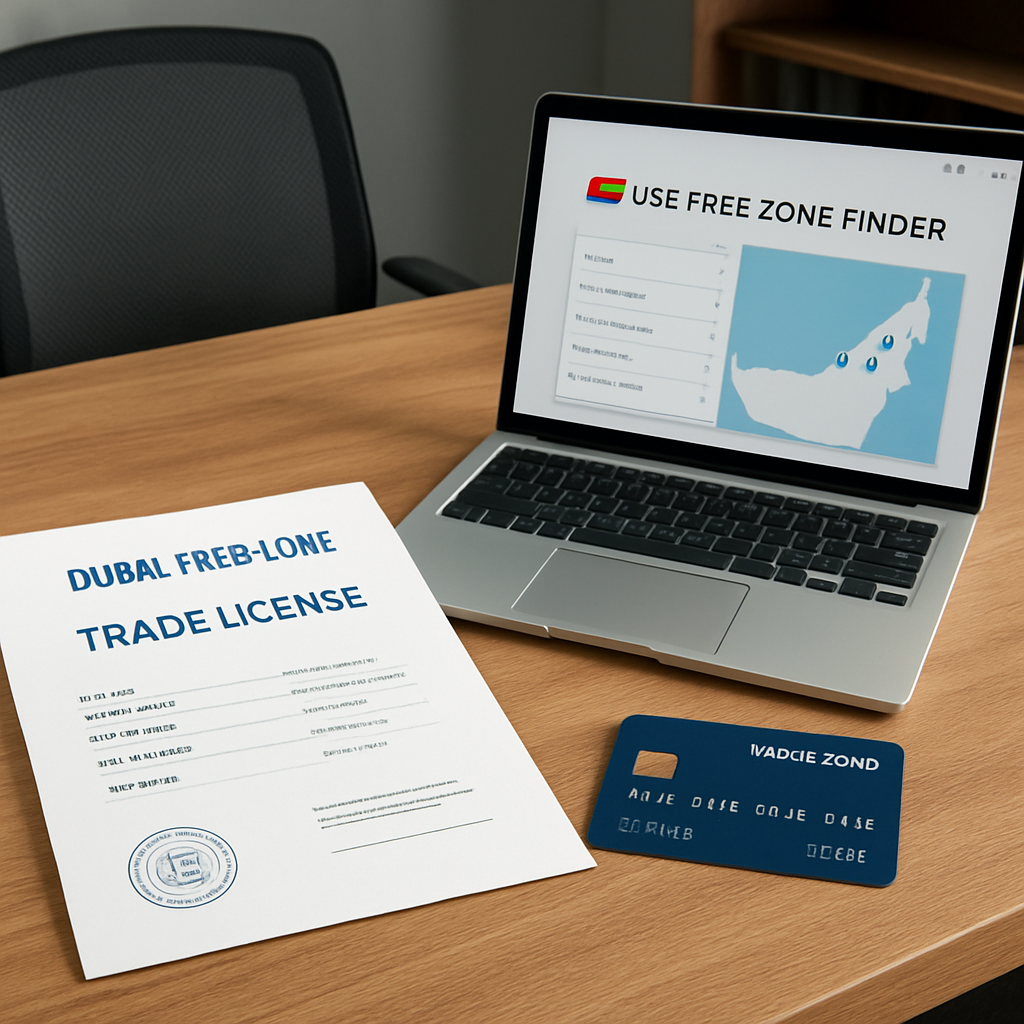 To keep the momentum, schedule your visa applications right after the bank account is active. The free‑zone authority can pull the licence and bank statement automatically, so the immigration team can issue your residence visas in under a week.Need a hand smoothing out the licence‑to‑bank transition? Our UAE Free Zone Finder team can walk you through the exact documents each bank prefers – just drop us a WhatsApp and we’ll set up a quick call.
Step 5: Meet Ongoing Compliance and Renewal Requirements
So you’ve got the licence, the bank account, and the visas – now the real marathon begins. Compliance in a Dubai free zone isn’t a “set‑and‑forget” thing; it’s a series of little checkpoints that keep your company legit, your visas active, and your bank happy.
Annual audit – why it matters
Every free‑zone entity is required to submit audited financial statements each year under Federal Decree Law No 32 of 2021. The audit isn’t just a bureaucratic box; it proves your numbers line up with UAE tax rules and builds trust with partners. Swift Audit explains that annual audits are mandatory for free‑zone companies and outline the documents you’ll need, such as balance sheets, cash‑flow statements, and supporting invoices.Here’s a quick audit checklist:
- Prepare trial balance and general ledger for the fiscal year.
- Gather bank statements, invoices, and receipts for all transactions.
- Ensure your trade licence, shareholder register, and any customs declarations are up‑to‑date.
- Engage a certified auditor familiar with your specific free‑zone regulations.
Real‑world tip: Maria, a fintech founder in DMCC, set a calendar reminder for “Audit Prep – the applicable deadline before year‑end.” She handed the auditor a neatly filed digital folder, and the audit was signed off in just five days, saving her team weeks of back‑and‑forth.
License renewal – don’t let it slip
Free‑zone licences are valid for 12 months. Renewing on time protects your visa sponsorship, bank relationships, and, most importantly, your legal right to operate. The renewal process has gone almost fully digital thanks to many zones offering an online portal. Meydan Free Zone’s guide shows how the renewal can be done in under an hour with just a few clicks.Typical renewal documents:
- Current trade licence (PDF).
- Passport copies of all shareholders and managers.
- Emirates ID copies.
- Latest renewal receipt (if you’re extending an existing licence).
- Any updated lease agreement or activity‑change approvals.
Actionable steps:
- Log in to your free‑zone portal at least the applicable deadline before expiry.
- Upload the refreshed documents and double‑check the expiry date.
- Pay the renewal fee (usually 10‑15 % of the original licence cost).
- Download the renewed licence and store it securely – you’ll need the number for every visa application.
Example: Ahmed, who set up a logistics firm in JAFZA, missed the 30-day window and incurred an AED 200 fine per month. He learned to set a recurring calendar alert, and now his renewal is always on time, keeping his three employee visas active without interruption.
Visa sponsorship and employee updates
Every time you renew the licence, you can also adjust visa counts, add new activities, or change shareholder details. Think of the renewal window as a chance to audit your team structure – maybe you need an extra visa for a new sales lead or you want to switch a consultant to a full‑time employee.Key actions during renewal:
- Review the current visa quota versus your headcount.
- Submit any new passport copies or Emirates IDs for incoming staff.
- If you’re expanding activities, request an amendment through the portal – most zones approve changes on the spot.
Pro tip: Keep a shared Google Sheet titled “Visa Tracker” with expiry dates, passport numbers, and medical test status. Updating it every quarter prevents surprises when the licence renewal hits.
Staying on top of tax and KYC
Even though many free zones enjoy tax exemptions, the UAE introduced a 9 % corporate tax threshold in 2023. Your audited financials will be the basis for any tax filing, so don’t ignore that line item. Also, banks will periodically request updated KYC documents – a fresh utility bill or a new bank reference – especially if you’ve opened a multi‑currency account.Combine compliance with technology: link your corporate bank account to an accounting platform that auto‑tags transactions with your licence number. That way, when the auditor asks for a sample, you can pull a CSV in seconds.
Need a hand?
If any of this feels overwhelming, our Corporate structuring guide walks you through setting up reminders, choosing the right auditor, and keeping your documentation tidy. And for that extra SEO push once you’re back in business, check out rebelgrowth’s automated content engine – they even have a dedicated blog section for startups looking to rank fast.
FAQ
What’s the first step when I decide to set up a free zone company in Dubai?
First thing you do is pick the free zone that matches your business activity. Look at the industry focus, visa quota, and cost structure. A tech startup usually heads for DMCC or Dubai Internet City, while a logistics firm feels right in JAFZA. Once you’ve narrowed it down, grab the zone’s licence matrix from its portal and note the capital and fee requirements before you start filling out forms.
Do I really need a local sponsor or a PRO service?
No, you don’t need a UAE national as a shareholder – that’s the whole point of the free‑zone model. However, a PRO (Public Relations Office) can speed up document attestation, visa filing, and bank account opening. Think of the PRO as a concierge who knows the exact stamps the authorities want. If you’re comfortable handling paperwork yourself, you can skip the service, but most first‑tim founders save a week or two by hiring one.
How long does the whole registration process usually take?
From the moment you submit a complete application to receiving your trade licence, you’re looking at 2 to 4 weeks in most zones. The timeline can stretch if you miss a document or if the zone asks for an additional NOC. To keep things moving, respond to any “please provide…” email within 24 hours and keep digital copies of every file ready for quick upload.
What documents are absolutely mandatory for the application?
You’ll need a clear, scanned passport copy (valid at least six months), a two‑page business plan, the chosen licence type, and a proof of address – a recent utility bill or tenancy contract works. Some zones also request a bank reference or a sponsor guarantee if you don’t have a large capital injection. Label each file consistently (e.g., JohnDoe_Passport.pdf) so the reviewer can find them instantly.
Can I open a corporate bank account before my licence is issued?
Most banks want to see the official trade licence, so the safest route is to wait until you have the PDF in hand. That said, you can book an appointment early, bring your passport, business plan, and board resolution. A few banks will give you a provisional account number that becomes fully active once the licence is uploaded, which helps you start invoicing right away.
What ongoing compliance tasks should I put on my calendar?
Mark three dates each year: the licence renewal window (usually the applicable deadline before expiry), the annual audit submission (required under UAE Federal Decree Law 32), and the corporate tax filing if your revenue crosses the AED 375,000 threshold. Set reminders in a shared Google Sheet for passport expiries, visa medical tests, and KYC updates. Keeping these chores in a spreadsheet turns a potential headache into a quick check‑off.
How much should I budget for hidden costs beyond the licence fee?
Besides the headline licence price, plan for document attestation (AED 3 – 5 k), PRO service fees (AED 500 – 1 k), visa processing (AED 4 – 7 k per person), and a modest bank maintenance fee (around AED 50 – 100 monthly). If you opt for a flexi‑desk office, add AED 5 – 15 k a year; a private office can push the number higher. Factoring these items into your budget prevents surprise expenses when the renewal reminder pops up.
Conclusion
We’ve walked through every twist and turn of how to set up a free zone company in Dubai, from picking the right zone to keeping your paperwork tidy.If you’re feeling the excitement of a fresh licence in your inbox, remember the real power lies in the follow‑up – renew on time, file that annual audit, and keep visas synced with your growth plan.A quick tip: set three calendar reminders – one month before licence expiry, one month before audit deadline, and one month before tax filing – and you’ll turn what feels like a marathon into a series of easy checkpoints.And if any of this still sounds overwhelming, our team at UAE Free Zone Finder is just a WhatsApp ping away – we’ll help you fine‑tune the checklist, answer lingering questions, and keep your setup on track.So, take a breath, follow the steps you’ve just read, and picture yourself opening the office door in a Dubai free zone – the paperwork will be behind you, and the real adventure of building your business is about to begin.Remember, the free‑zone model gives you 100 % ownership, low overhead, and fast visa processing – that’s a competitive edge you can’t ignore. Keep the momentum, stay organized, and watch your Dubai venture take off.