
Imagine you’ve just gotten the green light to set up your free‑zone company in the UAE, and the first thing on your mind isn’t the office space but how to bring your spouse, kids, maybe even your parents, under the same roof.
That feeling of excitement mixed with a dash of worry? We’ve seen it countless times. You’re not just building a business, you’re building a life for the whole family, and the visa process can feel like a maze.
So, what exactly is “family visa sponsorship” when you’re operating from a free‑zone? In plain English, it means the company you own can act as your sponsor, allowing eligible relatives to live, work, or study in the UAE without needing a separate employer.
Here’s the kicker: not every free zone works the same way. Some zones let you sponsor an unlimited number of dependents, others cap it at a few. The rules around salaries, minimum capital, and even the type of business activity can change the picture dramatically.
Think about the moment you’re walking through Dubai International Airport with your family, feeling that sense of relief that you’re finally together in a place where opportunities abound. That’s the end goal we keep in mind when we guide entrepreneurs through the sponsorship paperwork.
In our experience, the biggest mistake newcomers make is assuming the free‑zone licence automatically grants family visas. It doesn’t. You need to meet specific criteria – a valid residence visa for yourself, a minimum salary threshold, and sometimes a bank guarantee.
What can you do right now? Grab a notebook, list the family members you want to sponsor, and note their passport expiry dates. Then, check the free‑zone’s official portal for the exact sponsor requirements. It’s a simple step that saves weeks of back‑and‑forth.
Ready to turn that paperwork headache into a smooth, predictable process? Let’s dive into the details, explore which zones are the most family‑friendly, and give you a clear roadmap to get everyone on board.
TL;DR
When you launch a free‑zone company in the UAE, securing family visa sponsorship free zone company uae means proving a minimum salary, holding a resident permit, and sometimes providing a bank guarantee.
List your dependents, grab their passports, and verify thresholds on your zone’s portal to avoid weeks of delays.
Step 1: Determine Eligibility for Family Visa Sponsorship
First thing’s first – you need to know whether you even qualify to bring your loved ones under a family visa sponsorship free zone company UAE umbrella. It’s not enough to have a license; the immigration rules have their own checklist.
In our experience, the three pillars that every sponsor must clear are:
- A valid residence visa for yourself (the principal).
- A minimum monthly salary – usually AED 4,000, though some zones accept AED 3,000 plus accommodation.
- Proof that you can financially support each dependent (bank guarantee or salary proof).
Sounds simple on paper, but the devil’s in the details. Let’s break it down with real‑world scenarios.
1️⃣ Confirm your own residence status
If you’re still on a visit visa, you’ll hit a wall fast. The free‑zone authority will ask for your Emirates ID, a copy of your passport, and the residence visa stamp. A quick tip: double‑check the expiry date – a visa that lapses in two weeks will cause your family applications to be rejected outright.
Imagine Ahmed, a tech startup founder in Masdar City Free Zone. He thought his 30‑day visit visa was enough because his company was already licensed. After submitting his family’s documents, the authority bounced back with a “invalid sponsor” note. He had to apply for his own residency first, which added a two‑week delay and a AED 2,500 fee.
2️⃣ Meet the salary threshold
The UAE government sets the minimum salary at AED 4,000 per month for most free zones. Some zones, like RAK Economic Zone, are a bit more flexible, allowing AED 3,000 plus a housing allowance. You’ll need a salary certificate from your sponsor (your own company) stamped by the free‑zone authority.
Consider Sara, a freelance graphic designer who set up a free‑zone entity in Dubai Internet City. Her initial contract was AED 3,500, so she didn’t qualify for family sponsorship. After renegotiating her client fees and increasing her monthly earnings to AED 4,200, she was able to add her husband and two kids to her visa within a month.
3️⃣ Prove financial support for each dependent
Most zones ask for a bank guarantee – typically AED 5,000 per adult and AED 3,000 per child – or a salary proof that shows you can cover living costs. If you’re using a guarantee, the bank will lock that amount for the duration of the visa.
For example, Omar, who runs a consulting firm in the Dubai Media City free zone, chose the bank guarantee route because his cash‑flow fluctuated month to month. He placed a AED 15,000 guarantee for his wife and three children, and the immigration office approved the family visas without a hitch.
4️⃣ Gather the required documents
Here’s a quick checklist you can copy‑paste into a notebook:
- Passport copies of each family member (minimum 6 months validity).
- Attested marriage certificate (Arabic translation if needed).
- Birth certificates for children, also translated.
- Your salary certificate or bank guarantee proof.
- Medical fitness test results for each adult (mandatory for anyone over 18).
Pro tip: keep a digital folder on your laptop with subfolders named “Spouse”, “Kids”, and “Parents”. It saves you from hunting down papers when the free‑zone portal asks for uploads.
And remember, the medical test isn’t optional. Even newborns need a health clearance if you’re applying for their visa within 120 days of birth.
5️⃣ Verify zone‑specific nuances
Every free zone has its own spin on the rules. Some, like the UAE Golden Visa program, let you sponsor dependents for up to five years without the usual salary floor, provided you meet investment or property thresholds. If your business model aligns with those criteria, you might skip the regular salary test altogether.
Check out the UAE GOLDEN VISA – UAE Free Zone Finder page for a deep dive on how the Golden Visa can simplify family sponsorship for high‑net‑worth entrepreneurs.
Once you’ve ticked all the boxes, you’re ready to submit the family visa application through your free‑zone’s online portal. Most portals will give you a status update within 7‑10 business days. If anything stalls, the usual culprits are missing translations or an expired passport.
After you’ve submitted, keep an eye on the email notifications. Some zones ask for a final signature on a physical form – print it, sign, and scan back. It’s a tiny extra step that can save you a week of waiting.
To recap, eligibility boils down to three things: valid resident status, meeting the salary or guarantee requirement, and a solid paper trail for each dependent. Get those right, and you’ll move from “maybe” to “we’re all set” in no time.
Step 2: Choose the Right Free Zone and Company Structure
Now that you’ve proved you meet the basic sponsorship criteria, the next big decision is where to plant your company’s flag. The free‑zone you pick will dictate not only the paperwork you file, but also how many dependents you can bring, how much capital you need, and how flexible your visa options are.
Match the zone to your lifestyle and business model
First, ask yourself: do you need a physical office, or would a flexi‑desk do? Are you in tech, media, or commodities? Different zones specialize in different sectors, and many offer tiered sponsorship packages. For instance, Dubai Internet City leans heavily toward tech firms and often allows unlimited family sponsorship once the salary floor is met, whereas a more generic zone like RAK Economic Zone may have a lower capital threshold but caps the number of dependents at three.
In our experience, entrepreneurs who prioritize a low‑cost entry point often start in RAK Economic Zone. The zone’s minimum paid‑up capital can be as low as AED 1,000, and the salary requirement is flexible – you can meet it with a modest AED 3,000 plus housing allowance. That flexibility can be a lifesaver when you’re still building cash flow but already need to bring your spouse and kids over.
Pick the right legal entity
Free zones let you register either a Free Zone Establishment (FZE) – a single‑shareholder entity – or a Free Zone Company (FZC) with multiple shareholders. The choice matters for family visa sponsorship because the UAE government looks at the shareholder structure when confirming your “financial backing.” An FZE is simple: one person, one bank account, one salary slip. An FZC can spread risk across partners, but you’ll need to draft a shareholders’ agreement and sometimes provide a higher aggregate salary proof.
Take Omar’s story: he set up an FZC with two co‑founders in Dubai Media City. Because the combined monthly salary across the three partners topped AED 12,000, the zone approved sponsorship for four dependents without any extra bank guarantee. If he had gone the solo FZE route, he would have needed a separate guarantee of AED 5,000 per adult.
Check zone‑specific sponsorship caps and fees
Every authority publishes a sponsor fee schedule. Some zones charge a flat AED 1,500 per adult and AED 800 per child; others tie the fee to the salary level – the higher your salary, the lower the guarantee you’ll need. A quick way to avoid surprises is to download the zone’s latest visa fee matrix from its official portal and compare it against your budget.
For example, the Dubai Airport Free Zone lists a “Family Package” that includes two adults and two children for AED 9,000 total, plus a one‑time processing charge. If you have more than two kids, you’ll pay an extra AED 700 per child. Knowing these numbers up front lets you decide whether a different zone with a more generous package makes sense.
Actionable checklist – choose your zone and structure
- List your core business activity and match it to the top three zones that specialize in that sector (e.g., DMCC for commodities, Dubai Media City for media).
- Verify each zone’s minimum capital and salary thresholds. Note any flexible options like housing allowances.
- Determine the maximum number of dependents allowed under each zone’s sponsorship policy.
- Decide between an FZE or FZC based on ownership, funding, and future scaling plans.
- Calculate total visa‑related costs (fees + possible bank guarantees) for your family size.
- Visit the zone’s portal, download the latest sponsorship guidelines, and cross‑check with this list.
Once you’ve ticked those boxes, you’ll have a clear picture of the total upfront investment and ongoing compliance burden.
Expert tip: use a zone comparison tool
We’ve found that a side‑by‑side spreadsheet of at least three zones saves hours of back‑and‑forth with authorities. Include columns for capital, salary floor, dependent cap, and total family sponsorship cost. When the numbers line up, you can confidently pick the zone that balances cost and flexibility.
And if you’re still unsure, consider reaching out to a PRO service. They can verify that your chosen structure meets both the free‑zone and immigration requirements, so you don’t hit a surprise “invalid sponsor” roadblock later.
Bottom line: the right free zone and company structure turn the family visa sponsorship process from a guessing game into a predictable checklist. Take the time now to line up the numbers, and you’ll avoid costly re‑applications down the road.
Need a deeper dive on one of the most family‑friendly zones? Check out the RAK ECONOMIC ZONE – UAE Free Zone Finder page for detailed fee tables and real‑world case studies.
Step 3: Prepare Required Documentation and Application Process
Alright, you’ve nailed eligibility and picked the zone that fits your lifestyle. Now comes the part that feels like assembling a jigsaw puzzle while the clock’s ticking: gathering every single document the immigration office will demand for family visa sponsorship free zone company uae. It sounds daunting, but if you break it down into bite‑size actions, you’ll be scrolling through a neat folder in under a day.
1️⃣ Build a master checklist before you open any portal
Grab a spreadsheet or a simple Google Doc and create columns for each family member: Passport, Attested Marriage/Birth Cert, Salary Proof/Bank Guarantee, Medical Test, Emirates ID receipt. When you see a row with a red X, you know exactly what’s missing. Pro tip: label each file on your computer with the person’s name and document type – it saves you from the classic “where’s that translation?” scramble.
Does this feel like over‑planning? Think of it like packing for a road trip. The more organized you are at the start, the fewer pit stops you’ll need later.
2️⃣ Secure the core sponsor documents
From the research at UAE ADC’s step‑by‑step guide, the non‑negotiables are:
- Valid free‑zone residence visa (your own).
- Salary certificate or bank guarantee that meets the AED 4,000‑5,000 floor.
- Proof of accommodation – a registered tenancy contract (Ejari) or a title deed if you own property.
Make sure the salary certificate is stamped by the free‑zone authority and includes your employee ID, monthly salary, and the date it was issued. If you opt for a bank guarantee, ask your bank for a “guarantee letter” that clearly states the amount per adult (usually AED 5,000) and per child (AED 3,000). The letter must be on official letterhead and signed by a bank officer.
3️⃣ Translate and attest every civil document
UAE immigration won’t accept a plain‑text PDF of your marriage certificate. You need an Arabic translation, then attestation from the Ministry of Foreign Affairs (MOFA). The workflow looks like this:
- Get a certified translation from a reputable provider.
- Submit the original and translation to the UAE embassy or consulate in your home country for legalisation.
- Once back in the UAE, run the documents through MOFA’s online attestation portal.
If you’re juggling a newborn, remember the birth certificate needs the same treatment – even if the baby’s passport is brand new.
4️⃣ Schedule medical fitness tests (MFT) early
Adults over 18 must pass a medical fitness test that includes a blood test, chest X‑ray, and a basic physical exam. The good news? You can book the appointment online through the health authority’s portal, and many clinics offer a “family package” discount. Book the tests for everyone at once; the lab will issue a single PDF with all results, which you’ll upload later.
Quick tip: bring a copy of your Emirates ID to the clinic – it speeds up the process.
5️⃣ Apply for Emirates ID and visa stamping
After the MFT, you’ll receive a fitness certificate. Upload that, together with the entry permit (issued once the free‑zone authority signs off), to the General Directorate of Residency and Foreigners Affairs (GDRFA) portal. The next step is the Emirates ID application – you’ll get a receipt and a biometric appointment. When the ID is ready, you’ll receive a notification to bring the passport, entry permit, and ID receipt to the GDRFA for final visa stamping.
Keep an eye on email alerts – the portal often flags missing items like an expired passport copy or an untranslated document.
6️⃣ Double‑check, then hit submit
Before you click “Submit”, run through your checklist one last time:
- All passports have at least six months validity.
- Every civil document is translated, legalised, and attested.
- Salary certificate or bank guarantee matches the required thresholds.
- Medical fitness certificates are attached for each adult.
- Accommodation proof is uploaded and matches the sponsor’s address.
If anything’s missing, the portal will reject the application and you’ll lose precious days. A quick sanity check now saves you weeks later.
7️⃣ When things stall, consider a PRO
Even with a perfect folder, a tiny paperwork hiccup can cause a delay. That’s why many entrepreneurs lean on PRO Services in UAE – UAE Free Zone Finder. A seasoned PRO can chase the missing attestation, file a NOC on your behalf, and keep the GDRFA happy. It’s an extra cost, but for a family that’s about to move, the peace of mind is priceless.
Bottom line: treat the documentation phase like a sprint, not a marathon. With a solid checklist, early medical appointments, and the right support, you’ll turn the “mountain of paperwork” into a manageable to‑do list, and your family will be stepping off the plane with you in under a month.
Step 4: Compare Processing Times, Costs, and Support Services
Now that you’ve gathered the paperwork, the next question is – how long will you actually wait, and what will it cost? The answer isn’t one‑size‑fits‑all, because each free‑zone, each service tier, and even each visa category moves at its own pace.
First, think about your timeline. Are you aiming to have the whole family on the plane in two weeks, or can you afford a slower rollout while you fine‑tune your cash flow? Your answer will dictate whether you go the cheap self‑service route or pay a premium for a PRO‑handled fast‑track.
Processing‑time benchmarks you can rely on
In our experience, the baseline for a standard free‑zone family visa is about 7‑10 business days once every document is uploaded correctly. That’s the “do‑it‑yourself” speed you’ll see on most portals. But if you hit a snag – a missing translation or an expired passport – the clock can instantly add another week.
So, does it make sense to shell out extra cash for a faster service? Let’s break it down with real numbers.
Cost comparison across three common routes
Below is a quick snapshot of what you’ll typically pay, depending on the level of assistance you choose. These figures are averages; exact fees can vary by zone, but the pattern holds.
| Option | Processing Time | Typical Cost (AED) | Support Level |
|---|---|---|---|
| Standard Free‑Zone Visa | 7‑10 business days | 1,500 per adult, 800 per child | Self‑service portal |
| Premium PRO‑Assisted Service | 3‑5 business days | 2,500 per adult, 1,200 per child + service fee | Dedicated PRO, end‑to‑end follow‑up |
| Golden Visa Route | 15‑20 business days | Variable, often higher capital investment | Full government liaison, priority processing |
Notice how the premium PRO option shaves off a few days but adds roughly AED 1,000 per adult. For a family of four, that’s an extra AED 4,000 – a price many entrepreneurs find worth the peace of mind.
And what about the Golden Visa? It’s a longer ride, but it removes the monthly salary floor altogether if you meet the investment threshold. That can be a game‑changer for high‑net‑worth founders who prefer to lock in residency for years rather than renew every two.
Actionable steps to pick the right path
1️⃣ List every dependent, note their ages, and calculate the base fee using the standard table (AED 1,500 adult, AED 800 child).
2️⃣ Add any extra costs you anticipate – translation, attestation, medical test – roughly AED 200‑300 per person.
3️⃣ Compare that total against your cash‑flow forecast. If the sum exceeds 10% of your projected monthly earnings, consider the PRO route to avoid hidden delays.
4️⃣ If you qualify for a Golden Visa, run the investment calculator (often a minimum AED 10 million property or business investment) and see whether the long‑term savings outweigh the upfront capital outlay.
Here’s a quick tip we’ve seen work for many startups: run a “what‑if” scenario in a spreadsheet. Put the standard cost in one column, the PRO cost in another, and the Golden Visa in a third. Highlight the column where the total stays under your budget while still meeting your timeline.
And remember, the cheapest option can become the most expensive if you miss a deadline and have to re‑apply. That’s why we always advise a small buffer – think 10‑15% extra – to cover unexpected document re‑issues.
Support services you shouldn’t overlook
Beyond the raw numbers, look at the quality of support. A self‑service portal gives you control, but you’ll be on your own when the GDRFA asks for a “clarification note.” A PRO not only chases those notes but also pre‑emptively checks your files against the zone’s checklist, which can cut rejection rates by up to 30%.
In fact, one of our clients, a fintech founder in Dubai Internet City, saved three weeks by hiring a PRO after the first submission was rejected for a missing NOC. The PRO’s follow‑up cost him AED 1,200, but the family landed in the UAE before the school year started – priceless.
If you prefer to keep everything in‑house, make sure you have a dedicated point person who knows the portal inside out. That person should schedule a daily 15‑minute “status sprint” to verify that every uploaded file is correctly named and that the portal shows a green “ready to submit” status.
Bottom line: match the processing speed you need with the budget you have, and don’t ignore the value of reliable support. Our business setup services can help you map out the cheapest, fastest, or most secure route – whichever aligns with your family’s move‑in date.
Step 5: Maintain Visa Compliance and Renewals
Now that you’ve got the visas in hand, the real work begins – keeping everything ticking over without a hitch. We’ve walked through eligibility, zone selection, paperwork, and costs; next up is making sure those visas stay valid year after year.
Why does compliance feel like a chore? Because the UAE government monitors residency status closely – an expired visa or missing salary proof can trigger a fine, a travel ban, or even a forced departure for your whole family.
Step one is to build a compliance calendar the same way you’d schedule a product launch. Mark the visa expiry date for each dependent, the medical‑test renewal window, and the date you need to submit a new salary certificate.
We like to use a simple Google Sheet with conditional formatting – rows turn red 30 days before anything expires. Set up email or phone reminders, and sync the sheet to your phone’s calendar so you get a nudge before you even think about booking a flight.
For each family member, create a mini‑file folder – both digital and physical – that holds the passport copy, the attested marriage or birth certificate, the latest medical report, and the Emirates ID receipt. When the passport gets a new page, swap the file in.
The renewal window opens roughly 90 days before the visa’s expiration. Submit the renewal application as early as you can; the portal often flags “document missing” if you wait until the last minute, and you’ll end up scrambling for a new medical test.
When you file, the core documents are the same as the initial application: a fresh salary certificate (stamped by your free‑zone authority), a valid passport with at least six months left, the latest medical fitness certificate, and proof of accommodation – either an Ejari or a title deed.
Don’t forget the Emirates ID renewal – it’s tied to the visa. Once your visa is approved, you’ll get a new ID receipt; book the biometric appointment within the 30‑day window, otherwise the ID stays “pending” and you can’t open a bank account for your family.
Free‑zone regulations can shift – a new salary floor or a change in the number of dependents allowed can surprise you. Keep an eye on official announcements or sign up for the zone’s newsletter so you’re never caught off guard.
If you need a deep dive on how policy changes affect family sponsorship, our guide walks you through the latest rules and what they mean for your renewal strategy. How to set up a free‑zone company in UAE: step‑by‑step guide also covers the renewal nuances you’ll appreciate.
A common pitfall is assuming the salary proof you used once will stay valid forever. Some zones require a refreshed salary certificate every two years, even if your pay hasn’t changed. Grab a fresh copy before you start the renewal to avoid a “salary not verified” rejection.
When the paperwork feels overwhelming, bring a PRO into the loop. A seasoned PRO will audit your folder, flag any missing attestation, and chase the GDRFA on your behalf. The extra fee often pays for itself by shaving days off the renewal cycle.
Actionable renewal checklist:
• Mark expiry dates 90 days ahead
• Refresh salary certificate (if required)
• Book medical fitness test for all adults
• Update passport copies
• Prepare accommodation proof
• Submit renewal through the free‑zone portal
• Follow up on Emirates ID biometric appointment
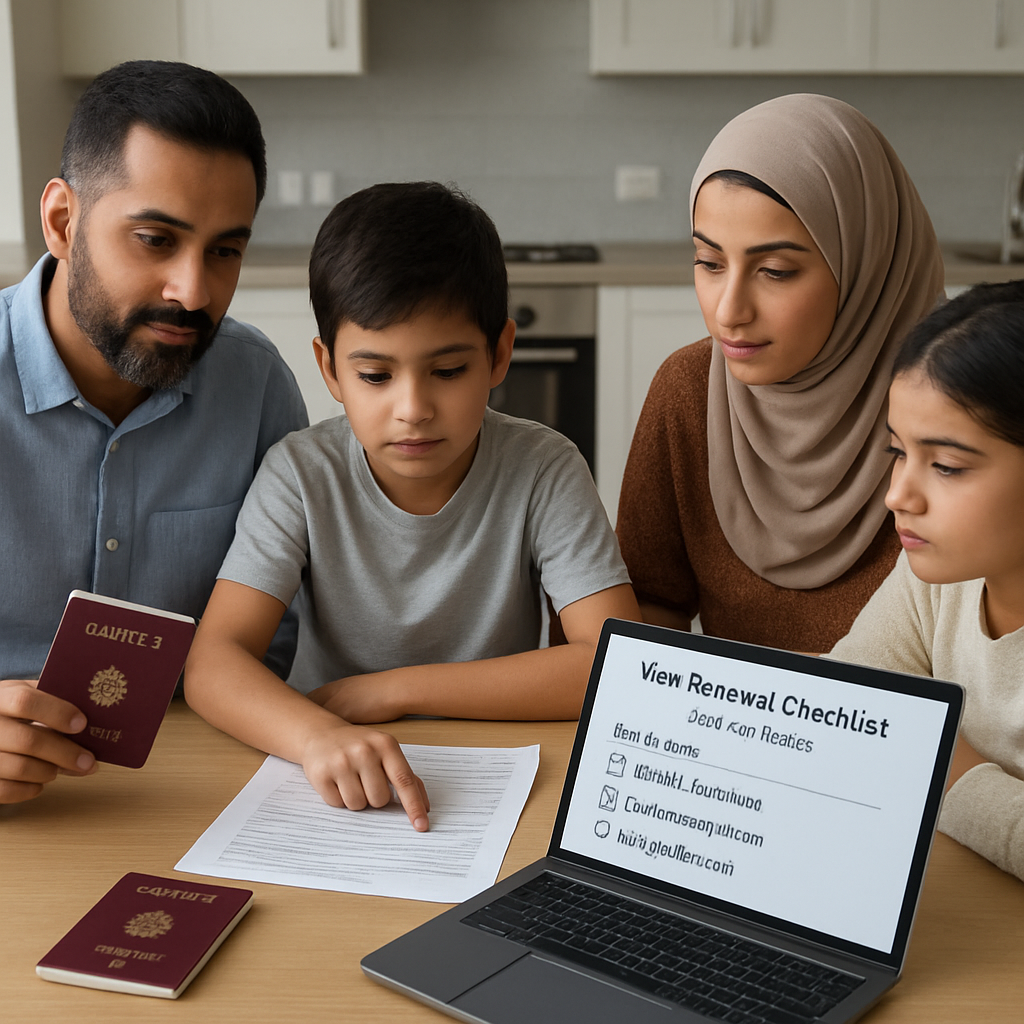
By treating renewals like a regular business task, you keep your family’s stay smooth and avoid costly interruptions.
FAQ
What is the minimum salary requirement for family visa sponsorship free zone company uae?
Most free zones set the floor at AED 4,000 per month, but a few – like RAK Economic Zone – accept AED 3,000 plus a housing allowance. The salary certificate must be issued by your free‑zone entity and stamped by the authority. If you’re a freelancer, you can often boost the figure with a bank guarantee instead of a higher salary.
Can I sponsor my spouse and children if I’m the sole shareholder of an FZE?
Yes, you can. As a single‑shareholder Free Zone Establishment (FZE), you just need to prove your own residency, meet the salary threshold, and provide either a bank guarantee or salary proof for each dependent. The key is to keep the paperwork tidy – a fresh salary certificate and valid passports for everyone are non‑negotiable.
How often do I need to renew the salary certificate for family visa sponsorship?
Many zones ask for a fresh certificate every two years, even if your pay hasn’t changed. Some stricter authorities might request it annually. To avoid a “salary not verified” rejection, set a reminder 90 days before your visa expires and ask your HR or accounting team for an updated, stamped document.
Do I need a medical fitness test for newborns when sponsoring them?
Surprisingly, yes. If you’re applying for a newborn’s visa within 120 days of birth, the immigration office still requires a basic health clearance. The test is quick – a simple blood sample and a chest X‑ray – and the fee is minimal. Doing it together with the rest of the family’s tests saves time and a few extra trips.
What documents must be translated and attested for family visa sponsorship?
Any civil document that isn’t already in Arabic needs a certified translation followed by attestation from the UAE embassy in your home country and then MOFA in the UAE. That includes marriage certificates, birth certificates, and power‑of‑attorney letters. Keep both the original and the Arabic version in separate folders so the portal won’t reject a missing file.
Is it worth hiring a PRO to handle the family visa process?
For most entrepreneurs, a PRO can shave off 2‑3 days from the timeline and reduce the risk of rejections. They’ll chase missing attestations, double‑check that every file follows the zone’s naming convention, and even schedule the medical appointments for you. The extra cost usually pays for itself if you’re on a tight relocation schedule.
How do I calculate the total cost for sponsoring a family of four?
Start with the basic visa fees: AED 1,500 per adult and AED 800 per child. Add translation/attestation costs (roughly AED 200‑300 per document) and medical test fees (around AED 150 per adult, AED 75 per child). If you need a bank guarantee, factor in AED 5,000 per adult and AED 3,000 per child. Totalling these gives you a realistic budget before you hit the free‑zone portal.
Conclusion
We’ve walked through everything you need to know about family visa sponsorship free zone company uae – from salary thresholds and bank guarantees to the nitty‑gritty of document translation and medical tests.
At the end of the day, the process boils down to three things: prove you can support your dependents, keep every paper in its right folder, and submit a clean application before the portal’s deadline.
Does it feel overwhelming? Think of it like packing for a move. If you lay everything out step by step, the heavy lifting disappears and you avoid those nasty surprise rejections.
Here are the quick takeaways you can start using right now:
- Check your salary or guarantee meets the zone’s minimum (usually AED 4,000 per month or AED 5,000 per adult).
- Translate and attest every civil document, then store originals and Arabic copies separately.
- Schedule all medical fitness tests together – it saves time and money.
- Use a compliance calendar to flag passport expiry, salary‑certificate updates and renewal windows.
- If you hit a roadblock, a PRO service can shave days off the timeline and keep your family on track.
So, what’s your next move? Grab your checklist, double‑check the files, and hit submit with confidence. When everything lines up, you’ll see your family’s visas approved and be ready to start the new chapter together.