
If you’ve ever stared at a blank compliance form and felt the knot in your stomach tighten, you’re not alone.
The Economic Substance Regulations (ESR) for UAE free zones are designed to prove that your company really “does business” inside the Emirate, not just on paper, but the reporting requirements can feel like navigating a maze with shifting walls.
Take Ahmed, an entrepreneur launching a fintech startup in the Dubai International Financial Centre. He thought filing a simple annual return would be a breeze, yet the regulator asked for detailed records of staff hours, local expenditures, and a genuine business‑activities narrative. After a few back‑and‑forth emails, Ahmed realized he needed a systematic approach.
What we’ve seen work best is breaking the ESR reporting process into four bite‑size steps:
1️⃣ Map every core activity to a specific UAE‑based function – sales, management, or R&D.
2️⃣ Log the actual qualified personnel and the time they spend on each activity – even a part‑time accountant counts.
3️⃣ Capture all local operating costs – rent, utilities, and professional fees.
4️⃣ Draft the “Economic Substance Report” that ties the three pillars together, then submit it through the Federal Tax Authority portal.
For small business owners, the trick is to embed the data collection into everyday tools. A cloud‑based spreadsheet that automatically pulls payroll hours, or a simple bookkeeping app that tags expenses by “ESR” can save hours each quarter.
And remember, the deadline isn’t just a date on the calendar – missing it can trigger a 20 % penalty on your assessed tax liability. That’s why many of our clients set a calendar reminder three months before the filing window opens.
Need a concrete example? A consultancy operating out of a flexi‑desk in Ras Al Khaimah logged only 120 hours of local staff time in 2023. By aligning those hours with a modest rent invoice, they comfortably met the “substance” threshold and avoided any fines.
When you’re juggling setup, licensing, and now ESR reporting, it helps to have a partner who understands the nuances. Corporate Taxation – UAE Free Zone Finder breaks down the filing mechanics and offers templates you can adapt.
So, what’s your next move? Start by gathering your staff time sheets this week, match them to your core activities, and set a reminder for the ESR submission deadline. With a clear plan, the regulations become a checkpoint rather than a roadblock.
TL;DR
Navigating the economic substance regulations uae free zones reporting can feel like a maze, but with a clear four‑step process you can confidently map activities, log staff time, capture local costs, and submit a compliant report without penalties. Start by gathering your time‑sheets this week, align them with core activities, and set a calendar reminder three months before the filing deadline to keep everything on track.
Step 1: Understand the Scope of Economic Substance Regulations for UAE Free Zones
First thing’s first – you need to know exactly what the regulator is asking for. It’s not enough to hear “economic substance” and assume it’s just a buzzword. The Federal Tax Authority (FTA) expects you to prove that real, UAE‑based activities are happening, and they do it through three pillars: qualified personnel, core income‑generating activities, and local expenditures.
Does that sound overwhelming? Imagine you’re opening a coffee‑shop in a free zone. The regulator will want to see that baristas are actually working in the UAE, that the shop is selling coffee (not just a shell company), and that you’re paying rent, utilities, and buying beans locally. Same idea, just with a fintech or consulting firm.
Map Your Core Activities
Grab your business plan and highlight every activity that creates revenue. Is it software development, asset management, or perhaps logistics? Write them down in plain language – “we develop blockchain‑based payment solutions” is clearer than “we provide fintech services.” This list becomes the foundation for the rest of the reporting.
Tip: If you’re not sure whether an activity qualifies, think about where the decision‑making happens. If the strategy is set in Dubai and the team executing it is based there, you’re likely in the clear.
Identify Qualified Personnel
Qualified personnel are employees (or contractors) who perform the core activities in the UAE. The rule of thumb is anyone who spends at least 40 % of their time on a qualifying activity counts. Pull your payroll data, filter by department, and calculate the percentage.
We’ve seen small startups get tripped up because they counted remote freelancers who never set foot in the free zone. Only include those with a physical presence or a valid work permit.
Calculate Local Expenditures
Local costs cover rent, utilities, professional fees, and any other expense that directly supports the core activity. It’s not enough to say “we have expenses” – you need to tag them as ESR‑related. A quick way is to add an “ESR” column in your accounting software and flag each line item.
And here’s where an Our Auditing Services – UAE Free Zone Finder partner can help you set up that tagging system so the numbers line up perfectly when it’s filing time.
Check the Thresholds
The FTA sets a minimum substance threshold: either 50 % of the total staff time or a minimum of 25 % of the total expenses must be tied to the core activity. If you fall short, you’ll need to either increase local staffing or re‑evaluate the activity’s classification.
For example, a consultancy with 200 hours logged but only 30 hours tied to a UAE‑based project would need to either bring in more local consultants or shift the focus of the project.
Document, Document, Document
Every claim you make must be backed up. Keep employment contracts, lease agreements, and invoices handy. When the FTA asks for proof, you’ll thank yourself for having a tidy folder.
If you’re looking for printable templates to keep everything organized, JiffyPrintOnline offers affordable custom forms and checklists that you can brand with your company logo.
Need legal nuance, especially if your business deals with crypto or blockchain? The ESR landscape can intersect with other UAE regulations. A quick consult with NeosLegal UAE Crypto Lawyers can clarify how crypto‑related revenue fits into the substance test.
Bottom line: Understanding the scope isn’t a one‑off task. It’s a living map you’ll revisit each year. Once you’ve nailed down the three pillars, the rest of the filing process becomes a lot less intimidating.
Step 2: Determine Reporting Obligations and Thresholds
Alright, you’ve figured out you’re in scope – now the real question is: how do you know what you actually have to report and when?
The Economic Substance Regulations uae free zones reporting framework sets two moving parts: a filing obligation and a quantitative threshold. If either one slips, the regulator can slap a 20 % penalty on your assessed tax, so we treat both like non‑negotiable check‑boxes.
1️⃣ Identify the reporting window
The law gives you a maximum of six months after the fiscal year‑end to submit the ESR notification, and then up to twelve months to file the full substance report. In practice most free‑zone licences align the deadline with the Federal Tax Authority’s annual filing calendar – usually by the end of March for a calendar‑year company.
Tip: pop a reminder into your calendar the moment you close your books for the year. A simple “ESR deadline” event with a one‑month lead‑time warning saves you from scrambling.
2️⃣ Quantitative thresholds you can actually measure
The regulator looks at three numbers:
- Relevant income ≥ AED 375,000 (you can pull this straight from your profit‑and‑loss).
- Qualified personnel ≥ 50 % of total full‑time equivalents (or the “reasonable” time test for part‑timers).
- Operating expenses ≥ AED 50,000 or a proportionate share of your total costs, whichever is higher.
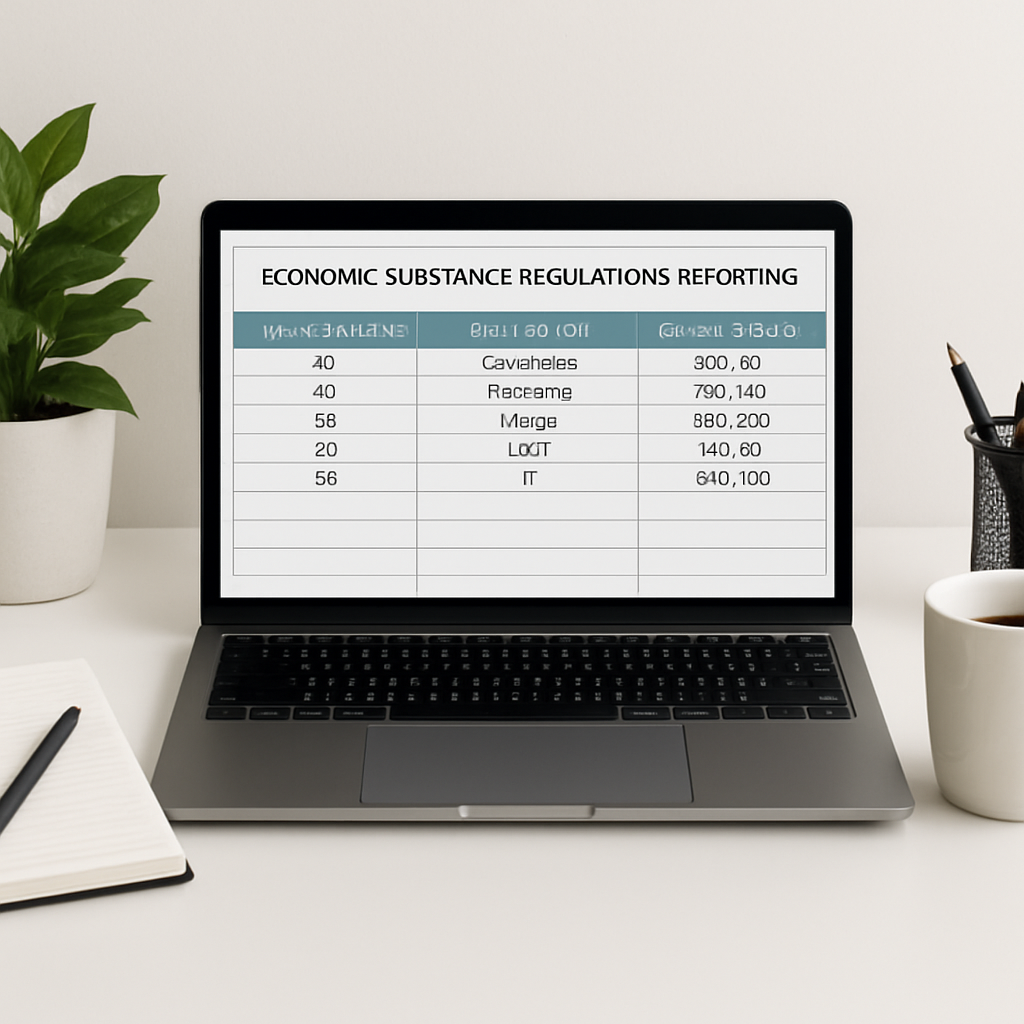
If you hit any two of those three, you’re considered to have met the “substance” test. That’s why we always build a tiny spreadsheet that flags “In Scope” as soon as the numbers cross the line.
Where do you get the official numbers? The Ministry of Economy publishes the exact thresholds in its ESR guidance — see the Ministry of Economy guidelines. The same page notes the six‑month notification period and the twelve‑month reporting window.
3️⃣ Map your activities to the “relevant” list
Not every line‑item in your business counts. Only the nine “Relevant Activities” – banking, insurance, fund management, shipping, distribution, holding, leasing, intellectual property, and R&D – trigger the ESR. If you’re a fintech firm, you fall under “financial services,” which is on that list.
Grab the full activity list from the Cabinet’s recent update – the Cabinet Decision No 98 – and tick the boxes that match your revenue streams.
Now run a quick cross‑check: if your fintech revenue is AED 420,000 and that’s 84 % of total income, you’ve already cleared the income threshold. Next, tally the hours your local compliance officer, accountant, or developer spent on those activities. Even a part‑time staff member counts as long as you can prove “reasonable” time.
4️⃣ Build a simple “obligation checklist”
Take a fresh sheet and list each of the three thresholds. Next to each, write “Met?” and plug in your numbers. If you get a green flag on at least two, you can move to the actual filing. If not, you’ll need to either boost local staff time, increase UAE‑based expenses, or reconsider whether you truly need to report this year.
Remember, the ESR isn’t a one‑off test. Every financial year you repeat the same three‑step dance, so automating the data pull now (payroll → hours, accounting → expenses) pays off long‑term.
Bottom line: determine your reporting obligations by (1) knowing the six‑month/‑twelve‑month windows, (2) measuring the three thresholds, and (3) matching your activities to the official list. Once those boxes are checked, the actual ESR report becomes a form‑filling exercise rather than a nightmare.
Step 3: Prepare Required Documentation and Financial Records
Alright, you’ve nailed the thresholds – now it’s time to pull together the paperwork that will prove you’ve got real substance in the UAE. If you’re staring at a mountain of receipts and wondering where to start, you’re not alone. The key is to treat this like a mini audit you control, not a surprise inspection.
Gather the core documents first
Start with three buckets: contracts, payroll, and expense invoices. For contracts, pull any lease agreements, service contracts, and any written agreements that tie a UAE‑based activity to a specific employee or director. A simple screenshot of a signed lease for your flexi‑desk can be enough, as long as the address and dates are clear.
Payroll is next. Export a CSV from your payroll software that shows each qualified employee’s name, role, and hours worked on the Relevant Activity. Even part‑time staff count – just make sure the “reasonable time” test is documented. If you use an external payroll provider, request a letter confirming the hours.
Finally, gather all expense invoices that relate to UAE operations: rent, utilities, internet, professional fees, and any local marketing spend. Tag them in your accounting system with a custom “ESR” label so you can pull a report in seconds when the filing window opens.
Real‑world example: the consulting firm
Imagine a consultancy that rents a co‑working desk in Ras Al Khaimah for AED 12,000 a year. They keep a spreadsheet that logs 150 hours of local staff time and attach the lease agreement, a legal services invoice (AED 5,000), and a broadband bill (AED 800). When the ESR notification arrives, they simply copy the CSV, attach the three PDFs, and hit submit. No frantic email chase with the landlord.
Build a “Documentation Checklist” you can reuse
We like to keep it ultra‑simple: create a Google Sheet with columns for Document Type, Source, Date, ESR Tag, and Status. Fill it out as you collect each item. When everything shows “Complete,” you know you’re ready.
Tip: set a recurring calendar reminder – say, the first Monday after your financial year‑end – to review the checklist. That way you never scramble at the last minute.
Expert tip: use accounting services to stay compliant
Our Our Accounting Services – UAE Free Zone Finder can help you tag expenses automatically and generate the ESR‑ready reports you need. It’s a small investment that saves hours when the deadline looms.
What to include in the Economic Substance Report
The regulator expects a clear narrative that ties the three pillars together. Include:
- A summary of the Relevant Activity you performed.
- The total qualified personnel hours (with a breakdown by employee).
- The total UAE‑based operating expenses, broken down by category.
- A copy of audited financial statements for the reporting period.
Don’t forget the “Management Decision” proof – a board resolution or meeting minutes that show strategic decisions were taken in the UAE.
Common pitfalls and how to avoid them
1️⃣ Missing lease renewal proof – keep a digital copy of the renewal email. 2️⃣ Forgetting to tag mixed‑purpose expenses – if an invoice covers both UAE and non‑UAE costs, split it and only claim the UAE portion. 3️⃣ Over‑looking “in‑kind” contributions, like a free office space from a partner – request a valuation letter.
Each of these mistakes can trigger a AED 50,000 fine, according to the Reed Smith overview of ESR penalties.
Quick reference table
| Document Type | Key Detail to Capture | Where to Store |
|---|---|---|
| Lease / Office Agreement | Address, dates, signed by both parties | Cloud folder “ESR Docs” |
| Payroll Export | Employee name, role, hours on Relevant Activity | Accounting software → CSV |
| Expense Invoices | UAE‑based cost, invoice number, date | Tagged in bookkeeping system |
And finally, a quick sanity check: does each document have a clear date, a UAE reference, and a link to the activity you logged? If yes, you’re in good shape.
Need a legal deep‑dive? NeosLegal UAE Crypto Lawyers offers specialised guidance on regulatory compliance for crypto‑focused businesses navigating the ESR.
Bottom line: treat the documentation phase as building a puzzle. Each piece – lease, payroll, invoice – snaps into place, and before you know it you’ve got a complete picture that satisfies the Economic Substance Regulations UAE free zones reporting requirements without breaking a sweat.
Step 4: Submit the Economic Substance Notification and Annual Report
Now that your paperwork is tidy, it’s time to hit “send.” The filing part feels like the final boss level, but with a clear checklist you can breeze through the Ministry of Finance portal without pulling your hair out.
What exactly do you need to upload?
Three things: the Economic Substance Notification (the quick “we’re in scope” form) and the full Annual Report (the detailed narrative). Both live on the same MOF portal, so you’ll only log in once.
Upload the PDF versions of:
- Signed notification form – usually a one‑page PDF generated by your accounting software or template.
- Economic Substance Report – includes activity summary, qualified personnel hours, UAE‑based expenses, and audited financial statements.
- Supporting documents – lease agreement, payroll export, expense invoices. Keep them in a single zipped folder to avoid “missing attachment” errors.
Step‑by‑step submission guide
1. Log into the MOF portal. If you’ve never used it, the first time you’ll be prompted to create a two‑factor authentication token. Write the code down; you’ll need it for every filing year.
2. Select “Economic Substance Notification.” The system asks for your Reportable Period start and end dates – double‑check they match the dates you used in the report.
3. Attach the notification PDF. A quick “preview” button lets you confirm the file opens correctly. If the portal flags a size limit, zip the file.
4. Move to the “Annual Report” section. Here you’ll paste the narrative text into a rich‑text box and upload the supporting PDFs. The portal will automatically pull the total qualified personnel hours from the CSV you uploaded earlier – make sure the column headings are exactly “Employee, Role, Hours.”
5. Review the auto‑validation screen. The system checks three things: (a) the notification is present, (b) the report includes at least two of the three substance tests, and (c) all required supporting docs are attached. If anything is red, fix it now; the portal won’t let you submit otherwise.
6. Submit and capture the receipt. Once you click “Submit,” the portal generates a reference number and a PDF receipt. Save that receipt in the same “ESR Docs” folder – you’ll need it if the regulator asks for proof of filing.
Timing is everything
Remember the six‑month window for the notification and the twelve‑month window for the full report. Most free‑zone companies set an internal deadline two weeks before the regulator’s cutoff. That buffer gives you time to fix any validation errors.
Pro tip: add a recurring task in your calendar titled “ESR filing – upload files” and set the reminder for 14 days before the deadline. When the task pops up, you’ll already have the zipped folder ready.
Common pitfalls and how to dodge them
• Wrong fiscal year dates. A mismatch between the dates on your financial statements and the dates you enter on the portal triggers an automatic rejection. Keep a master spreadsheet with the exact start‑end dates and copy‑paste them.
• Missing signatures. The notification form must be signed by an authorized signatory. If you’re using a digital signature, make sure it’s embedded in the PDF, not just an image.
• Unzipped large attachments. The portal caps individual files at 10 MB. Zip everything, or split large PDFs into separate files named “Lease‑Part‑1,” “Lease‑Part‑2.”
• Skipping the board resolution. Even if you’re a single‑owner LLC, a simple board resolution stating that strategic decisions are made in the UAE satisfies the “management decision” test.
Need a quick reference?
Here’s a cheat‑sheet you can copy into a Google Doc:
- Notification PDF – 1 page, signed, dates aligned.
- Annual Report – narrative + tables, ≤ 15 pages.
- Supporting docs – lease, payroll CSV, expense invoices (zipped, ≤ 10 MB each).
- Receipt PDF – store in “ESR Docs” folder.
If you’re still unsure about any of the steps, the DIFC’s own guidance on Economic Substance Regulations walks you through the portal mechanics and lists the exact document requirements — see the DIFC Economic Substance Regulations overview.
And that’s it. With the files in the right place, the dates double‑checked, and a calendar reminder set, you’ll submit the Economic Substance Notification and Annual Report without breaking a sweat.

Step 5: Common Pitfalls and How to Avoid Penalties
Ever felt that a tiny oversight could explode into a 20 % penalty? You’re not alone – most entrepreneurs discover the hard way that the Economic Substance Regulations UAE free zones reporting is as much about the details as the big picture.
Let’s walk through the most common traps and, more importantly, how you can sidestep them before they bite.
1️⃣ Forgetting the notification deadline
It’s easy to think the six‑month notification window is just a formality. In reality, missing it triggers an AED 20,000 fine straight away. Do you set a calendar reminder? If you haven’t, pop one in now – set it for two weeks before the filing window closes, not the day of.
Pro tip: create a recurring “ESR deadline” event in the same calendar you use for tax filings. When it pops up, you’ll already have the zip folder of documents ready to go.
2️⃣ Mismatched fiscal‑year dates
Picture this: you upload a report that says the financial year ends 31 December 2023, but your audited statements show 30 September 2023. The portal will reject it, and you’ll be scrambling for a new reference number.
Keep a master spreadsheet with the exact start‑end dates and copy‑paste them into every form. One tiny copy‑paste error can cost you hours and a penalty.
3️⃣ Missing signatures or using images instead of embedded digital signatures
We’ve seen firms upload a PDF with a scanned signature image – the system flags it as “missing signature.” A real digital signature has to be embedded in the PDF file itself.
If you’re not sure how to do that, a quick guide from the Ministry of Finance portal explains the process. Trust me, it’s worth the extra minute.
4️⃣ Oversized attachments
The portal caps each file at 10 MB. Large lease agreements or lengthy audited statements often exceed that. Zip them, split them into “Lease‑Part‑1” and “Lease‑Part‑2,” and rename clearly.
And remember: a single zip file larger than 10 MB will be rejected too – keep each zip under the limit.
5️⃣ Skipping the board resolution
Even if you’re the sole shareholder, a simple board resolution stating that strategic decisions are made in the UAE satisfies the “management decision” test. It’s a one‑page document; don’t treat it as optional.
In our experience, clients who skip this step get a surprise request from the regulator for additional paperwork, which can delay the whole filing.
6️⃣ Not keeping a clear audit trail
Regulators will ask for proof that your expenses are genuinely UAE‑based. If you mix local and non‑UAE costs on a single invoice, you’ll need to split them and keep a valuation note.
Use a dedicated “ESR” tag in your accounting software so you can pull a filtered report in seconds. This also helps when you need to show the National Assessing Authority the exact breakdown.
7️⃣ Assuming exemption means no notification
Exempted Licensees still have to file a notice confirming their exempt status. Forgetting this step reverts you to a standard Licensee overnight, bringing all the thresholds and penalties back.
Check the latest Cabinet Resolution No. 98 of 2024 – it clarifies that exemption notices are still mandatory.
8️⃣ Ignoring the penalty escalation ladder
First offence: AED 20,000 for late notification. Second offence in the next year: AED 50,000. Keep repeating the same mistake? You could face AED 400,000.
It’s a steep climb, but it’s easy to avoid by treating the ESR as a recurring quarterly task rather than an annual scramble.
Quick checklist to dodge penalties
- Set calendar alerts for notification and full report deadlines.
- Store a master copy of fiscal‑year dates – use them everywhere.
- Ensure every PDF has an embedded digital signature.
- Compress or split files to stay under 10 MB each.
- Draft a one‑page board resolution, even for single‑owner entities.
- Tag all ESR‑related expenses in your accounting system.
- File the exemption notice if you qualify.
- Review the penalty schedule and aim for zero repeats.
Need a helping hand to keep everything tidy? Our Our Auditing Services – UAE Free Zone Finder can run a quick compliance audit before the filing window opens, flagging any red‑flags you might have missed.
For a deeper dive into the penalty structure and how the National Assessing Authority enforces them, see the BBCIncorp overview of UAE Economic Substance Regulations. It breaks down the AED 20,000 late‑notification fine and the escalating AED 50,000 and AED 400,000 penalties.
Bottom line: the ESR isn’t a mysterious monster – it’s a checklist with a few gotchas. Treat those gotchas like potholes on a familiar road: slow down, look ahead, and you’ll arrive at the filing finish line without a scratch.
Step 6: Ongoing Compliance and Best Practices for UAE Free Zone Entities
Even after you’ve crossed the finish line of the ESR notification, the work isn’t done. The regulator expects you to keep the substance alive year after year, and a small slip‑up can turn a smooth filing into a costly penalty.
Turn compliance into a habit, not a chore
What if you treated the ESR like a quarterly health check instead of an annual scramble? In practice that means setting up a repeatable routine that lives in your existing accounting workflow.
First, pick a “Compliance Day” – usually the last Friday of the month that follows your fiscal‑year close. Block two hours on the calendar, invite your accountant, and run through the same three pillars you used for the first report: activities, personnel, and expenses.
Activities: keep the map updated
Every new client, product launch, or service line should be logged against the Relevant Activity list. A quick one‑line note in your project management tool (e.g., “Added crypto‑trading advisory – falls under Financial Services”) is enough to keep the map accurate.
Personnel: automate the hours capture
If you’re still asking staff to email timesheets, you’re courting error. Switch to a simple time‑tracking app that syncs with your payroll system. When the month ends, export a CSV and you’ll have the exact numbers the regulator wants, without a manual spreadsheet hunt.
Expenses: tag at the source
Tagging is a habit you can embed in your accounting software. Create a custom “ESR” tag and apply it to any invoice that relates to UAE‑based rent, utilities, professional fees, or marketing. When the filing window opens, a filtered report pulls the numbers in seconds.
Does this sound like extra work? On the contrary – once the tags and automation are in place, you’re basically pressing a button each year.
Stay ahead of regulatory updates
The Ministry of Finance occasionally tweaks thresholds or adds new activity categories. Missing a change can mean you’re filing the wrong form.
A quick way to stay in the loop is to subscribe to the official MOF newsletter – it’s free, concise, and lands in your inbox the week a new Cabinet Decision is published. Set a calendar reminder to review the newsletter every quarter and note any changes that affect your business.
Document everything – even the “obvious”
Regulators love to ask for “proof of substance.” That proof is only as good as the trail you leave behind. Keep a dedicated “ESR Docs” folder in the cloud and store every lease renewal email, board resolution, and expense invoice there.
When you file, attach a single zip file named “ESR_2024” (or the relevant year). Inside, include a short “Read‑me” PDF that lists: – the activity you reported, – total qualified personnel hours, – total UAE‑based expenses, – the location of each supporting document. If a question pops up, you’ll have the answer ready in seconds.
Run a pre‑filing health check
Before the six‑month notification deadline, run a checklist you can reuse each year:
- Are all activities still classified as Relevant?
- Do you have at least 50 % of staff time recorded for those activities?
- Is the total UAE expense above AED 50,000 or the proportional share?
- Is every supporting document signed, dated, and stored in the “ESR Docs” folder?
- Has the board resolution been updated for the current fiscal year?
- If any item is red, give yourself a week to fix it. The extra buffer prevents the “last‑minute panic” we’ve all experienced.
If any item is red, give yourself a week to fix it. The extra buffer prevents the “last‑minute panic” we’ve all experienced.
Leverage professional help strategically
For entrepreneurs who wear many hats, a quick compliance audit from a specialist can be worth the cost. The audit is a one‑off review that confirms your automation, tagging, and documentation are regulator‑ready. Think of it as a safety net rather than a recurring expense.
In our experience, clients who schedule an audit every two years avoid the majority of penalties and free up time to focus on growth.
Final tip: make compliance visible
Share a one‑page compliance snapshot with your team at the start of each quarter. Highlight the key numbers – “Qualified hours: 180 h, UAE expenses: AED 78,000, Activities in scope: Financial Services.” When everyone sees the metrics, the ESR stops being a hidden monster and becomes part of the company’s regular scorecard.
Bottom line: Ongoing compliance is less about ticking boxes and more about embedding a simple, repeatable rhythm into your daily operations. Once the habit sticks, the ESR becomes just another line item on your to‑do list – and you’ll never look back at that dreaded penalty again.
FAQ
What exactly is the economic substance regulations uae free zones reporting requirement?
In plain English, the ESR asks you to prove that your free‑zone business really has a substantive presence in the UAE –‑ staff, expenses, and real activity –‑ and to file that proof with the Ministry of Finance each year. It’s not just a checkbox; the regulator looks for three pillars – relevant income, qualified personnel hours, and UAE‑based operating costs –‑ and expects at least two of them to be met.
If any pillar falls short, you could face a fine, so the report is essentially your annual “substance audit.”
Who needs to file the ESR report in a UAE free zone?
Any free‑zone entity that meets the income threshold of AED 375,000 or more, or that has 50 % of its staff time tied to a Relevant Activity, is in scope. Even if you think you’re small, the moment your revenue or local expenses cross those lines, the filing obligation kicks in.
Entrepreneurs, small business owners, foreign investors and consultants should all run a quick “scope check” after the fiscal year closes –‑ it’s faster than discovering a penalty later.
How do I determine the reporting window and deadlines?
The regulator gives you up to six months after your financial year‑end to submit the short notification, then a further twelve months to file the full annual report. Most free‑zone companies line this up with the Federal Tax Authority’s March deadline, but you can set your own internal calendar reminder.
Tip: create a recurring “ESR deadline” event two weeks before the six‑month mark –‑ that buffer saves you from last‑minute scrambling.
What documents should I have ready before I start the ESR filing?
You’ll need three core packs: a signed notification form, the detailed annual report, and supporting evidence. The evidence includes lease agreements, payroll exports showing hours on Relevant Activities, and UAE‑based expense invoices (rent, utilities, professional fees, etc.).
Make sure every PDF has an embedded digital signature and a clear date –‑ a scanned signature image will be rejected by the portal.
Can I use a spreadsheet or software to automate the threshold calculations?
Absolutely. A simple Excel or Google Sheet with columns for revenue, qualified hours, and operating costs can auto‑flag “In Scope” once two thresholds are met. Use a formula like =IF(AND(Revenue>=375000,Hours>=50%),”In Scope”,”Out of Scope”).
Many accounting platforms let you tag expenses with a custom “ESR” label, pulling a filtered report in seconds when the filing window opens.
What are the most common penalties and how can I avoid them?
The regulator typically levies AED 20,000 for a late notification, AED 50,000 for a second‑year offence, and up to AED 400,000 for repeated failures. The biggest culprits are missed deadlines, mismatched fiscal‑year dates, and missing signatures.
Prevent these by (1) syncing your fiscal dates across all documents, (2) setting calendar alerts for both the six‑month and twelve‑month windows, and (3) doing a pre‑filing health check –‑ a quick checklist that confirms every required PDF is signed, dated, and zipped under 10 MB.
Conclusion
We’ve walked through the entire Economic Substance Regulations UAE free zones reporting maze – from spotting the reporting window to pulling the right paperwork and finally hitting “submit.” If you’ve felt the knot in your stomach every time a deadline loomed, you’re not alone; the good news is that the process becomes almost routine once you embed the right habits.
Bottom line: you need three things to stay in the clear – a clear activity map, solid proof of qualified personnel hours, and verifiable UAE‑based expenses. Miss any one and you risk the AED 20,000 late‑notification penalty, or worse, the escalating fines that can hit AED 400,000.
Take the consulting firm example we used earlier: they logged 150 local‑staff hours, kept a digital lease, and tagged every invoice with an “ESR” label. When the six‑month window opened, a quick export from their accounting system gave them a ready‑made PDF package, and the filing was completed without a hitch.
Here are the five steps you should lock into your calendar for every fiscal year:
- Mark the “ESR Notification” date – six months after year‑end – with a two‑week buffer.
- Run the threshold spreadsheet to confirm at least two of the three tests are met.
- Update your Corporate Structuring – UAE Free Zone Finder checklist with any new lease or board resolution.
- Export payroll hours and expense reports, zip them under 10 MB, and verify embedded digital signatures.
- Submit, save the receipt, and set a post‑submission review two weeks later to catch any regulator feedback.
And if you need printable templates for those reports, a quick stop at JiffyPrintOnline can save you time and keep your paperwork looking professional.
By treating ESR compliance as a repeatable “health check” rather than a one‑off nightmare, you protect your free‑zone business, avoid costly penalties, and keep the focus on growth.