Ever caught yourself wondering if you can run a mainland operation while your company lives in a free zone? It’s a question that pops up the moment you picture expanding beyond the fenced‑in advantages of a free‑zone licence. Let’s unpack what that really means for you.
First off, imagine the freedom of a free‑zone company – 100 % foreign ownership, zero corporate tax, and a streamlined setup. But the mainland market holds the heavyweight contracts, the government tenders, and the retail storefronts you might be eyeing. The clash between these two worlds is what fuels the confusion.
So, can i do business in uae mainland with free zone company? The short answer is yes, you can engage in many mainland activities, but there are rules that shape how you do it. Think of it like a bridge: you need the right permits and sometimes a UAE local sponsor to cross safely.
In practice, you might set up a free‑zone entity for your holding and intellectual property, then register a branch or a local service agreement to sell directly on the mainland. That’s where the paperwork gets interesting – you’ll need a commercial licence from the Department of Economic Development (DED) and often a UAE national as a local service agent. Our own experience shows that aligning the free‑zone structure with a mainland branch saves both tax headaches and operational bottlenecks.
Here’s a quick mental checklist: 1) Does your activity require a mainland licence? 2) Can the free‑zone company act as a service provider to a mainland entity? 3) Are you prepared for the extra compliance, like VAT registration and local labour regulations? If you answer yes to most, you’re on the right track.
A common pitfall is assuming the free‑zone licence automatically covers all sales across the UAE. It doesn’t. You’ll still need to respect sector‑specific rules – for example, health‑care or education often demand a dedicated mainland licence no matter where your holding sits.
What about banking? Many entrepreneurs think a free‑zone account can handle mainland transactions, but banks usually ask for a mainland licence to open a corporate account that can move money locally. That’s another reason a well‑structured branch can simplify cash flow.
If you’re still on the fence, picture this: a tech startup registered in Dubai Internet City keeps its IP and investors in the free zone, while its sales team operates out of a Dubai mainland office, signing contracts with local government bodies. The setup feels like juggling, but with the right legal advice it runs smoothly.
We’ve helped dozens of entrepreneurs map this exact scenario, and the key is clear communication with both free‑zone authorities and the DED. That’s why resources like BUSINESS SETUP – UAE Free Zone Finder can be a lifesaver, walking you through each step and pointing out the hidden costs before they bite.
Ready to test the waters? Start by listing the mainland activities you need, match them against your free‑zone licence, and then reach out to a trusted advisor. You’ll find that the answer to can i do business in uae mainland with free zone company is less about a yes or no, and more about building the right bridge.
TL;DR
Yes—can i do business in uae mainland with free zone company, but you’ll need a licence, a local agent, and aligned structures for you.
Start by mapping your mainland operations, match them to a suitable DED licence, and consult experts—like UAE Free Zone Finder—to build the bridge without costly surprises.
Step 1: Evaluate Eligibility for Mainland Operations
Before you chase the headline ‘can i do business in uae mainland with free zone company’, pause and ask yourself: does your free‑zone activity fall under one of the sectors the new Dubai Executive Council Resolution actually opens up?
The March 2025 Resolution (No. 11) creates two pathways – a branch licence or a temporary permit – but only for activities that the Department of Economy and Tourism (DET) will later list as eligible. That means the first thing you need is a clear inventory of what you plan to sell or service on the mainland.
Start by mapping every product, service, and client segment you intend to target in Dubai’s non‑free‑zone market. Write them down in a spreadsheet, then colour‑code each line as either “already covered by your free‑zone licence”, “potentially eligible under the new rules”, or “needs a separate mainland licence”. This simple visual audit often reveals hidden gaps you’d otherwise miss.
Next, cross‑reference your list with the draft activity categories published by DET. While the official list won’t be out until September 2025, early drafts show that commercial trading, consulting, and many tech services are on the fast‑track, whereas regulated fields like health‑care or education still require a dedicated mainland licence.
For a deep dive into the legal nuances, see the analysis by Reed Smith, which breaks down the three pathways and the regulatory checkpoints you’ll face here.
KPMG’s commentary adds that you’ll need separate financial records for any mainland activity, and that a one‑year renewal cycle applies to both branch licences and temporary permits according to their recent brief.
Now turn that audit into an action checklist:
- Confirm the exact legal name of your free‑zone entity.
- Identify the DET‑approved activity code that matches each mainland service.
- Gather the core documents: trade licence copy, shareholders’ passport scans, and a board resolution authorising the mainland expansion.
- Decide whether a branch licence (long‑term, renewable annually) or a temporary permit (up to six months, good for pilot projects) makes more sense for each activity.
Tip: If you’re an entrepreneur who wants to test the waters before committing to a full branch, the temporary permit is a low‑cost way to validate demand while you still enjoy free‑zone employment benefits for your staff.
Our own experience shows that aligning the structure early saves you months of back‑and‑forth with the DET. A quick way to visualise the right fit is to use the CORPORATE STRUCTURING – UAE Free Zone Finder tool, which walks you through the branch versus permit decision matrix.
After you’ve chosen the route, submit the application through the DET portal, attach the activity code, and pay the prescribed fee (the Resolution outlines a flat fee structure that varies by licence type). You’ll receive a provisional approval within 10‑15 business days, after which you can start invoicing mainland clients.
Once the paperwork is in place, you’ll need to adjust your accounting systems to keep mainland revenue separate from free‑zone income – a requirement for corporate‑tax compliance.
Finally, run a quick compliance test: simulate a mainland invoice, run it through your accounting software, and verify that VAT registration, corporate tax filing, and audit trails are all correctly mapped. If anything looks off, consult a tax advisor before you go live.
By following these steps you’ll move from “maybe” to “definitely eligible”, turning the regulatory change into a real growth lever for your business.
Step 2: Choose the Right Business Activity and License
Now that you’ve confirmed you’re eligible, the next puzzle piece is picking the exact activity you’ll run on the mainland and the licence that matches it.
Map your mainland activity to the DET list
Think of the DET activity list like a menu. You can’t order “chef’s special” if it’s not on the board. Start by writing down every service or product you plan to sell outside the free‑zone – whether it’s a consulting package, a hardware resale, or a digital marketing campaign.
Once you have that list, match each line to the draft activity codes that the Department of Economy and Tourism will publish (the final list is due by 3 September 2025). In our experience, most tech‑related services and general trading fall under the “branch licence” bucket, while short‑term projects often qualify for a “temporary permit”.
Does your activity need extra regulator sign‑off? Health‑care, education, and financial services still require a dedicated mainland licence, even after the new resolution.
Decide between a branch licence and a temporary permit
A branch licence is the workhorse. It lasts a year, renews annually, and lets you keep the same legal entity on both sides of the fence. This is ideal if you’re looking for stable, long‑term contracts – think government tenders or a permanent retail outlet.
On the other hand, a temporary permit is a low‑cost trial. It runs up to six months and is perfect for testing a new market segment, launching a pilot project, or running an event‑based operation. You can still use your free‑zone staff, but you’ll need to register the permit separately in the DET portal.
Tip: If you’re not sure which route fits, start with a temporary permit. It gives you a real‑world feel for mainland compliance without locking you into a year‑long commitment.
Gather the paperwork – and don’t forget the activity code
Regardless of the licence type, the DET will ask for a handful of documents:
- Copy of your free‑zone trade licence.
- Board resolution authorising the mainland expansion.
- Passport scans of all shareholders and the local service agent (if required).
- The specific activity code you matched in the previous step.
- Proof of office or a virtual office address in mainland Dubai (only for branch licences).
Make sure the activity code appears exactly as shown on the DET list – a single typo can push your application back weeks.
Calculate the fee and timeline
The resolution spells out a flat‑fee structure that varies by licence type. As of the latest guidance, a branch licence runs around AED 5,000 – 7,000, while a temporary permit is roughly half that. Payment is made through the DET portal, and you’ll typically see a provisional approval within 10‑15 business days.
Don’t forget to budget for the one‑time registration of your mainland VAT number and the separate corporate‑tax filing requirements. Keeping mainland revenue in its own ledger is not just good practice – it’s mandatory for tax compliance.
Final sanity check before you hit “Submit”
Run a quick compliance test: create a mock mainland invoice, feed it into your accounting software, and verify that VAT, corporate tax, and audit trails line up with the DET’s expectations. If anything feels off, pause and get a tax advisor’s opinion.
And remember, the big picture is about alignment. The right activity code, the appropriate licence, and clean financial segregation together turn the question “can i do business in uae mainland with free zone company” from a legal maze into a clear roadmap.
For a deep dive into the legal nuances of the new pathways, see the analysis by Reed Smith on the Executive Council Resolution No. 11 here.
Step 3: Understand Licensing Processes and Costs
Alright, you’ve decided you need a mainland licence or a dual‑licence to serve UAE clients. The next question is: what actually happens when you click ‘apply’ and how much will it bite?
Map the approval journey
First, log in to the Department of Economy and Tourism (DET) portal. You’ll see a clean three‑step wizard: upload documents, select your activity code, and pay the fee. It feels a bit like ordering a coffee online – you pick the size, add your name, and boom, you’re on your way.
Once you hit submit, the system generates a provisional reference number. That’s your ticket to the 10‑15 business‑day window where the DET reviews your paperwork, checks the activity code against the latest eligibility list, and confirms you’ve attached the right local service agent passport scans.
So, what should you do while you wait? Run a quick compliance check on a mock invoice – make sure VAT, corporate tax, and audit trails line up. If anything feels off, pause and get a tax advisor’s opinion before you go live.
Breaking down the fees
A branch licence usually runs AED 5,000 – 7,000. A temporary permit, which is perfect for a pilot project, is roughly half that. Those numbers are flat – no hidden surcharges – but remember you also need to budget for a one‑time mainland VAT registration (around AED 1,000) and the corporate‑tax filing setup.
In our experience, many entrepreneurs underestimate the cost of keeping two sets of books. The DET requires a separate ledger for mainland revenue, and the FTA expects a clean VAT return for that stream. That’s why we often recommend using a dedicated accounting package or even a specialist service.
For a deeper dive into how dual licensing can shave off the need for a second legal entity, check out the dual licensing model described by Masdar City Free Zone. It’s a solid example of cost‑efficient market access.
Key documents you’ll need
- Copy of your free‑zone trade licence.
- Board resolution authorising the mainland expansion.
- Passport scans of all shareholders and the local service agent (if required).
- The exact activity code you matched in Step 2.
- Proof of office – either a physical address for a branch licence or a virtual office certificate for a temporary permit.
One tiny typo in the activity code can push your application back weeks, so double‑check every line.
Timing tips you can act on today
Start the portal submission early in the week. The DET batch processes applications on Tuesdays and Fridays, so you’ll get feedback before the weekend.
Set a calendar reminder for the licence renewal deadline (usually 12 months after approval). Missing it means you’ll have to re‑apply and pay the fee all over again.
If you’re a foreign investor worried about currency fluctuations, lock in the AED amount when you receive the provisional invoice – the DET portal lets you pay in AED only, avoiding conversion surprises.
Where to get help
Our Corporate Taxation – UAE Free Zone Finder page walks you through the tax registration steps and even offers a checklist you can download. It’s a handy companion when you’re juggling both free‑zone and mainland obligations.
Bottom line: the licensing process isn’t mysterious, it’s just a series of predictable steps. Keep your documents tidy, budget for the flat fees plus the bookkeeping overhead, and you’ll have that mainland licence in hand without a hitch.
Step 4: Compare Mainland vs Free Zone Requirements
Alright, you’ve mapped your activity and picked a licence. Now it’s time for the real showdown: mainland versus free‑zone requirements. Think of it like comparing two cars – one’s a rugged 4×4 that can go anywhere, the other’s a sleek electric that’s cheap to run but only on certain roads. Both get you where you want to be, but the trade‑offs matter.
Ownership and sponsorship
In the mainland, the old rule still nudges you toward a local sponsor who holds at least 51 % of the shares. That can feel like giving away a piece of the pie, but recent sector‑specific reforms let you own 100 % in a handful of activities – tech, media, and consulting, for example. Free zones, on the other hand, let you keep every single share. No local partner, no profit‑sharing.
Tip: If you’re an entrepreneur with a tight equity plan, start by checking whether your activity falls under the new 100 % ownership list. If not, budgeting for a sponsor’s fee (usually AED 10‑15 k per year) should be part of your financial model.
Licence fees and renewal cycles
Mainland commercial licences hover around AED 5,000‑7,000 for a basic trading activity, plus annual renewal fees that can climb with office size. Free‑zone licences often start a bit higher – AED 7,000‑10,000 – but you avoid the extra local sponsor cost and you get a built‑in one‑year renewal that’s usually flat.
For a concrete example, a Dubai‑based IT consultancy set up a branch licence on the mainland for AED 6,200 yearly, while the same firm kept its free‑zone licence at AED 8,500. The net difference? About AED 2,300, but the mainland route opened up government contract eligibility that the free zone alone couldn’t touch.
Office space and physical presence
Mainland licences demand a physical office that meets minimum square‑footage requirements – typically 150 sq ft per visa. The address shows up on the DED portal, and you’ll need a tenancy contract, Ejari registration, and a NOC from the landlord.
Free zones are more flexible. Many offer “flexi‑desk” or virtual office options that satisfy the authority while letting you keep costs low. However, if you plan to serve mainland customers directly, you’ll still need a branch office or a local service agent, which brings its own paperwork.
Tax and customs implications
Both jurisdictions now sit under the UAE corporate‑tax regime (9 % on taxable income above the exemption threshold). The real difference lies in customs. Free‑zone companies enjoy duty‑free import/export within the zone, but once goods cross into the mainland you’ll face the standard 5 % customs duty.
Imagine a fashion retailer importing fabrics duty‑free into a free zone, then moving finished garments to a mainland boutique. They’ll pay 5 % on the value of the finished goods at the point of entry – a cost that should be baked into pricing.
Hiring and visa flexibility
On the mainland, you can sponsor as many employees as your office space allows, and you can tap into both local and expat talent pools. Free zones limit you to the visa quota the zone authority allocates, and those visas are tied to the zone itself.
One of our clients, a health‑tech startup, kept its R&D team in a free zone for the tax perks, but hired sales reps on the mainland to tap into local hospital contracts. The split‑model gave them the best of both worlds.
Decision matrix
| Criteria | Mainland | Free Zone |
|---|---|---|
| Ownership | Often requires 51 % local sponsor (unless activity qualifies for 100 % foreign ownership) | 100 % foreign ownership, no sponsor needed |
| Market access | Direct access to local customers, government contracts, retail spaces | Limited to export‑oriented activities; mainland sales need a local agent or branch |
| Office requirement | Physical office + Ejari, minimum space per visa | Flexi‑desk or virtual office often acceptable |
| Customs & duties | Standard 5 % duty on imports | Duty‑free within zone; duty applies when goods move to mainland |
So, which side feels right for you? Ask yourself: Do you need that direct line to government tenders or a storefront on Sheikh Zayed Road? If yes, mainland is the obvious choice. If your business lives on cross‑border trade, tech services, or you simply want to keep 100 % control, a free‑zone setup – possibly with a branch licence for mainland sales – makes sense.
Here’s a quick three‑step cheat sheet you can run through right now:
- List every activity you plan to perform on the mainland.
- Match each activity to the ownership and office requirements in the table above.
- Calculate the total cost (licence fee + sponsor fee + office rent) versus the revenue you expect from mainland contracts.
When the numbers line up, you’ll know whether to go full‑steam mainland, stay in the free zone, or adopt a hybrid branch model.
Need a visual guide to help you decide? Check out our Corporate banking services page – it breaks down the financing options for both setups and shows how to keep your cash flow smooth across jurisdictions.
For deeper industry context, Alpha Partners notes that mainland businesses “offer broader market access” while free zones “provide tax exemptions and duty‑free imports” according to their comparative analysis. And a LinkedIn perspective highlights the trade‑off between “local trade restrictions” and “full foreign ownership” in their recent post. Use these insights to fine‑tune your decision.
Step 5: Complete Registration and Compliance
Now that you’ve nailed the licence type and activity code, it’s time to cross the finish line – the registration and compliance stage.
Gather Your Core Documents
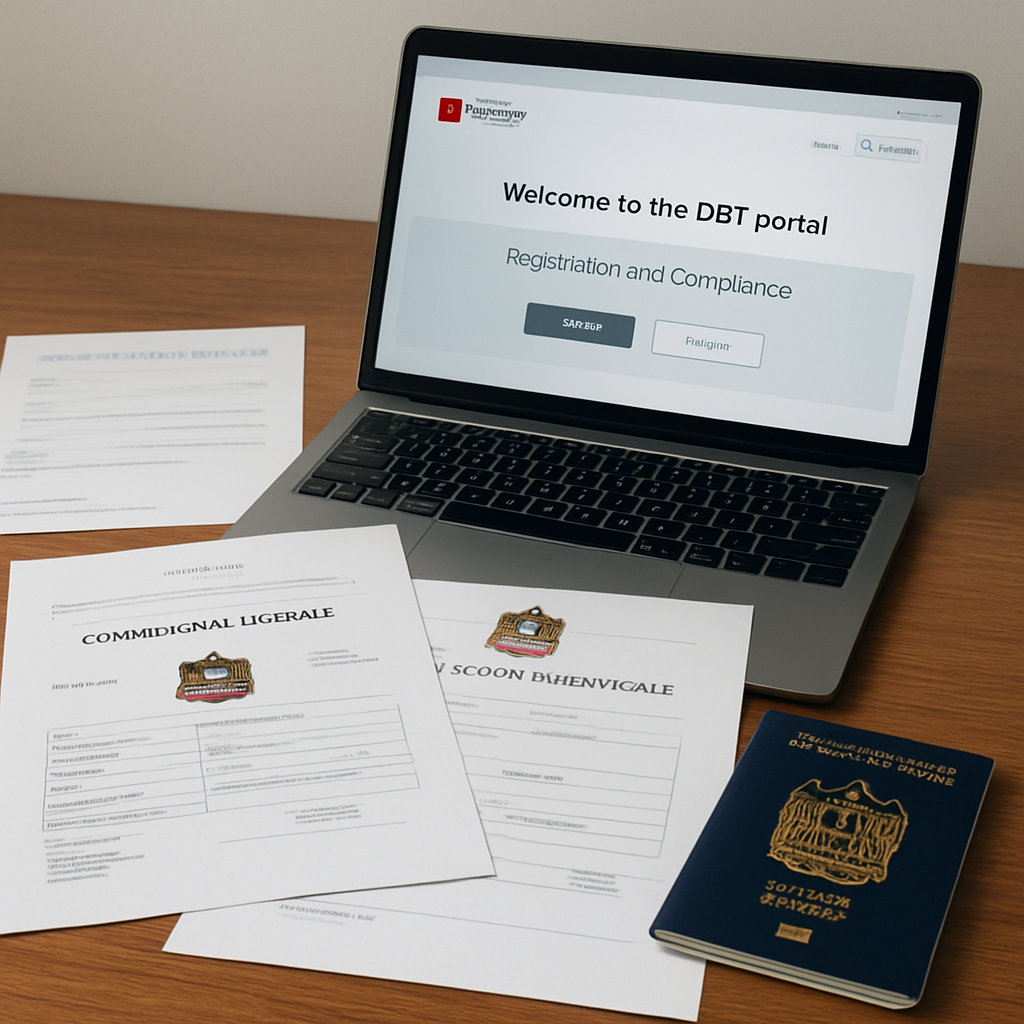
First, pull together the paperwork the Department of Economy and Tourism (DET) will ask for. You’ll need a clean copy of your free‑zone trade licence, a board resolution that authorises the mainland expansion, passport scans of every shareholder, and the local service agent’s ID if a sponsor is required.
Don’t forget the activity code you matched in Step 2 – it has to appear exactly as printed, otherwise the system will bounce your file back for “incorrect code”. A small typo can add a week or two to the timeline.
Submit Through the DET Portal
Log in to the DET e‑service portal and start a new “Mainland Branch/Permit” application. The wizard is straightforward: upload each document, select the activity code from the drop‑down, and confirm your office address (physical for a branch, virtual for a temporary permit).
Pay the flat fee – AED 5,000‑7,000 for a branch licence, about half for a permit – using the portal’s AED‑only payment gateway. You’ll receive a provisional reference number within minutes; keep it handy, it’s your ticket to the 10‑15 business‑day review window.
While you wait, run a quick “mock invoice” in your accounting software. Plug in the VAT rate (5 %) and the corporate‑tax exemption threshold, then verify the totals line up with what the DET expects. If something looks off, adjust now rather than after approval.
Secure VAT and Corporate‑Tax Registration
Once the DET gives you provisional approval, you must register for VAT on the Federal Tax Authority (FTA) portal if your expected annual turnover exceeds AED 375,000. The process mirrors the DET submission: upload your mainland licence, provide bank details, and confirm your taxable supplies.
The FTA will ask for the same set of documents you already prepared, plus a draft of your first‑year financial statements. In our experience, filing both registrations back‑to‑back saves you a couple of weeks of back‑and‑forth.
Tip: Use a dedicated ledger for mainland revenue.
Mixing free‑zone and mainland income in one ledger can trigger audit flags. Create a separate chart of accounts labeled “Mainland Operations” and map every invoice, expense, and payroll entry there. It keeps your corporate‑tax filing clean and makes the annual audit a breeze.
Set Up Your Mainland Office and Local Agent
If you’re going the branch route, you’ll need a physical office that meets the 150 sq ft per visa rule. Sign a tenancy contract, register it in Ejari, and obtain an NOC from the landlord. The NOC is a simple letter stating the landlord’s consent for you to operate a business from the space.
For a temporary permit, a flexi‑desk or virtual office certificate from an approved provider will do. Just make sure the address you enter in the DET portal matches the certificate exactly – the system validates the format.
Final Compliance Checklist
Before you hit ‘Submit’, run through this quick checklist to make sure nothing slips through the cracks.
- Confirm the activity code matches the DET list – no typos.
- Upload all required documents in PDF, under 5 MB each.
- Pay the licence fee and keep the receipt for audit purposes.
- Register for VAT and corporate tax within 30 days of licence issuance.
- Set up a separate mainland ledger and run a mock invoice test.
- Secure Ejari registration or virtual office proof, and obtain the landlord NOC if needed.
- Schedule a post‑approval meeting with your local service agent to confirm ongoing compliance deadlines.
When every checkbox is ticked, you’ll receive the final mainland licence or permit, and you can start invoicing UAE clients without a hitch. In our experience, the biggest surprise entrepreneurs face is the need for a clean, separate accounting trail – once that’s in place, the rest runs smoothly.
So, grab your documents, fire up the DET portal, and get that registration done. The mainland market is waiting, and you’re now fully equipped to tap into it.
FAQ
Can I operate a mainland branch if my free‑zone licence already covers the activity?
In most cases the free‑zone licence doesn’t automatically grant you mainland rights. The DET looks for a specific activity code that matches the mainland service you want to provide. If the code lines up, you can apply for a branch licence or a temporary permit. Otherwise you’ll need to apply for a separate mainland licence even if the underlying business is identical.
Do I need a local sponsor for a mainland branch?
Only certain activities still require a UAE national sponsor. Tech, media, and many consulting services now qualify for 100 % foreign ownership, but traditional trading or hospitality often need a local service agent who holds at least 51 % on paper. The sponsor usually charges an annual fee, so factor that into your cost model early.
What documents are absolutely essential for the DET application?
Think of it as a checklist you can print out: free‑zone trade licence copy, board resolution authorising the mainland expansion, passport scans of all shareholders, the exact activity code, and proof of office (physical lease for a branch or virtual office certificate for a permit). Every file must be a PDF under 5 MB and the activity code must match the DET list verbatim.
How long does the approval process usually take?
Once you hit “Submit” in the DET portal, the system generates a provisional reference number. The review window is typically 10‑15 business days. If the reviewers spot a typo in the activity code or a missing signature, they’ll send it back, adding another week. Starting the application early in the week helps you get feedback before the weekend.
Do I have to register for VAT and corporate tax separately?
Yes. After the mainland licence is issued, you must register for VAT on the FTA portal if your projected turnover exceeds AED 375,000. Corporate tax registration follows the same document set, so it’s efficient to submit both back‑to‑back. Keep mainland revenue in a dedicated ledger – mixing it with free‑zone income triggers audit flags.
Is a feasibility study worth doing before I expand?
Absolutely. A solid business feasibility study helps you gauge market demand, estimate the cost of a local office, and decide whether a branch or a temporary permit makes more sense. Our own business feasibility study tool walks you through revenue projections, sponsor fees, and compliance timelines, so you avoid costly surprises later.
What common pitfalls should I watch out for?
First, a mismatched address – the DET portal validates the exact format of your virtual office certificate, so a stray space can reject your file. Second, overlooking the separate ledger requirement; we’ve seen entrepreneurs get audited because mainland invoices were logged under the free‑zone chart of accounts. Finally, forgetting the one‑year renewal deadline – set a calendar reminder the day you receive the licence.
Conclusion
If you’ve made it this far, you already know that the answer to “can i do business in uae mainland with free zone company” is a confident yes—provided you follow the right steps.
Remember the three pillars: pick the correct activity code, keep mainland revenue in its own ledger, and lock in a local sponsor or 100 % ownership where the law allows.
What we’ve seen work best is to run a quick mock invoice before you hit submit. It catches VAT or corporate‑tax mismatches that could otherwise delay approval.
So, what’s your next move? List the mainland services you need right now, match them to the DET activity list, and schedule a 30‑minute call with a trusted advisor. That tiny planning session can save weeks of back‑and‑forth.
And don’t forget the renewal clock—set a calendar reminder the day you receive the licence. One missed deadline means you start the whole process over.
In short, the bridge between free‑zone and mainland is less about bureaucracy and more about clear paperwork and disciplined accounting. Take the checklist, act on it, and you’ll be invoicing UAE clients from the mainland in no time.
Ready to start? Grab our free checklist and move forward today.