Imagine scrolling through your favourite online store, wondering how that tiny business managed to sell worldwide from a tiny office in Dubai. The truth? They secured a UAE free zone e‑commerce license, which lets them operate tax‑efficiently, own 100% of their company, and ship across borders without the red tape you’d expect. That moment of “I wish I could do that too” is exactly what many entrepreneurs feel when they first hear about free zones. The good news? The requirements aren’t as scary as the headlines suggest. You’ll need a valid passport, a business plan that outlines your online activities, and proof of a physical or virtual office in the chosen free zone. Some zones also ask for a modest share‑capital deposit – often as low as AED 10,000 – but many offer flexible packages where you can start with a flexi‑desk or a virtual office to keep costs down. Costs vary by zone and licence type. For a basic e‑commerce licence in popular hubs like DMCC or RAK Free Trade Zone, you’re looking at a government fee of around AED 12,000, plus a service‑provider fee that usually ranges between AED 7,000‑15,000. Add a modest office or flexi‑desk fee (AED 3,000‑8,000) and you’re comfortably under AED 35,000 total – a fraction of what setting up a mainland company would cost. Here’s a quick snapshot: License fee: AED 10‑15k Registration & approval: AED 2‑4k Office/flexi‑desk: AED 3‑8k Annual renewal (government + service): AED 8‑12k Real‑world example: Sara, a fashion designer from Melbourne, chose the Dubai Multi‑Commodity Centre (DMCC) because it offers a dedicated e‑commerce licence that includes ware‑housing support. Within two weeks she had her licence, a virtual office, and a warehouse space for just AED 28,000. Six months later her online sales topped $200k, and the tax‑free environment meant she could reinvest more profit back into the brand. What we often see is that the biggest hurdle isn’t the paperwork – it’s knowing which free zone aligns with your product niche. Tech‑savvy sellers gravitate to Dubai Internet City, while retail‑heavy brands prefer DMCC or Ras Al Khaimah because of their logistics networks. If you’re ready to dive in, start by mapping your product flow, then use a reliable step‑by‑step guide to setting up a free‑zone company to keep you on track. And once your licence is in hand, you’ll need a platform to showcase your goods – check out Shopify alternatives for Australian small businesses for ideas that fit your budget and growth plans. Bottom line: the UAE free zone e‑commerce license requirements and costs are transparent, scalable, and designed for entrepreneurs who want to launch fast and scale globally. Let’s get your digital storefront officially licensed and watch the sales roll in. TL;DR In a nutshell, getting a UAE free zone e‑commerce license costs roughly AED 10‑15k for the licence, plus registration, office and renewal fees that usually stay under AED 35k total, giving you 100% ownership and tax‑free trading. We’ve seen entrepreneurs launch fast, keep costs low, and scale globally, so follow our quick checklist and start your licence journey today. Table of Contents Step 1: Determine Eligibility and Business Activity Criteria Step 2: Choose the Right Freezone for Your E‑Commerce Venture Step 3: Gather Required Documents and Legal Proofs Step 4: Cost Breakdown & Comparison Table Step 5: Submit Application and Pay Fees Step 6: Post‑Approval Setup – Bank Account, Visa, and Warehouse FAQ Conclusion Step 1: Determine Eligibility and Business Activity Criteria First thing’s first – do you actually qualify for an e‑commerce licence in a UAE free zone? It sounds bureaucratic, but the checklist is surprisingly short. If you can answer “yes” to the core questions below, you’re already past the biggest hurdle. Who can apply? Any foreign national with a valid passport can set up a free‑zone company, provided you don’t already own a mainland entity that conflicts with the zone’s rules. That means you don’t need a local sponsor or a UAE national partner – 100 % ownership is the norm. Think about it this way: you’re the captain of a ship, and the free zone is a calm harbour that lets you steer without anyone tugging on the helm. What business activities are allowed? Free zones carve out specific activity codes. For an e‑commerce licence, you’ll usually see codes like “Online Retail,” “Marketplace Platform,” or “Digital Services.” The key is to match your actual operations to the code – if you plan to sell physical goods, choose a retail code; if you’re offering SaaS, pick a digital services code. We often see entrepreneurs get tripped up by trying to bundle unrelated activities (like warehousing and consulting) under a single licence. The safe route is to start with the core e‑commerce activity and add others later via a supplemental activity request. Document checklist Passport copy (clear scan, no expiry within 6 months) Brief business plan – just 1‑2 pages outlining your product range, target market, and sales channels. Proof of address – this can be a virtual‑office agreement or a flexi‑desk contract in the chosen free zone. Bank reference or proof of initial share‑capital (often AED 10,000, but some zones waive it for virtual offices). That’s it. No need for a lengthy feasibility study unless you’re aiming for a massive inventory‑heavy operation. Choosing the right free zone Different zones cater to different product flows. Dubai Internet City is a magnet for tech‑focused marketplaces, while DMCC and RAK Free Trade Zone have strong logistics networks for physical goods. If you’re unsure, UAE Free Zone General Trading License Requirements Checklist – Complete Step‑by‑Step Guide walks you through the decision matrix. Does your product need a warehouse? Do you plan to ship internationally from Dubai’s ports, or will you rely on dropshipping? Those answers will steer you toward a zone with the right infrastructure. Cost considerations at this stage The eligibility phase itself doesn’t cost much – mostly the government fee for the licence (around AED 12 000) and the service‑provider fee (AED 7 000‑15 000). What really adds up is the office or flexi‑desk arrangement, which can be as low as AED 3 000 for a
Mirsal 2 Registration Steps for Dubai Free Zone Companies: A Complete Guide
Imagine you’re sitting in a coffee shop in Dubai, scrolling through the Mirsal 2 portal, and suddenly the registration form feels like a maze. You’re not alone – many entrepreneurs hitting the free‑zone market hit that same wall of uncertainty when they first encounter the mirsal 2 registration steps for dubai free zone companies. Here’s the good news: the process isn’t as cryptic as it seems once you break it down into bite‑size actions. First, you’ll need to gather your core documents – passport copies, a No‑Objection Certificate from your sponsor (if you have one), and a clear description of your intended business activity. Think of these as the passport stamps you need before you can board the flight to your new venture. Next, log into the Mirsal 2 system and create a new “Company Registration” request. You’ll be prompted to fill out the company name, select the free‑zone authority, and indicate the share capital. In our experience, choosing a modest share capital (often AED 10,000) speeds up approval because the free‑zone authorities can verify the amount quickly. After the initial entry, the system will generate a provisional licence number. At this point, you’ll upload the supporting documents we mentioned earlier. A handy tip: label each file clearly (e.g., “Passport_JohnDoe.pdf”) to avoid any back‑and‑forth with the authority. Once the documents are uploaded, you’ll pay the registration fee – typically ranging from AED 2,000 to AED 5,000 depending on the free‑zone. The payment gateway is integrated directly into Mirsal 2, so you’ll receive an instant receipt that you can keep for your records. Finally, the authority will review your submission. Most approvals come within 5‑7 business days. When you get the green light, you’ll receive an official licence copy via email, and you can proceed to open a corporate bank account, apply for visas, and start operating. Real‑world example: a tech startup we helped in Dubai Internet City completed the entire Mirsal 2 registration in just nine days, thanks to a clean document checklist and prompt fee payment. Another client, a trading firm in Jebel Ali, faced a minor hiccup when their activity description was too vague; a quick tweak saved them an extra week. If you’re feeling a bit overwhelmed, remember that you don’t have to navigate this alone. Our practical step‑by‑step guide to set up a free zone company in Dubai walks you through each screen of Mirsal 2, complete with screenshots and checklist templates. So, take a deep breath, follow these steps, and you’ll be one step closer to turning that Dubai free‑zone dream into a real, operational business. TL;DR In just a few minutes you’ll see how the mirsal 2 registration steps for dubai free zone companies turn a confusing portal into a clear, actionable checklist. Follow our quick rundown, avoid common pitfalls, and get your licence in under a week—so you can focus on launching your business, not paperwork. Table of Contents Step 1: Gather Required Documents for Mirsal 2 Registration Step 2: Submit Application and Review the Comparison of Free Zone Portals Step 3: Pay Fees and Obtain Preliminary Approval Step 4: Receive Final License and Register with Mirsal 2 Benefits Overview: Why Mirsal 2 Registration Matters for Your Free Zone Business Common Mistakes to Avoid During Mirsal 2 Registration Conclusion FAQ Step 1: Gather Required Documents for Mirsal 2 Registration First thing’s first – you can’t even start the Mirsal 2 wizard without the right paperwork in hand. It feels a bit like packing for a trip: you stare at a list, wonder why you need a spare pair of socks, then realize you’ll be sorry if you forget them. So, what exactly should be on that list? Here’s the core set that every entrepreneur chasing a Dubai free‑zone licence will need. 1. Personal identification Passport copy (clear, colour, with the bio‑data page visible). If you have a residency visa, tack that on too – the system will ask for it later. Tip: name the file Passport_YourName.pdf and keep the size under 2 MB. Mirsal 2 rejects anything bigger. 2. No‑Objection Certificate (NOC) from your sponsor If you’re a UAE national or have a local sponsor, you’ll need an NOC stating they have no objection to you setting up a free‑zone entity. It’s a one‑page letter on their official letterhead, signed and stamped. Don’t over‑think the wording – a simple “We have no objection…” works fine. 3. Business activity description Write a concise, yet detailed, description of what your company will do. Avoid vague phrases like “trading” – specify “import‑export of consumer electronics” or “software development services”. The free‑zone authority will reject anything that looks generic. Imagine you’re explaining your idea to a friend over coffee; that tone usually hits the sweet spot for clarity. 4. Share capital proof Most Dubai free zones accept a minimum share capital of AED 10,000. You can upload a bank statement or a capital deposit receipt. If you’re opting for a higher amount, attach the same kind of proof. Pro tip: label it ShareCapital_AED10k.pdf and include a short note at the top of the PDF – it saves the reviewer a click. 5. Office lease or virtual‑office agreement Free zones require a physical address, even if you’re using a flexi‑desk. Upload the lease agreement or the virtual‑office contract. Make sure the document shows the company name (or “to be assigned”) and the exact address. If you’re still hunting for space, many providers let you get a temporary agreement that you can replace later. 6. Board resolution (if applicable) For shareholder‑run entities, a signed resolution authorising the formation of the company and appointing the signatory for Mirsal 2 is mandatory. Keep it short – a paragraph with the resolution, signatures, and date. Even if you’re a sole proprietor, this document can act as a safety net if the authority asks for extra proof. 7. Additional supporting docs Depending on the free zone, you might need a copy of your Emirates ID, a recent utility bill for proof of address, or

UAE Free Zone General Trading License Requirements Checklist – Complete Step‑by‑Step Guide
Picture this: you’ve just decided to launch a general trading business in a UAE free zone, but the checklist of requirements feels like a maze. You’re not alone—most entrepreneurs hit the same wall when they first stare at the list of documents, fees, and regulatory steps. First off, the core of a general trading license is surprisingly straightforward: you need a valid passport copy, a business plan outlining your trading activities, and proof of a physical address or flexi‑desk within the free zone. In our experience, many clients skip the business plan or write something too vague, only to be sent back for clarification. A concise, two‑page plan that spells out the commodities you’ll handle, your target markets, and projected turnover usually does the trick. Next, you’ll face the capital requirement. Most free zones ask for a minimum share capital of AED 10,000, but some, like DMCC, waive it if you opt for a flexi‑desk. It’s worth checking the specific zone’s policy before you lock in your office choice. A real‑world example: a Dubai‑based electronics distributor saved AED 15,000 by choosing a flexi‑desk in a zone that didn’t enforce a share‑capital deposit. Don’t forget the approvals. If you plan to trade food items, you’ll need clearance from the Dubai Municipality; for electronics, a customs‑duty exemption request may be required. These extra steps can add a week or two to your timeline, so build that into your schedule. Here’s a quick actionable checklist to keep you on track: Gather passport copies and recent utility bills for proof of address. Draft a clear, two‑page business plan with your trading scope. Confirm the minimum share capital for your chosen free zone. Secure any sector‑specific approvals (e.g., food, electronics). Prepare a bank reference letter or proof of funds. Submit the application through the free zone’s online portal. And remember, you don’t have to navigate this alone. Platforms like How to Set Up a Free Zone Company in UAE: A Step‑by‑Step Guide walk you through each document and deadline, turning a daunting process into a manageable series of steps. So, grab this checklist, double‑check each item, and you’ll be well on your way to securing that general trading license without unnecessary delays. TL;DR If you’re ready to launch a trading business in a UAE free zone, our uae free zone general trading license requirements checklist condenses every document, fee and approval into an actionable list. Follow it, and you’ll breeze through the setup, getting licence and operations up and running faster than expected. Table of Contents Step 1: Define Your General Trading Activity and Scope Step 2: Choose the Right Free Zone for General Trading Step 3: Gather Mandatory Documents and Prepare Your Checklist Step 4: Submit Application, Pay Fees, and Track Approval Step 5: Receive Your License and Meet Post‑Issuance Compliance Conclusion FAQ Additional Resources Step 1: Define Your General Trading Activity and Scope Imagine you’ve just opened the notebook where you’ll sketch the whole trading business. The first line you write? What exactly are you going to sell, and where? Getting crystal‑clear on your activity isn’t just a formality for the free‑zone authority – it’s the compass that keeps you from wandering into costly revisions later. In the UAE free zone, the licence you apply for must match the specific commodities or services you intend to move. A vague “general trading” description will get sent back for clarification faster than you can say “re‑apply”. Map out the product families Start by listing every product family you plan to handle. Are you importing electronics, distributing construction materials, or moving fashion accessories? Write each category on its own line, then add a short note on the sub‑types (e.g., “smartphones, tablets, accessories”). This granular list helps the licensing team see that you’ve thought it through. Tip: If you anticipate adding new lines later, note it as a future activity – you can always file an amendment down the road. That way you avoid the surprise of having to apply for a brand‑new licence after you’re already trading. Define your market reach Who are you selling to? Local retailers, Gulf‑wide distributors, or overseas buyers? The free‑zone authority often asks for a brief market overview. Mention the primary regions (e.g., GCC, MENA, EU) and the channel you’ll use (online, B2B wholesale, retail stores). This shows you’ve scoped the scale of your operation. And remember, some zones have restrictions on certain product types – for instance, a zone focused on tech might charge extra for hazardous goods. Double‑check the zone’s activity list before you lock in your description. Match activity codes to the licence Every free zone publishes an activity code matrix. Find the code that aligns with your main product family. If you’re dealing with multiple families, pick the one that represents the bulk of your turnover and list the others as “supplementary activities.” This is where the step‑by‑step guide to set up a free zone company can save you time – it walks you through the code lookup process. Don’t forget to note any special handling requirements (e.g., temperature‑controlled storage for food, CE certification for electronics). Those details often pop up in the customs‑duty exemption or sector‑specific approval stages. Draft a concise activity statement Now turn that list into a two‑page business plan excerpt. Keep it punchy: “We will import and wholesale consumer electronics – smartphones, tablets, accessories – to retail chains across the GCC, using a flexi‑desk office in Dubai Airport Free Zone. Projected turnover for Year 1 is AED 1.2 million.” This sentence hits the what, where, and how without drowning the reviewer in fluff. Think about the future: add a line like “Additional product lines, such as smart home devices, will be introduced in Year 2 pending regulatory approval.” That signals growth intent without committing you to a broader licence now. Secure sector‑specific approvals early If any of your items fall under regulated categories – food, pharmaceuticals, or telecom equipment – you’ll need extra clearances. Start the paperwork with the relevant authority (e.g., Dubai Municipality for food,
How to Apply for a UAE Tax Residency Certificate for Free Zone Companies: Step-by-Step Guide
Ever stared at a blank form and wondered if you’re missing a secret step that could unlock smoother banking, easier invoicing, and that coveted “UAE‑based” credibility? That moment of uncertainty is exactly why getting a UAE tax residency certificate feels like a puzzle with a missing piece. For many entrepreneurs, especially those launching a free‑zone venture, the certificate isn’t just paperwork – it’s the key that tells the world (and the tax authorities) your company truly operates from the UAE. Without it, you might face higher withholding taxes abroad or struggle to prove your economic substance. Let’s walk through what we’ve seen work best. First, confirm your business meets the core criteria: a physical office or a virtual‑office lease in the free zone, a local bank account, and proof of actual commercial activity. Imagine you’ve just set up a tech startup in Dubai Internet City; you’ll need a tenancy agreement, recent bank statements, and a copy of your trade license. Next, gather the supporting documents. A typical checklist includes: Copy of the commercial licence issued by the free‑zone authority. Tenancy contract or a virtual‑office agreement showing a UAE address. Bank statement (minimum three months) from a UAE bank. Passport copies and Emirates IDs of the shareholders/directors. Proof of business activity – invoices, client contracts, or a business plan. Once you have everything, submit the application through the free‑zone’s online portal or directly to the Federal Tax Authority (FTA). Pay the modest fee (usually AED 200‑300) and wait for the FTA to verify your documents. In our experience, the turnaround is about two weeks if the file is complete. Pro tip: double‑check that the name on your bank account matches exactly the name on your trade licence; a mismatch can delay approval. Also, keep a copy of the “Economic Substance” declaration you filed – the FTA often cross‑references it when issuing the residency certificate. If you’re unsure about any step, Understanding UAE Corporate Tax for Free Zone Companies: A Practical Guide breaks down the tax landscape and why the residency certificate matters for compliance. So, grab your lease, fire up your bank statements, and get that certificate. It’s the small win that clears the path for larger growth. TL;DR If you’re ready to turn your free‑zone setup into a tax‑efficient UAE residency, follow our step‑by‑step guide on how to apply for a UAE tax residency certificate for free zone companies. You’ll learn the exact documents, fees, and submission tips that keep the process smooth and get approval in just a couple of weeks. Table of Contents Step 1: Determine Eligibility for the Tax Residency Certificate Step 2: Gather Required Documents Step 3: Submit Your Application Through the Free Zone Authority Step 4: Follow Up and Receive the Certificate Step 5: Leverage the Benefits of Your Tax Residency Certificate Comparison: Free Zone vs Mainland Tax Residency Requirements Conclusion FAQ Step 1: Determine Eligibility for the Tax Residency Certificate Picture this: you’ve just secured a prime office space in Dubai Internet City, the bank has approved your corporate account, and you’re ready to start invoicing overseas. The one thing that could still hold you back is whether your free‑zone company actually qualifies for a UAE tax residency certificate. Let’s break down the checklist so you can stop guessing and start ticking boxes. First, the FTA wants proof that your business truly “operates” in the UAE, not just exists on paper. That means you need a physical address or a recognized virtual‑office lease within the free zone you chose. A simple tenancy contract showing a UAE address usually does the trick – no need for a fancy skyscraper, a coworking desk works as long as it’s on the official lease. Second, you must have a local bank account that’s been active for at least three months. The FTA will ask for statements that show regular inflows and outflows, proving the company’s economic substance. If you’re a startup that’s only just opened the account, consider running a few internal transfers or receiving a client payment to create that activity. Third, the shareholders and directors need valid passports and Emirates IDs. The FTA checks that the individuals behind the company are identifiable and that their personal details match the company registration documents. If you’re a foreign investor, make sure your Emirates ID is linked to your residency visa – it’s a small detail that trips up many first‑time applicants. Business Activity Proof Now, let’s talk about the “proof of business activity” requirement. The FTA expects at least one of the following: recent invoices to UAE or overseas clients, signed contracts, or a concise business plan that outlines your services, target market, and projected revenue. For a tech startup, a handful of signed MOUs with regional partners can be enough. For a trading company, a copy of a recent customs clearance document works wonders. One common mistake is overlooking the “economic substance” declaration you may have filed earlier. The FTA often cross‑references that filing, so keep a copy handy. It shows you’ve already demonstrated that your core income‑generating activities are conducted in the UAE. Here’s a quick self‑assessment you can run: grab a spreadsheet and list each eligibility item – address, bank statements, IDs, activity proof. Mark “yes” or “no”. If you have more than one “no”, that’s a red flag you need to fix before you even open the FTA portal. And remember, the free‑zone authority you’re registered with may have its own extra requirements, like a minimum paid‑up capital or a local sponsor. Double‑check their guidelines – they’re usually posted on the authority’s website, or you can review our guide on UAE corporate tax for free‑zone companies for a quick reference. Once you’ve gathered everything, the actual application is surprisingly straightforward. Log into the FTA’s e‑services portal, fill out the “Tax Residency Certificate” form, and upload each document as a PDF. The system will validate file size and format, then you pay the AED 200‑300 fee. If you hit a snag, you might want
dmcc company setup cost 2024: Detailed Guide to Fees, Licenses, and Savings
Ever stared at a spreadsheet of fees and wondered if setting up a DMCC company in 2024 is worth the headache? You’re not alone. Many entrepreneurs feel a knot in their stomach when they see licence costs, and hidden admin charges piled together. But here’s the thing: the DMCC (Dubai Multi Commodities Centre) still packs a punch for startups that need a global trading hub, and the numbers aren’t as mysterious as they seem once you break them down. Think about it this way – instead of guessing, you can actually see each line item: the basic licence fee, the flexi‑desk or office rent, the registration charge, and the annual renewal cost. And if you’re a foreign investor, you’ll be relieved to know that 100% ownership is allowed, so you don’t have to hunt for a local sponsor just to meet a budget line. In our experience at UAE Free Zone Finder, the most common surprise is how a flexi‑desk can shave a few thousand dirhams off the total, turning a “premium” setup into a lean, cash‑friendly launch. So, what should you keep an eye on? First, the licence tier – trading, service, or e‑commerce – because each tier has its own price tag. Second, the office solution – a physical office, a virtual office, or a flexi‑desk – each comes with a different commitment length and cost. Third, the mandatory registration and PRO fees that pop up at the start and then reappear every renewal. But don’t let those figures freeze you out. Most clients we talk to end up saving 10‑15% by bundling services or opting for a shorter flexi‑desk term during the first year. Now, imagine you’ve got a clear, itemised budget in front of you. You can compare it to other free zones, decide if the DMCC’s strategic location and commodity focus are worth the premium, and move forward with confidence. Ready to demystify the numbers and see exactly what “DMCC company setup cost 2024” looks like for your business? Let’s dive deeper and turn those fees into a roadmap rather than a roadblock. TL;DR In 2024, DMCC company setup costs break down into a licence fee, office (flexi‑desk or physical) rent, registration, and annual renewal, each clearly itemised so you can compare options and avoid hidden surprises. By bundling services or opting for a shorter flexi‑desk term, many entrepreneurs shave 10‑15% off the total, giving you a realistic budget and confidence to launch your Dubai trade hub. Table of Contents Step 1: Choose the Right DMCC License Type Step 2: Calculate the Core Setup Fees Step 3: Add Optional Services and Their Costs Step 4: Compare Total Cost Scenarios Step 5: Optimize Costs with Savings Strategies Conclusion FAQ Step 1: Choose the Right DMCC License Type Imagine you’re scrolling through DMCC’s licence catalog and suddenly feel like you’re choosing a flavor at an ice‑cream shop – there are so many options, and each one promises a different sweet payoff. That moment of decision is where the real cost curve starts to form, because the licence you pick directly drives your dmcc company setup cost 2024 budget. First thing’s first: DMCC splits licences into three broad families – Trading, Service, and E‑commerce. Trading licences let you move physical commodities, metals, or even food items across borders. Service licences cover consulting, IT, or professional advice. E‑commerce licences are geared toward online storefronts, digital marketplaces, and drop‑shipping models. Now, you might be thinking, “Can I just pick any licence and add a flexi‑desk later?” Not quite. The licence type determines not only the activity you can legally perform, but also the mandatory fees that stack up each year – registration, PRO, and renewal fees all vary by family. How to match licence type to your business model Ask yourself three quick questions: What’s the core product or service you’ll sell? Will you need a physical warehouse or can you ship straight from a supplier? Do you plan to sell primarily online, or will you have a showroom? Answering those helps you land on the right bucket. For example, a tech startup that offers SaaS solutions will usually fit a Service licence, which is cheaper than a Trading licence because there’s no need for warehouse fees. But here’s a little nuance: DMCC often bundles additional activities onto a single licence for an extra charge. If you foresee expanding into trading later, it might be cheaper to add that activity now rather than filing a brand‑new licence down the road. And don’t forget the step‑by‑step guide on opening a company in a Dubai free zone. It walks you through the exact fee matrix for each licence family, so you can compare apples to apples before you sign anything. So, you’ve picked a Service licence. What’s next? Look at the “activity list” DMCC provides. Each activity carries a code and a price tag. Some popular codes like “Consultancy” or “Digital Marketing” are low‑cost, while “Import‑Export of Precious Metals” can add a few thousand dirhams to your annual bill. Practical tip: start lean, scale later Most entrepreneurs I talk to begin with the minimal viable activity – the one that lets them generate revenue right away. Then, as cash flow improves, they upgrade or add new activities. This staged approach can shave 10‑15% off the total dmcc company setup cost 2024 because you avoid paying for unused privileges. Speaking of scaling, once your licence is set, you’ll need a professional online presence. That’s where a partner like Free Website Chick can help you spin up a polished website without blowing your budget. And if your business leans into the crypto or blockchain space, you might want to consult legal experts early on. NeosLegal UAE Crypto Lawyers specialize in compliance for innovative ventures operating out of DMCC. Don’t overlook the practical side of paperwork either. The PRO (Public Relations Officer) fee is a fixed amount tied to your licence type, and it covers the visa processing for you and any employees you

What is a UAE Free Zone Company: Complete Guide to Setup and Benefits
Imagine you’re scrolling through a sea of business opportunities and you stumble upon the term “UAE free zone company.” You feel a spark of excitement, but also a flicker of confusion – what does it actually mean, and why does everyone rave about it? At its core, a UAE free zone company is a business entity that lives inside a specially designated economic area where the government offers a bundle of incentives: zero corporate tax for a set period, 100% foreign ownership, and streamlined customs procedures. Think of it as a sandbox where the rules are tweaked to let entrepreneurs focus on growth instead of paperwork. For example, a tech startup from Berlin set up in Dubai Internet City and within three months was able to hire talent from over 20 nationalities without needing a local sponsor. A boutique fashion brand from Mumbai chose Jebel Ali Free Zone because the proximity to the port cut shipping costs by 15%, and the company could ship directly to Europe under a duty‑free regime. So, why does this matter to you? If you’re an entrepreneur eyeing the Middle East, a free zone gives you a fast‑track entry point. You can register your company in as little as 7‑10 days, open a corporate bank account, and apply for a residence visa for yourself and key staff. In many zones, you even get access to flexi‑desk or virtual office solutions, meaning you don’t have to lease a full office right away. But there are nuances. Each free zone tailors its license types – commercial, service, industrial, or educational – to match specific activities. Selecting the right one determines what you can legally do. A common pitfall is assuming all free zones are the same; Dubai Media City, for instance, is ideal for advertising agencies, while Ras Al Khaimah’s free zones cater more to manufacturing. Want a deeper dive? Our step‑by‑step guide to set up a free zone company in the UAE walks you through choosing a zone, preparing documents, and navigating the licensing process. And if your venture involves crypto or blockchain, you’ll likely need specialized legal advice – consider consulting NeosLegal UAE Crypto Lawyers to ensure you stay compliant with the latest regulations. Bottom line: a UAE free zone company is more than a legal wrapper; it’s a launchpad designed to minimize friction and maximize flexibility. As you explore this option, keep your business model front‑and‑center, match it with the right zone, and you’ll unlock a pathway that many entrepreneurs have found to be both cost‑effective and growth‑friendly. TL;DR A UAE free zone company lets you own 100 % of your business, enjoy zero‑tax incentives and set up quickly with flexi‑desk or virtual office options, making it ideal for entrepreneurs, investors and consultants looking to jump‑start operations in the Middle East. By matching your activity to the right zone—like Dubai Internet City for tech or Jebel Ali for logistics—you can cut costs, speed visa processing and focus on growth rather than paperwork. Table of Contents Step 1: Determine the Right UAE Free Zone for Your Business Step 2: Choose the Appropriate License Type Step 3: Prepare Documentation and Legal Requirements Step 4: Submit Application and Obtain Your License Step 5: Set Up Bank Account, Office Space, and Visa Process Offshore vs Free Zone Company Setup in UAE FAQ Conclusion Step 1: Determine the Right UAE Free Zone for Your Business First thing’s first – you need to ask yourself what your business actually does day‑to‑day. Is it a tech startup that lives on cloud services, a fashion label that ships physical goods, or a consultancy that sells advice? The answer will steer you toward the free zone whose ecosystem, licensing rules, and infrastructure line up with your activity. Picture this: you’ve just built a prototype app and you’re itching to launch. You might gravitate toward Dubai Internet City because it clusters with other tech firms, offers co‑working spaces, and even hosts venture‑capital events. On the other hand, if you’re importing electronics and need a port nearby, Jebel Ali Free Zone (JAFZA) cuts your logistics headaches dramatically. Map your core activity to a zone’s specialization Most free zones publish a list of permitted activities. Grab that list and highlight the ones that match your primary service or product. If you see “e‑commerce” or “online retail” under a zone’s catalogue, that’s a green light. If the activity isn’t listed, you’ll have to request a special license – which can add time and cost. Tip: Keep an eye on ancillary services. Some zones, like Dubai Media City, also give you easy access to media‑production facilities, which can be a bonus if you need video content for your brand. Consider visa and staffing requirements Free zones differ on how many visas you can obtain with a single license. For a solo founder, a flexi‑desk option with one visa might be perfect. If you plan to bring in a small team of developers, look for zones that allow multiple employment visas without ballooning fees. We’ve seen entrepreneurs trip up by choosing a zone with a cheap license but strict visa caps, only to discover they need to relocate staff elsewhere. A quick check on the zone’s website saves you that headache. And don’t forget the residency angle – many zones bundle a residence visa with the license, meaning you can live and work in the same place. That’s a massive perk for foreign investors. Factor in cost and flexibility License fees, office rent, and hidden administration costs vary widely. Some zones charge a flat fee for a virtual office, while others require a physical space. If cash flow is tight, a virtual‑office‑friendly zone can keep your overhead low while you focus on product‑market fit. Once you’ve narrowed down three or four candidates, compare the total cost of ownership: registration fee, annual renewal, visa cost per employee, and any mandatory service charges. Create a simple spreadsheet – it turns the decision from “gut feeling” to “data‑backed.” Need a deeper dive? Our
Meydan Free Zone Licence Cost 2024: Detailed Breakdown for New Businesses
Picture this: you’ve just landed a promising crypto startup idea and the buzz about Meydan Free Zone keeps popping up in every forum you read. You’re excited, but the first question that hits you is – how much does a Meydan free zone licence actually cost in 2024? That’s a fair worry. The numbers can feel like a maze of fees, hidden charges, and variable costs depending on your business activity. In our experience, many entrepreneurs get stuck at this stage, watching their enthusiasm wane because the budget feels unclear. Let’s break it down together. The core licence fee usually starts around AED 15,000, but that’s just the tip of the iceberg. You’ll also need to factor in the registration fee (about AED 5,000), a security deposit that can range from AED 10,000 to AED 30,000, and the cost of a physical office or flexi‑desk – which can be another AED 10,000‑20,000 a year. On top of that, there are annual renewal fees, typically 10‑15% of the original licence cost. Here’s a quick snapshot: Initial licence fee: AED 15,000‑20,000 Registration & admin fees: AED 5,000‑7,000 Office/flexi‑desk rent: AED 10,000‑20,000 per year Security deposit: AED 10,000‑30,000 (refundable) Annual renewal: ~12% of licence fee That adds up, but the good news is you can tailor the package to fit your cash flow. For example, a tech startup that only needs a flexi‑desk can shave off up to AED 10,000 compared to a full‑scale office. We’ve seen small‑scale e‑commerce firms launch with a total upfront outlay of roughly AED 35,000, while a larger logistics operation might budget closer to AED 70,000. One practical tip: always ask for a detailed cost breakdown before you sign anything. Some providers bundle services that you might not need, like premium support or extra visa slots. By dissecting the invoice, you can negotiate to drop unnecessary items and keep your budget lean. If you’re still unsure about the exact numbers for your specific activity, our Rakez Licence Cost 2024: Detailed Breakdown for Entrepreneurs guide offers a comparable cost model that can help you estimate the Meydan fees more accurately. And remember, the licence cost is just one piece of the puzzle. Legal compliance, especially for crypto‑related businesses, can add another layer of expenses. That’s why many founders turn to specialists like NeosLegal UAE Crypto Lawyers to navigate the regulatory landscape without surprises. Bottom line: with a clear view of each fee component and a few smart negotiations, the Meydan free zone licence becomes a manageable step rather than a roadblock. Ready to crunch the numbers and move forward? TL;DR The Meydan free zone licence cost 2024 starts around AED 15,000 plus registration, office and security fees, totalling roughly AED 35‑70 k depending on your setup. Break down each component, negotiate unnecessary add‑ons, and use our guide to keep expenses lean while staying compliant for crypto or e‑commerce ventures alike in 2024. Table of Contents Understanding the Base Licence Fee Structure Additional Costs and Fees to Anticipate Comparison of Licence Costs Across Meydan Free Zone Categories How to Calculate Total Startup Cost for Your Business Cost‑Saving Strategies and Discounts Available in 2024 Step‑by‑Step Process to Secure Your Licence in 2024 FAQ Conclusion Understanding the Base Licence Fee Structure When you first saw the headline “Meydan free zone licence cost 2024,” you probably wondered what exactly you’re paying for. The base licence fee is the foundation – it covers the authority’s right to let you operate under the Meydan banner, and it’s the number you’ll see on every invoice. Here’s the good news: the base fee isn’t a mysterious, ever‑changing figure. In 2024 the Department of Economic Development in Meydan has set a standard tier that most activities fall into, and it usually lands between AED 15,000 and AED 20,000 per year. That range reflects the type of business activity – a simple e‑commerce shop sits at the lower end, while a fintech or crypto‑focused venture leans toward the higher end because of the extra regulatory oversight. But the base licence isn’t the only line item you’ll encounter. Think of it as the rent for the legal “space” you occupy. On top of that you’ll pay a registration fee (around AED 5,000), a security deposit (refundable, typically AED 10,000‑30,000 depending on your office choice), and any optional add‑ons like extra visa slots or a dedicated desk. Those extras can push the total outlay to AED 35,000‑70,000, which is why breaking down each component matters. So, how do you actually calculate the base fee for your specific scenario? Follow these three quick steps: Step 1 – Identify your activity code Identify your activity code. Meydan publishes a catalog; most digital‑service activities sit in Code 101‑001 which carries the AED 15,000 base. Step 2 – Check for special endorsements Check if your activity requires a special endorsement. Crypto licensing, for example, adds a modest surcharge of AED 2,000‑3,000. Step 3 – Add mandatory extras Add any mandatory extras. The minimum office requirement in Meydan is a flexi‑desk at AED 10,000 per year; if you opt for a private office, expect an additional AED 5,000‑10,000. Put those numbers together and you have a transparent picture of what you’ll owe before you even sign the contract. If the total feels a bit steep, remember you can negotiate the office component – many entrepreneurs start with a flexi‑desk and upgrade later. Our step‑by‑step guide to opening a company in Dubai free zone walks you through the paperwork, so you won’t miss a single fee. A common mistake is to overlook the security deposit. It’s fully refundable once you hand back your licence, but it ties up cash for the first year. If cash flow is tight, ask the free‑zone authority if you can split the deposit into two installments – they often accommodate startups. Once the licence is active, you’ll also have to budget for annual renewal, which is usually 10‑12% of the original base fee. That means if you paid AED 18,000 this year, expect around AED 1,800‑2,200 next year just to keep the licence alive. Now, beyond the numbers, think
Customs Duty Exemption in UAE Free Zones: A Complete Guide for Businesses
Ever stood in a shipping yard, watching pallets being loaded, and thought, “Why am I paying customs duties on goods that are just passing through?” That’s the exact frustration many entrepreneurs feel when they first explore importing to the UAE. The good news? If you set up in a UAE free zone, most of those duties disappear. Customs duty exemption UAE free zones means you can bring in raw materials, equipment, or finished products without the usual 5 % import tax, and in many cases you won’t pay any VAT on the transaction either. Take Ali, a tech startup founder who needed high‑end servers for his data‑center. By registering in Dubai Internet City, he moved the hardware straight from Shenzhen to the zone and saved roughly AED 30,000 in duties alone – money he could reinvest in software development. Or consider Fatima, who runs a boutique fashion label. She sources fabrics from Bangladesh; once her garments are stored in Jebel Ali Free Zone they’re exempt from customs until she decides to sell them on the UAE mainland, at which point a modest duty applies only on the final sale. So how does the exemption actually work? First, your company must be a legal entity licensed within the free zone. Second, the goods must enter the zone’s designated customs warehouse or logistics hub. Third, you’ll need a valid import‑export licence – the same document that lets you move items in and out without triggering standard customs procedures. Here’s a quick checklist you can run through right now: 1️⃣ Choose a free‑zone that aligns with your industry (tech, logistics, manufacturing, etc.). 2️⃣ Apply for the free‑zone license and the import‑export permit. 3️⃣ Set up a customs account with the UAE Federal Customs Authority. 4️⃣ Declare your goods as ‘in‑zone’ to benefit from the duty‑free status. If you’re unsure which zone offers the best mix of infrastructure and tax breaks, our guide Understanding UAE Free Zones: Opportunities for Businesses and Investors walks you through the top options, from Sharjah Airport International Free Zone’s proximity to the air cargo hub to Ras Al Khaimah’s low‑cost warehousing. Finally, remember that duty exemption isn’t a blanket free‑ride. Keep records of all import documents, track the movement of goods, and file periodic reports to avoid penalties. A disciplined approach ensures you reap the savings year after year. Ready to stop overpaying on customs? Start by mapping your supply chain, pick the right free zone, and get that import‑export licence. The exemption is there – you just have to claim it. TL;DR If you set up your business in a UAE free zone, you can tap into customs duty exemption uae free zones, eliminating the standard 5% import tax and often avoiding VAT on inbound goods. Follow our checklist—choose the zone, secure an import‑export licence, and track paperwork to lock in savings. Table of Contents Step 1: Determine Eligibility for Customs Duty Exemption Step 2: Gather Required Documentation Step 3: Apply Through the Free Zone Authority Step 4: Meet Compliance and Reporting Requirements Step 5: Leverage Tax Benefits & Ongoing Support Step 6: Compare Major UAE Free Zones for Duty Exemption Efficiency FAQ Conclusion Step 1: Determine Eligibility for Customs Duty Exemption Imagine you’re standing on the loading dock, watching a container truck roll in, and you realize you could be paying an extra 5 % on everything inside. That gut‑check moment is what pushes many entrepreneurs to dig into the customs duty exemption UAE free zones rules. First thing you need to confirm: is your company a legally‑registered free‑zone entity? If you’ve already secured a free‑zone license (or are about to), you’re halfway there. The exemption only applies when the business itself is the owner of the goods, not a third‑party distributor. Check the company structure Free‑zone companies must be 100 % owned by the investor, with a clear trade name and a registered office inside the zone. If you’re a foreign investor, that’s actually a plus – you don’t need a local sponsor, and the customs authority recognises your entity straight away. In our experience, the simplest way to verify this is to pull your licence copy and look for the clause that mentions “Customs duty exemption applies to all imports under this entity”. If that line is missing, you’ll need to request an amendment from the zone authority. Identify the eligible goods Not every item qualifies. The exemption covers raw materials, components, and capital equipment that will be used in your free‑zone‑based operation. Finished goods destined for re‑export are also covered, but once they move to the mainland market the standard 5 % duty kicks in. Think about your supply chain: are you importing fabric for a fashion line, or servers for a data‑center? Both are classic examples that usually meet the criteria, as long as you can prove they’ll stay in‑zone until you decide to sell locally. Tip: keep a simple spreadsheet that logs the HS code, invoice value, and intended use for each shipment. Customs officers love paperwork – the more transparent you are, the smoother the process. Secure an import‑export licence This is the magic ticket. Without a valid import‑export licence, even a perfectly structured company can’t claim the duty‑free status. The licence ties your customs account to your free‑zone entity and tells the Federal Customs Authority that the goods are moving under a “in‑zone” declaration. We often recommend using the detailed guide on custom duty exemptions overview to double‑check the exact paperwork required for each free‑zone you’re considering. Once the licence is approved, you’ll receive a customs account number. Plug that into your shipping documents, and you’ll see the duty line disappear on the entry form. Practical checklist Verify your free‑zone licence mentions customs exemption. Confirm the goods fall under eligible categories (raw materials, capital equipment, re‑exportable items). Apply for and obtain a valid import‑export licence linked to your customs account. Maintain a clear record of HS codes, invoices, and intended use for every shipment. And don’t forget the little things that can trip you up:
VAT Registration for UAE Free Zone Companies: A Step‑by‑Step Guide
Imagine you just secured a slick office space in Dubai Internet City and your first client is ready to pay. You’re thrilled, but then a notification pops up from the Federal Tax Authority saying you need to register for VAT. Suddenly that excitement feels a bit shaky, right? The good news is, VAT registration for UAE free zone companies isn’t as intimidating as it looks. If your annual taxable supplies cross the AED 375,000 threshold – or even if you expect to stay below it but want to claim input tax – you’ll need to file a registration application. Entrepreneurs we’ve worked with often overlook the fact that free‑zone entities can still be liable once they engage with mainland customers or import goods. Here’s a quick, down‑to‑earth checklist you can follow right after you sign the licence agreement: Gather your trade license, passport copies and a recent bank statement. Prepare a detailed description of your business activities, focusing on the supply of goods or services. If you import, keep your customs invoices handy; if you export, have the sales contracts ready. Create a simple projected turnover sheet for the next 12 months – the FTA likes to see numbers. Once you have those docs, log into the FTA’s e‑services portal, choose ‘VAT Registration’, and upload the files. The system usually responds within two weeks. If approved, you’ll receive a Tax Registration Number (TRN) and can start issuing tax invoices. A common pitfall is forgetting to update your invoice template; make sure the TRN, VAT amount and ‘Taxable Supply’ label are clearly shown. What many free‑zone founders don’t realize is that early registration can actually save money. By being VAT‑registered you can reclaim the 5 % tax on office rent, telecom bills and even on the equipment you bought to launch your startup. In our experience, a small e‑commerce outfit in Jebel Ali saved roughly AED 12,000 in its first year just by filing the correct input‑tax claims. For a deeper dive into the filing obligations, check out our guide on Corporate Taxation – UAE Free Zone Finder, which walks you through the post‑registration compliance calendar. If your business involves crypto assets or you’re unsure about how VAT interacts with digital tokens, a quick consult with specialists like NeosLegal UAE Crypto Lawyers can clear up the gray areas and keep you on the right side of the law. Bottom line: treat VAT registration as the first legal milestone, not a bureaucratic afterthought. Grab those documents, hit the portal, and you’ll be free to focus on growing your free‑zone venture. TL;DR VAT registration for UAE free zone companies unlocks input‑tax refunds, keeps you compliant, and lets you issue proper tax invoices from day one. Gather your trade license, passport, bank statement, and projected turnover, then upload them via the FTA portal; approval usually arrives within two weeks, saving time and headaches. Table of Contents Step 1: Confirm VAT Eligibility for Your Free Zone Business Step 2: Gather Required Documents and Prepare Your Application Step 3: Submit Your VAT Registration via the FTA E‑Services Portal Step 4: Post‑Registration Compliance and Ongoing Reporting Step 5: Common Pitfalls and How to Avoid Them Additional Resources for Free Zone VAT Registration FAQ Conclusion Step 1: Confirm VAT Eligibility for Your Free Zone Business When you first land that shiny free‑zone licence, the next question that pops up is: “Do I really need to register for VAT?” If you’ve felt that flutter of doubt, you’re not alone. Most entrepreneurs in Dubai Internet City or Jebel Ali wonder whether the 5 % tax will bite them. Here’s the simple truth: the Federal Tax Authority (FTA) draws a clear line – if your taxable supplies (goods or services) are expected to cross AED 375,000 in a 12‑month period, you must register. Even if you think you’ll stay under that figure, you might still want to register to reclaim input tax on rent, utilities, and equipment. Check the numbers you already have Grab the spreadsheet you used for your business plan. List every projected invoice – from consulting fees to software subscriptions – and add up the total. If the sum lands anywhere near the AED 375k mark, flag it. If you’re still shy of the threshold, ask yourself two questions: Will you start selling to mainland UAE clients soon? Do you import raw materials or equipment that carry VAT? Answering “yes” to either means you’ll benefit from registration now rather than scrambling later. What the FTA actually looks for The FTA isn’t interested in your hopes; they want concrete evidence. They’ll ask for: A copy of your free‑zone trade licence. Passport copies of the shareholders. A recent bank statement showing business activity. A one‑page turnover projection (that’s the one you just crunched). All of these live in the same folder you used for the initial licence application, so you won’t be hunting for extra paperwork. Quick tip: Use a VAT eligibility calculator There are a handful of free tools online that let you plug in your expected revenue and instantly tell you if you cross the threshold. A quick Google search for “UAE VAT eligibility calculator” will surface a few reliable options. Just make sure the calculator is up‑to‑date with the 2023‑24 FTA rules. And remember, once you’re registered, you’ll receive a Tax Registration Number (TRN) that you’ll need on every invoice. That tiny number is what unlocks your ability to claim back the 5 % on eligible expenses. When in doubt, ask a specialist If your business involves crypto assets, digital services, or anything that feels a bit “grey,” a quick consult with a UAE‑focused law firm can save you headaches. Specialists understand how VAT interacts with emerging sectors and can confirm whether you truly need to register now. In our experience, a handful of startups waste weeks chasing a late registration only to discover they could have claimed AED 10‑15k in input tax earlier. It’s a small price to pay for peace of mind. For a deeper dive into the filing obligations, check out our
Ultimate Beneficial Owner UAE Filing Free Zone: Complete How‑To Guide
Imagine you’re scrolling through the free‑zone portal, heart racing because you finally found the perfect spot for your startup, only to hit a wall: the paperwork asks for the ultimate beneficial owner (UBO) details. You’re not alone – that moment of “wait, what exactly do they need?” hits most entrepreneurs the first time they register a free‑zone company. In the UAE, the UBO filing isn’t just a bureaucratic checkbox; it’s the government’s way of knowing who truly controls the business. For foreign investors, especially those in tech or crypto, this can feel like an extra layer of scrutiny. But here’s the good news: the process is pretty straightforward once you break it down. First, gather the basics: full legal name, passport number, nationality, and a clear description of ownership percentage. If you own multiple entities, you’ll need to map the chain of ownership back to the natural person who ultimately benefits. Think of it like tracing a family tree, but for shares. Next, prepare a concise UBO declaration. It should state the individual’s role, the percentage of voting rights they hold, and any other direct or indirect interests. Many free‑zone authorities now accept this as a digital PDF uploaded through their portal, so you don’t have to mail a stack of paper. Here’s a quick actionable checklist: Identify every individual who holds 25% or more of the company’s shares. Collect passport copies, proof of address, and a signed declaration form. Map any intermediate entities (e.g., a holding company) back to the natural person. Upload the compiled file to the free‑zone authority’s online portal. Confirm receipt and keep a copy for your records – you’ll need it for future audits. Real‑world example: a Dubai‑based fintech startup discovered that its investor, a holding company registered in Cyprus, needed to disclose the actual shareholders behind it. By laying out the ownership chain clearly, the filing was approved in under 48 hours, and the company could move on to opening a corporate bank account. And don’t forget that the UBO information ties directly into your overall corporate structuring. A well‑planned structure not only satisfies regulators but also positions you for tax efficiency and smoother expansion. For deeper insight on how to align your ownership layout with UAE free‑zone rules, check out our guide on CORPORATE STRUCTURING – UAE Free Zone Finder. Bottom line: the UBO filing is a one‑time effort that pays off in peace of mind and compliance confidence. Gather your documents, map the ownership, upload, and you’re set to focus on growing your business. TL;DR The ultimate beneficial owner UAE filing free zone is a one‑time, straightforward process that, once you gather the required personal documents, map any ownership chains, and upload the declaration, clears compliance hurdles and lets you focus on growing your business. Follow our quick checklist—identify shareholders with 25%+ stakes, collect passports and proof of address, link intermediate entities to natural persons, submit via the portal, and keep a copy for audits—to ensure smooth approval within days. Table of Contents Step 1: Understand UBO Legal Requirements in UAE Free Zones Step 2: Gather Required Documents for UBO Filing Step 3: Submit Your UBO Declaration – Process Walkthrough Step 4: Compare Filing Procedures Across Major Dubai Free Zones Step 5: Post‑Filing Compliance and Ongoing UBO Obligations FAQ Conclusion Step 1: Understand UBO Legal Requirements in UAE Free Zones First thing’s first – the term “ultimate beneficial owner” sounds fancy, but at its core it’s just the natural person who ultimately controls a company. In the UAE free‑zone world, the regulator wants to know who that person is, what share they hold, and how they exercise voting rights. Why does it matter? If you’re an entrepreneur or a foreign investor, the authorities will ask for this info during the company registration or any subsequent amendment. Miss a detail and you could face delays, fines, or even a forced amendment later on. So, what does the law actually require? Across most free zones the rule of thumb is any individual owning 25 % or more of the share capital—or exercising equivalent control—must be disclosed. Some zones also ask for anyone who can ultimately benefit, even if their direct share is below 25 % but they sit behind a holding company. Here’s the checklist you’ll need to satisfy the legal requirement: Full legal name (as it appears on the passport). Passport number, nationality, and date of birth. Exact percentage of voting rights or share ownership. Proof of address (utility bill, bank statement, or tenancy contract). Signed UBO declaration form (usually a one‑page PDF). And if your ownership structure includes intermediate entities—say a Cyprus holding company— you’ll have to map that chain back to the natural person. Think of it like tracing a family tree, but each branch is a corporate entity. Need a quick visual? Most free‑zone portals let you upload a simple spreadsheet that links each entity to its ultimate owner. Keep it clean: one row per person, one column for each entity, and a final column for the ownership percentage. Now, a common pitfall: forgetting to include directors who also hold significant voting power. Even if a director only has 10 % of shares, but they can direct the company’s decisions, they’re considered a UBO in many zones. Double‑check the free‑zone’s specific guidance. What about documentation? You’ll usually upload a scanned passport, a recent utility bill, and the signed declaration. Make sure the passport copy is clear—no blurry edges—because the portal’s OCR can reject poor images. Once you hit “submit,” the authority typically reviews the file within 48‑72 hours. If everything lines up, you’ll receive a confirmation email and the UBO info gets stamped onto your company’s record. Keep a copy for your own records; you’ll need it for future audits or bank account opening. Need more context on how the ownership layout fits into the broader picture? Our Corporate structuring guide walks you through aligning your shareholding with UAE free‑zone rules, so you don’t end up re‑structuring later. If you’re in the crypto or

Economic Substance Regulations UAE Free Zones Reporting: A Complete Guide
If you’ve ever stared at a blank compliance form and felt the knot in your stomach tighten, you’re not alone. The Economic Substance Regulations (ESR) for UAE free zones are designed to prove that your company really “does business” inside the Emirate, not just on paper, but the reporting requirements can feel like navigating a maze with shifting walls. Take Ahmed, an entrepreneur launching a fintech startup in the Dubai International Financial Centre. He thought filing a simple annual return would be a breeze, yet the regulator asked for detailed records of staff hours, local expenditures, and a genuine business‑activities narrative. After a few back‑and‑forth emails, Ahmed realized he needed a systematic approach. What we’ve seen work best is breaking the ESR reporting process into four bite‑size steps: 1️⃣ Map every core activity to a specific UAE‑based function – sales, management, or R&D.2️⃣ Log the actual qualified personnel and the time they spend on each activity – even a part‑time accountant counts.3️⃣ Capture all local operating costs – rent, utilities, and professional fees.4️⃣ Draft the “Economic Substance Report” that ties the three pillars together, then submit it through the Federal Tax Authority portal. For small business owners, the trick is to embed the data collection into everyday tools. A cloud‑based spreadsheet that automatically pulls payroll hours, or a simple bookkeeping app that tags expenses by “ESR” can save hours each quarter. And remember, the deadline isn’t just a date on the calendar – missing it can trigger a 20 % penalty on your assessed tax liability. That’s why many of our clients set a calendar reminder three months before the filing window opens. Need a concrete example? A consultancy operating out of a flexi‑desk in Ras Al Khaimah logged only 120 hours of local staff time in 2023. By aligning those hours with a modest rent invoice, they comfortably met the “substance” threshold and avoided any fines. When you’re juggling setup, licensing, and now ESR reporting, it helps to have a partner who understands the nuances. Corporate Taxation – UAE Free Zone Finder breaks down the filing mechanics and offers templates you can adapt. So, what’s your next move? Start by gathering your staff time sheets this week, match them to your core activities, and set a reminder for the ESR submission deadline. With a clear plan, the regulations become a checkpoint rather than a roadblock. TL;DR Navigating the economic substance regulations uae free zones reporting can feel like a maze, but with a clear four‑step process you can confidently map activities, log staff time, capture local costs, and submit a compliant report without penalties. Start by gathering your time‑sheets this week, align them with core activities, and set a calendar reminder three months before the filing deadline to keep everything on track. Table of Contents Step 1: Understand the Scope of Economic Substance Regulations for UAE Free Zones Step 2: Determine Reporting Obligations and Thresholds Step 3: Prepare Required Documentation and Financial Records Step 4: Submit the Economic Substance Notification and Annual Report Step 5: Common Pitfalls and How to Avoid Penalties Step 6: Ongoing Compliance and Best Practices for UAE Free Zone Entities FAQ Conclusion Step 1: Understand the Scope of Economic Substance Regulations for UAE Free Zones First thing’s first – you need to know exactly what the regulator is asking for. It’s not enough to hear “economic substance” and assume it’s just a buzzword. The Federal Tax Authority (FTA) expects you to prove that real, UAE‑based activities are happening, and they do it through three pillars: qualified personnel, core income‑generating activities, and local expenditures. Does that sound overwhelming? Imagine you’re opening a coffee‑shop in a free zone. The regulator will want to see that baristas are actually working in the UAE, that the shop is selling coffee (not just a shell company), and that you’re paying rent, utilities, and buying beans locally. Same idea, just with a fintech or consulting firm. Map Your Core Activities Grab your business plan and highlight every activity that creates revenue. Is it software development, asset management, or perhaps logistics? Write them down in plain language – “we develop blockchain‑based payment solutions” is clearer than “we provide fintech services.” This list becomes the foundation for the rest of the reporting. Tip: If you’re not sure whether an activity qualifies, think about where the decision‑making happens. If the strategy is set in Dubai and the team executing it is based there, you’re likely in the clear. Identify Qualified Personnel Qualified personnel are employees (or contractors) who perform the core activities in the UAE. The rule of thumb is anyone who spends at least 40 % of their time on a qualifying activity counts. Pull your payroll data, filter by department, and calculate the percentage. We’ve seen small startups get tripped up because they counted remote freelancers who never set foot in the free zone. Only include those with a physical presence or a valid work permit. Calculate Local Expenditures Local costs cover rent, utilities, professional fees, and any other expense that directly supports the core activity. It’s not enough to say “we have expenses” – you need to tag them as ESR‑related. A quick way is to add an “ESR” column in your accounting software and flag each line item. And here’s where an Our Auditing Services – UAE Free Zone Finder partner can help you set up that tagging system so the numbers line up perfectly when it’s filing time. Check the Thresholds The FTA sets a minimum substance threshold: either 50 % of the total staff time or a minimum of 25 % of the total expenses must be tied to the core activity. If you fall short, you’ll need to either increase local staffing or re‑evaluate the activity’s classification. For example, a consultancy with 200 hours logged but only 30 hours tied to a UAE‑based project would need to either bring in more local consultants or shift the focus of the project. Document, Document, Document Every claim you make must be backed up. Keep employment
Import Export Licence UAE Free Zone Cost: Complete Guide to Fees and Application
Picture this: you’ve just secured a promising supplier in Shanghai, and the next step is getting your goods out of the UAE without drowning in unexpected fees. That’s the moment many entrepreneurs realize they need an import‑export licence in a free zone, and the big question becomes – how much will it actually cost? The good news is the cost structure is surprisingly transparent once you break it down. You’re looking at three core buckets: the licence fee itself, the related government service charges, and any optional add‑ons like a flexi‑desk or warehouse space. For most Dubai‑based free zones the licence fee hovers between AED 5,000 and AED 12,000 per year, depending on the activity level you choose. If you’re just handling small‑scale trade, you’ll fall on the lower end; a full‑scale import‑export operation that moves containers daily can push the fee toward the top of that range. On top of that, expect a government service charge of roughly 4 % of the licence fee – that’s another AED 200‑500 you’ll see on the invoice. Then there are the optional costs: a flexi‑desk can run AED 2,500‑4,000 annually, while a dedicated warehouse space, which many import‑export firms need, starts around AED 10,000 and scales with size. Let’s make it concrete. Imagine an entrepreneur launching a boutique spice trade. They apply for a basic import‑export licence at AED 6,000, pay a 4 % service charge (≈AED 240), and choose a flexi‑desk for AED 3,000 because they don’t need a full warehouse yet. Their first‑year out‑of‑pocket cost totals roughly AED 9,240 – a figure you can budget for without surprise. If you’re eyeing a larger operation that needs a 20‑meter warehouse, add AED 12,000 for the space and your total climbs to about AED 22,500. The math shows why many SMEs start with a flexi‑desk and upgrade once cash flow stabilises. In our experience, the hidden cost killers are late‑payment penalties and the occasional need to add a new activity to your licence – each can add another AED 1,000‑2,000. That’s why we always advise checking the warehouse licence cost guide before you lock in your budget. TL;DR Getting an import export licence uae free zone cost means budgeting AED 6,000‑12,000 for the licence, adding a 4 % government fee, and factoring optional desk or warehouse fees. In practice, a small startup spends about AED 9,200 first year, while larger firms may hit AED 22,500, so you can plan cash flow accordingly. Table of Contents Step 1: Determine the Correct Licence Type for Import/Export Step 2: Calculate the Base Licence Fee and Additional Costs Step 3: Compare Freezone Licence Costs – Major Dubai Freezones Step 4: Prepare Required Documents and Submit Application Step 5: Understand Ongoing Fees and Renewal Process Step 6: Optimize Costs – Tips to Reduce Expenses FAQ Conclusion Step 1: Determine the Correct Licence Type for Import/Export Picture this: you’ve just nailed down that sweet deal with a supplier in Shanghai, and now you’re staring at the free‑zone portal, wondering which licence box to tick. It’s easy to feel a little lost – there are “general trading”, “food & beverage”, “electronics” and a handful of niche categories, each with its own price tag. First thing we do is ask yourself a simple question: what exactly are you moving across the border? If you’re shipping spices, textiles, or raw metals, you’ll land in different licence buckets. The UAE free‑zone authorities are surprisingly literal – they match the activity you declare to a predefined licence type, and that determines both the fee and the paperwork you’ll need. Map your activity to a licence category Grab a pen (or open a new tab) and list the primary product or service you’ll be importing or exporting. Then match it against the most common licence groups: General Trading – a catch‑all for mixed goods, but it can be pricier because it covers a broader scope. Food & Beverage – required if you’re dealing with edible items, even if they’re just spices. Industrial Materials – for metals, chemicals, construction supplies. Technology & Electronics – specialised for gadgets, components, and related software. Pharmaceuticals & Healthcare – a tightly regulated tier with extra compliance checks. If your business straddles two categories, you can either apply for a “multiple‑activity” licence (which adds a modest surcharge) or start with the most dominant activity and later add another one using our Step-by-Step Guide to Add Activity to Dubai Free Zone Licence. Most entrepreneurs prefer to begin with the core activity and expand once cash flow stabilises. Factor in the cost implications Once you’ve pinned the licence type, the cost sheet becomes clearer. A basic General Trading licence usually sits around AED 6,000‑8,000 per year, while a specialised Food & Beverage licence can edge up to AED 10,000‑12,000 because of extra health‑authority fees. Add the 4 % government service charge and you’re looking at an extra few hundred dirhams. Don’t forget the optional add‑ons that many newcomers overlook: a flexi‑desk (AED 2,500‑4,000) for a physical address, and, if you need a warehouse, the space‑rental cost that starts at roughly AED 10,000. Those numbers stack up fast, so it helps to sketch a quick budget before you hit “submit”. Check compliance requirements early Each licence type carries its own set of compliance checkpoints – think health inspections for food, CE marking for electronics, or a pharmacy licence for pharma. Skipping this step can land you with surprise fines that add AED 1,000‑2,000 per violation. A good habit is to download the free‑zone’s activity‑specific checklist and tick it off as you gather documents. And because many free‑zone businesses are now dabbling in crypto‑enabled trade finance, it never hurts to have a legal safety net. If your import‑export model involves digital payments or tokenised assets, you might want to peek at what NeosLegal UAE Crypto Lawyers say about regulatory compliance. Speaking of paperwork, you’ll soon need professional‑looking invoices, packing lists, and product labels. A quick way to keep those documents sharp and on‑brand is to partner with JiffyPrintOnline for affordable custom forms and labels. Bottom line: start by clearly defining what you’re moving, match it to the
Rakez Licence Cost 2024: Detailed Breakdown for Entrepreneurs
Let’s be honest: figuring out the Rakez licence cost for 2024 can feel like trying to read a contract in a language you barely speak. You’ve probably seen headlines shouting “low fees” and then wonder, “what’s really hiding in the fine print?” We get it—your budget is tight, your timeline is short, and you need clear numbers before you sign anything. In 2024 Rakez has streamlined its fee structure, but there are still three main buckets you’ll run into: the initial registration fee, the annual renewal charge, and any activity‑specific surcharges. The registration fee sits around AED 7,500 for most business activities, while the renewal is roughly AED 5,000 per year. If you add a flexi‑desk or a warehouse, expect an extra AED 2,000‑3,000 depending on size. Take Sara, an e‑commerce startup founder from the UK. She needed a quick‑launch licence to import goods and sell them online. When she first looked at the Rakez portal, the headline price was AED 7,500, but the total first‑year outlay—including a mandatory flexi‑desk at AED 2,500 and a one‑time admin charge of AED 1,200—ended up at AED 11,200. Knowing that upfront helped her secure a modest loan and avoid nasty surprises later. Here’s a quick checklist you can copy into your spreadsheet: • Registration fee ≈ AED 7,500 • Annual renewal ≈ AED 5,000 • Flexi‑desk (if needed) ≈ AED 2,000‑3,000 • Activity surcharge (e.g., trading, consultancy) ≈ AED 1,000‑2,000 • Miscellaneous admin fees ≈ AED 1,200. Add a 10 % contingency buffer for currency shifts or unexpected paperwork. A practical tip we’ve seen work wonders: line‑up your flexi‑desk or physical office before you submit the licence application. It smooths the approval process and often trims the renewal fee by a few hundred dirhams. If you’re unsure which office option fits your cash flow, our guide on how to open a company in Dubai free zone walks you through the decision‑making steps and cost comparisons. Actionable next steps: 1️⃣ List your core activity and check Rakez’s activity‑based surcharge table. 2️⃣ Calculate the total first‑year cost using the checklist above. 3️⃣ Set aside a contingency fund (10 %). 4️⃣ Book your flexi‑desk or warehouse space before filing the licence. 5️⃣ Submit the application with all documents ready, and you’ll usually hear back within 7‑10 business days. Bottom line: the Rakez licence cost in 2024 isn’t a mystery once you break it into these bite‑size pieces. Armed with the numbers, you can budget confidently, negotiate with investors, and focus on growing your business instead of sweating over hidden fees. Ready to take the next step? Let’s get you started. TL;DR Understanding the rakez licence cost 2024 means breaking down the registration fee, renewal charge, activity surcharges and optional flexi‑desk expenses so you can budget confidently and avoid hidden surprises. Use our checklist to calculate total first‑year outlay, add a 10 % contingency, secure a desk before filing, and move forward with your UAE free‑zone launch. Table of Contents Step 1: Understanding the Rakez Licence Structure Step 2: Mandatory Fees and One‑Time Charges Step 3: Variable Costs – Office Space, Employees, and Services Step 4: Cost Comparison Across Popular Freezones Step 5: Hidden Fees and Cost‑Saving Tips Conclusion FAQ Additional Resources Step 1: Understanding the Rakez Licence Structure When you first land on the Rakez portal, the numbers can feel a bit like a jigsaw puzzle – registration, renewal, activity surcharges, flexi‑desk fees. It’s easy to stare at the headline AED 7,500 and wonder what else is hiding behind the scenes. Let’s break it down the way we’d explain it over a coffee. First, there’s the registration fee. This is the one‑off amount you pay to get the licence issued. In 2024 it sits around AED 7,500 for most standard activities, but some niche categories (like aviation or heavy‑equipment trading) can push it a little higher. Next up is the annual renewal charge. Think of it as a subscription you keep paying to stay in the free‑zone ecosystem. It’s roughly AED 5,000 a year, and it covers the basic administrative upkeep of your licence. Now, the part that trips many newcomers: activity‑specific surcharges. Rakez tailors fees to the type of business you run. A consulting‑focused licence might add AED 1,000, whereas a trading licence could be AED 1,800. The key is to check the activity table early so you don’t get a surprise when the renewal invoice lands. And then there’s the flexi‑desk requirement. Rakez mandates a physical address, even if you’re operating virtually. A shared desk or virtual office usually costs between AED 2,000‑3,000 per year. If you’re already planning a warehouse or a larger office, that cost can be bundled, but the minimum flexi‑desk fee still applies. So, how does this all add up? Picture a tech‑startup founder in Berlin. He needs a consulting licence, a flexi‑desk, and the standard admin charge of AED 1,200. His first‑year outlay looks like this: Registration fee: AED 7,500 Renewal (first year covered by registration): AED 0 Activity surcharge (consulting): AED 1,000 Flexi‑desk: AED 2,500 Admin fee: AED 1,200 Total: AED 12,200. Knowing that number up front lets him budget for a modest loan and avoid scrambling for cash later. One tip we’ve seen work wonders: lock in your flexi‑desk before you submit the licence application. The Rakez system flags the address during the initial review, and having it confirmed speeds up approval by a few days. Another practical step is to double‑check whether your chosen activity falls into a “premium” category that carries extra surcharges. A quick glance at the Understanding flexi desk meaning in Dubai free zone guide can save you from an unexpected AED 1,500 hit. While you’re crunching numbers, remember that the licence cost isn’t the only expense. You’ll also need to think about corporate bank accounts, accounting software, and maybe a bit of IT security. That’s where a partner like SRS Networks can help you set up a secure infrastructure without breaking the bank. And don’t forget the printed side of your business. Custom invoices, labels, and business forms are essential for a professional look. JiffyPrintOnline offers affordable, high‑quality printing services that fit nicely into a startup budget. Here’s a quick checklist you can paste into your spreadsheet: Registration fee –
Understanding Warehouse Licence in Dubai Free Zone Cost: A Complete Guide
Imagine walking into a sprawling warehouse in Jebel Ali, the hum of forklifts around you, and realizing you still need the official licence to operate there – and that licence comes with a price tag you didn’t anticipate. That moment is all too common for entrepreneurs and foreign investors eyeing Dubai’s free zones. The “warehouse licence in Dubai free zone cost” isn’t just a flat fee; it’s a mix of registration charges, service fees, and sometimes hidden expenses tied to the size of the space and the type of goods you’ll store. In our experience, the base cost for a standard warehousing licence starts around AED 15,000‑20,000 per year. On top of that, you’ll pay a registration fee of roughly AED 1,500, a security deposit that can range from AED 5,000 to AED 10,000, and an annual renewal charge that mirrors the initial licence fee. For larger facilities exceeding 5,000 sq ft, many free zones add a per‑square‑metre surcharge – typically AED 2‑3 per sqm. Let’s look at a real‑world scenario: Ahmed, an e‑commerce startup founder, set up a 3,000 sq ft warehouse in Dubai Airport Free Zone. His licence cost him AED 18,000, plus AED 2,000 registration and a AED 7,000 deposit. After the first year, his renewal was only AED 18,500 because the zone offers a 2% discount for businesses that maintain a minimum annual turnover. Another example comes from a logistics firm that needed temperature‑controlled storage in Dubai South. Because the zone classifies climate‑controlled space as a premium activity, they faced an extra AED 5,000 activity fee on top of the standard licence. This shows why it’s crucial to map your exact warehouse needs before you request a quote. If you’re unsure where to start, a solid first step is to understand the full cost structure and compare a few zones side by side. Our step‑by‑step guide on how to open a company in Dubai free zone breaks down each fee component and even offers a handy spreadsheet template you can customize. Bottom line: budget for the licence itself, registration, deposits, activity surcharges, and potential renewal discounts. By mapping these items early, you avoid surprise invoices and keep your warehouse operation running smoothly from day one. TL;DR The warehouse licence in Dubai free zone cost includes a base fee of AED 15,000‑20,000 plus registration, security deposit, activity surcharges and renewal discounts, letting you budget each component up front. Compare zones, match them to your storage needs, and use our spreadsheet template to dodge surprise fees completely today. Table of Contents Step 1: Determine the Required Warehouse Licence Type Step 2: Calculate the Base Licence Fees Step 3: Add Facility and Service Charges Step 4: Compare Costs Across Popular Dubai Free Zones Step 5: Factor in Additional Expenses (Visa, PRO, Insurance) Step 6: Optimize Your Budget and Choose the Best Free Zone FAQ Conclusion Step 1: Determine the Required Warehouse Licence Type Ever walked into a massive free‑zone warehouse and felt that sudden knot in your stomach because you weren’t sure which licence you actually need? You’re not alone. The first thing we always tell entrepreneurs is to stop guessing and start mapping the exact activities you’ll be doing inside those walls. Dubai free zones split warehousing licences into a few clear buckets: pure storage, storage + distribution, and specialised activities like temperature‑controlled or hazardous‑goods handling. Each bucket carries its own base fee – usually AED 15,000‑20,000 – plus activity‑specific surcharges. If you only need a plain storage space, you’ll stick with the “standard warehouse” licence, which is the cheapest tier. Add a distribution component and you’ll jump into the “logistics” tier, where you pay an extra AED 2‑3 per square metre for the extra handling rights. So, how do you know which bucket you belong to? Start by listing every task your business will perform inside the warehouse. Will you just stack pallets? Or will you be picking, packing, and shipping orders daily? Maybe you need a cold‑room for perishable goods. Write it down, then compare it against the activity matrix that each free zone publishes. If you’re unsure, a quick call to the zone’s licensing authority can clarify whether an activity is considered “standard” or “premium.” Here’s a quick checklist you can copy‑paste into a notes app: Primary activity – e.g., general storage, e‑commerce fulfilment, cold storage. Secondary services – e.g., value‑added packaging, kitting, re‑branding. Square‑metre range – under 5,000 sq ft vs. over 5,000 sq ft (the latter triggers per‑sqm surcharges). Compliance requirements – fire safety, HACCP, ISO 9001, etc. Once you’ve ticked those boxes, you can pinpoint the licence type and get a solid cost estimate. If you discover you need to add an extra activity later, you won’t have to start from scratch – just submit a request to add an activity to your Dubai free zone licence and pay the corresponding fee. Don’t forget the paperwork side of things. Every licence application asks for inventory tracking sheets, safety manuals, and sometimes custom labels for your goods. Instead of printing those forms on generic paper, consider using custom warehouse labels and forms that match your branding and meet local compliance standards. It saves time at customs and looks professional when you’re dealing with suppliers. After the licence is approved, you’ll face the real‑world task of fitting out the space – shelving, racking, lighting, and maybe a few repairs. That’s where a reliable fit‑out partner comes in. We’ve seen many clients benefit from warehouse fit‑out and repair services that understand the nuances of free‑zone regulations, so you don’t end up with a non‑compliant layout. Bottom line: nail down your exact activities, match them to the right licence tier, and line up the paperwork and physical‑setup partners before you submit your application. When you’ve crossed those boxes, you’ll have a clear picture of the warehouse licence in Dubai free zone cost and avoid surprise fees down the road. Take a few minutes today to fill out the checklist above – that’s the first concrete step toward a smooth, cost‑predictable warehouse launch. Step 2: Calculate the Base Licence Fees Alright, you’ve nailed down the licence type – now it’s

Virtual Office Eligibility UAE Free Zone: Complete Guide for Business Setup
Imagine you’re scrolling through endless options for a UAE free zone, and the phrase “virtual office eligibility” keeps popping up. It feels like you’ve hit a secret door that could let you run a business without a brick‑and‑mortar office, but you’re not sure if you actually qualify. That moment of uncertainty is totally normal. Many entrepreneurs—especially those coming from abroad—wonder if a virtual office can satisfy the free‑zone authority’s requirements. The short answer is: yes, it can, but the details differ from one zone to another. First, let’s break down the core criteria. Most free zones ask for proof of a physical address, even if it’s a shared workspace. They typically want a lease agreement, a utility bill, or a recent tenancy contract. A virtual office provider usually supplies a certified business address and a mailbox service, which many authorities now accept as long as the provider is registered with the relevant free‑zone authority. For example, in Dubai Internet City, a virtual office is permissible if the provider offers a “flexi‑desk” arrangement and you can present a letter of approval from the zone’s administration. In Sharjah Media City, the regulator explicitly lists virtual offices as an acceptable option for startups looking to keep costs low. But there are a few gotchas. Some zones still require you to have a local sponsor or a physical presence for visa processing. Others might limit the type of activities you can conduct from a virtual address—like you can’t run a warehouse or a retail store from a virtual office. Here’s a quick checklist you can use right now: Confirm the free zone’s official stance on virtual offices (check their website or ask their customer service). Make sure the virtual office provider is approved by the specific free zone. Secure a signed lease or service agreement that includes the provider’s address. Verify that the address can be used for visa sponsorship if you need a residence visa. Keep copies of all documentation for future audits. In our experience helping entrepreneurs navigate these nuances, we’ve seen the Qualifying Free Zone Person Requirements UAE: Complete Guide for Individuals be a lifesaver. It walks you through the exact paperwork and eligibility checks you’ll need, saving you weeks of back‑and‑forth. So, if you’re an investor or a consultant advising a client, the first step is to list the free zones you’re interested in, then cross‑reference their virtual office policies. Once you have that map, you can confidently pick a provider, lock in the address, and move forward with licensing and visa applications without the hassle of hunting for a physical office you’ll never actually use. TL;DR Virtual office eligibility in UAE free zones hinges on each authority’s policy, requiring a certified address, approved provider, and documentation for licensing and visas today. Check the specific zone’s guidelines, secure a lease‑type agreement, and keep records easily, so you can launch your business quickly without a physical office now. Table of Contents Step 1: Understanding UAE Free Zone Regulations for Virtual Offices Step 2: Choosing the Right Free Zone for Your Virtual Office Step 3: Required Documents and Legal Proof of Eligibility Step 4: Cost Breakdown and Fee Structure Step 5: Application Process and Timeline Step 6: Maintaining Compliance After Approval FAQ Conclusion Step 1: Understanding UAE Free Zone Regulations for Virtual Offices Ever felt like the free‑zone rulebook is written in another language? You’re not alone. Before you can lock in a virtual office, you need to decode what each authority actually expects from you. First thing’s first: go straight to the source. Every free zone – Dubai Internet City, Sharjah Media City, Ras Al Khaimah Economic Zone – publishes a short “Virtual Office Policy” PDF or web page. Those pages will spell out three non‑negotiables: a certified business address, an approved provider, and the paperwork you’ll need for licensing and visas. What counts as a “certified address”? In most zones it’s a lease‑type agreement that the authority can verify. That could be a traditional office lease, a flexi‑desk contract, or a virtual office service agreement that includes a utility bill or a recent tenancy statement. The key is that the address must be on the zone’s approved provider list. And speaking of providers, not every coworking space can claim to be “approved.” You’ll see a green badge on the zone’s website next to partners they’ve vetted. If the provider isn’t on that list, you’ll likely hit a wall during the license application. It’s worth asking the provider for a “letter of approval” – a one‑page PDF that the free‑zone authority signs off on. But there’s a hidden layer most entrepreneurs miss: activity restrictions. A virtual address is perfect for consultancy, IT services, or e‑commerce back‑office functions, but you can’t run a warehouse, a retail storefront, or any operation that requires a physical inspection from the authority. So double‑check the “permitted activities” table in the zone’s handbook before you sign the lease. Visas are another puzzle piece. Some zones, like Dubai Media City, let you use the virtual address for your employee’s residence visa, provided the provider is listed as a “sponsor.” Others require you to have a physical presence for visa sponsorship. The rule‑of‑thumb: if you’re planning to bring staff on board, verify the visa‑eligibility clause early – it can save weeks of back‑and‑forth with immigration. Here’s a quick checklist you can copy‑paste into your notes: Locate the official “Virtual Office” policy on the free‑zone website. Confirm the provider appears on the zone’s approved‑partner list. Secure a signed service agreement that includes the certified address. Verify that the address is eligible for visa sponsorship (if needed). Cross‑check permitted business activities against your planned operations. Archive every document – the authority may ask for it during audits. When you’ve got the paperwork in order, you’ll find it much easier to move on to the licensing stage. In fact, our Qualifying Free Zone Person Requirements UAE: Complete Guide for Individuals walks you through the exact forms and signatures you’ll need, so you

Understanding flexi desk meaning dubai free zone: A Complete Guide
Imagine walking into a sleek coworking space in Dubai Airport Free Zone, setting your laptop on a tidy desk, and instantly having a legitimate business address on your license. That’s the vibe a flexi desk gives you – a cost‑effective, ready‑made office solution without the hassle of a full‑scale lease. But what does “flexi desk meaning Dubai free zone” really entail? In plain terms, it’s a shared workstation that comes with a registered office address, basic utilities, and often access to meeting rooms. The free zone authority treats it as a legitimate premises for licensing, which means you can still apply for visas, open bank accounts, and receive mail. Why do so many entrepreneurs gravitate toward this option? A recent survey of startups in Dubai showed that 68% chose a flexi desk to keep initial costs under AED 15,000 per year, compared to upwards of AED 50,000 for a private office. For a solo consultant or a tech incubator, that saving can be redirected into product development or marketing. Let’s walk through a quick checklist you can use right now: Identify the free zone that aligns with your industry – DIC for tech, JAFZA for logistics. Check the zone’s flexi‑desk policy: some allow up to two visas, others limit you to one. Compare annual fees – they typically range from AED 5,000 to 15,000. Confirm that the desk includes a registered address and mail handling. Ask about additional services like meeting room access or virtual receptionist. Real‑world example: A digital marketing agency set up in Dubai Media City started with a flexi desk, secured two employee visas, and within six months upgraded to a serviced office once revenue hit the breakeven point. On the flip side, a trading firm in JAFZA needed a dedicated warehouse space and opted for a physical office from day one. If you’re wondering whether a flexi desk can still support family visa sponsorship, our guide on Family Visa Sponsorship Free Zone Company UAE breaks down the exact requirements and how zones differ. So, before you sign any lease, sit down with a notebook, run through the checklist, and ask yourself: “Do I need a full office, or will a flexi desk give me the agility I need to grow?” The answer will shape your cost structure and speed of entry into the UAE market. TL;DR A flexi desk in a Dubai free zone gives you a legitimate business address, shared workspace, and the ability to obtain visas and bank accounts without the cost of a full office. It lets entrepreneurs and small investors start quickly, stay agile, and redirect savings into growth, while UAE Free Zone Finder helps navigate fees and compliance steps. Table of Contents What Is a Flexi Desk in Dubai Free Zones? Eligibility and Legal Requirements Cost Breakdown and Fee Structure How to Apply for a Flexi Desk License Benefits for Your Business Setup Conclusion Key Takeaways FAQ What Is a Flexi Desk in Dubai Free Zones? So you’ve seen the buzz around flexi desks, but what does it actually mean when you hear “flexi desk meaning Dubai free zone”? In plain English, it’s a ready‑made workstation that doubles as your official business address within a free‑zone authority. The desk sits in a shared coworking environment, yet the government treats it as a legitimate premises for licensing, visas, and bank‑account opening. Picture this: you walk into a bright hub in Dubai Airport Free Zone, place a coffee on a tidy table, and instantly have a registered address stamped on your trade license. No long‑term lease, no hidden maintenance fees – just a desk, a mailbox, and a few minutes of admin paperwork. Why entrepreneurs gravitate toward a flexi desk First, cost. A typical private office can chew up AED 50,000+ a year, while a flexi desk usually sits between AED 5,000 and 15,000. That extra cash can be funneled into product development, marketing, or even a quick trip to meet a potential investor. Second, speed. Setting up a full office often means waiting for fit‑out approvals. With a flexi desk, the free‑zone authority already has the address on file, so you can apply for a visa within days. For foreign investors who want to test the market, that agility is priceless. What the desk actually includes Most flexi desk packages bundle a few essentials: a registered address, mail handling, basic utilities (internet, electricity), and access to meeting rooms on a pay‑as‑you‑go basis. Some zones also throw in a virtual receptionist or a shared lounge where you can network with other startups. But don’t assume all desks are created equal. Some free zones cap the number of visas you can sponsor – often one or two – while others let you add a few more for a modest surcharge. Always double‑check the policy before you sign. In our experience, the zones that pair a flexi desk with a clear visa matrix (like DIC for tech or JAFZA for logistics) tend to attract the most sustainable startups. They know exactly how many employees they can bring on board without hitting a surprise wall. How to verify the desk’s legitimacy When you’re evaluating a flexi desk, ask the free‑zone authority for a “Letter of Confirmation” that states the desk is an approved business premises. This document is what banks will ask for when you open a corporate account. It also smooths the residency visa process. If you need a quick reference on what to look for, our step‑by‑step guide to setting up a free‑zone company in Dubai walks you through the paperwork, fees, and compliance checkpoints. And don’t forget the practical side‑effects: you’ll still need printed contracts, invoices, and maybe some signage for your desk. That’s where a partner like JiffyPrintOnline can save you time and money with affordable custom business forms and labels. Designing your brand presence A flexi desk doesn’t have to feel like a bland coworking cubicle. A professional logo, a sleek website, and some well‑designed stationery can make your startup

Step-by-Step Guide to Add Activity to Dubai Free Zone Licence
Ever stared at your Dubai free zone licence and thought, “I wish I could just add that new e‑commerce activity without jumping through a maze?” You’re not alone. Many entrepreneurs hit that wall when their business evolves – maybe you started with consulting and now want to sell products, or you launched a tech startup and later added a training arm. The good news? Adding an activity is a defined process, not a mystery. In most Dubai free zones you simply submit an amendment request, update your Memorandum of Association, and pay a modest fee. The paperwork feels a bit like updating your résumé – you highlight the new skill and the authorities approve it. Here’s how we break it down step by step. First, check the list of permitted activities in your free zone’s catalogue. Some zones, like Dubai Internet City, are tech‑heavy, while others, such as Jebel Ali, welcome logistics and manufacturing. If your desired activity isn’t on the list, you can often request a special approval – that’s where a clear business case helps. Second, draft a revised Business Activity Description. Keep it concise: “Provision of digital marketing services and online retail of consumer electronics.” Attach this to a formal amendment form, which you can download from the free‑zone authority portal. Third, pay the amendment fee. It usually ranges from AED 1,000 to AED 3,000 depending on the zone and the number of added activities. Once paid, the authority will issue an updated licence within 5‑10 business days. Real‑world example: Ahmed, a UAE‑based consultant, added ‘import‑export of building materials’ to his licence at Dubai South. He filed the amendment, paid AED 1,500, and within a week his new activity was officially recognised, allowing him to sign contracts with local contractors. Another case: Lina’s health‑tech startup needed to include ‘medical device distribution’ alongside software development. She consulted our team, we helped her align the activity with Dubai Silicon Oasis’ allowed categories, and the amendment was approved in under two weeks. A quick checklist to keep you on track: • Verify activity eligibility in the free‑zone handbook. • Update your MOA and activity description. • Prepare supporting documents (e.g., CVs, market study). • Pay the amendment fee. • Await the updated licence. If you’re unsure where to start, our practical step‑by‑step guide walks you through every form and tip. And when the new licence arrives, you’ll need fresh stationery, invoices and labels – tools that JiffyPrintOnline specializes in. TL;DR If you need to add activity to Dubai free zone licence, the process is a straightforward three‑step dance: check eligibility, file an amendment with a revised activity description, and settle the modest fee for an updated licence in under two weeks. We’ve seen entrepreneurs like Ahmed and Lina breeze through it, and with UAE Free Zone Finder’s checklist you can avoid common pitfalls and get your new activity officially recognised fast. Table of Contents Step 1: Review Your Existing Licence and Activity Scope Step 2: Choose the New Activity Category Step 3: Prepare Required Documents & PRO Services Step 4: Submit Amendment Request, Pay Fees & Compare Costs Step 5: Receive Updated Licence and Post‑Approval Compliance Conclusion FAQ Step 1: Review Your Existing Licence and Activity Scope First thing’s first – pull out your current Dubai free‑zone licence and give it a quick once‑over. It might feel like rummaging through old paperwork, but spotting the exact activity description and the licence expiry date can save you a ton of back‑and‑forth later. Do you remember that line that reads “Consulting services” in small print? That’s your starting point. If you’re thinking of adding “e‑commerce retail” or “logistics support,” you need to confirm whether the free‑zone handbook already lists those under the same umbrella or if you’ll need a separate amendment. And here’s a tip: many free zones group related activities. For example, Dubai Silicon Oasis often treats “software development” and “IT training” as a single category. So, if your new service is a natural extension, you might not need a brand‑new code – just a tweak in the description. Grab the licence’s serial number, note the issuing authority, and jot down the “Activity Code” (if there is one). Those little details are what the amendment form asks for, and missing them can stall the whole process. Next, pull up the most recent activity catalogue for your specific free zone. Most authorities host a PDF or an online list – it’s usually found under the “Licensing” or “Business Activities” tab on their portal. Scan the list for your desired activity. If you can’t find it, don’t panic – many zones allow a “Special Approval” request, but you’ll need a concise business case to justify it. While you’re at it, double‑check the licence validity. If your licence is set to expire in the next few months, it’s smarter to bundle the amendment with the renewal. That way you pay one fee instead of two, and you avoid the hassle of re‑issuing the whole document. Now, let’s talk paperwork. You’ll need an updated Memorandum of Association (MOA) that reflects the new activity. Most free‑zone authorities provide a template; just fill in the new line and have it signed by the shareholders. If you’re a sole proprietor, a simple declaration often suffices. Here’s where a quick visual helps – imagine a spreadsheet with three columns: Current Activity, New Activity, Required Document. Fill it out, and you’ll see at a glance what’s missing. It’s a tiny step that prevents a big headache. Once you’ve confirmed eligibility and gathered the MOA, it’s time to draft the revised Business Activity Description. Keep it punchy: “Provision of digital marketing services and online retail of consumer electronics.” Avoid jargon; the authority wants clarity, not marketing fluff. One more thing – if you’re planning to print new invoices, contracts, or labels for the added activity, you’ll eventually need fresh stationery. It’s a good moment to think about a reliable print partner that can churn out custom forms quickly. When everything

Partner Visa Process UAE Free Zone Company: Complete Step-by-Step Guide
Ever felt stuck staring at the endless paperwork for a partner visa, wondering if setting up a free zone company could actually make things smoother? You’re not alone. Many entrepreneurs and investors in the UAE hit the same roadblock: the partner visa process feels like a maze, and the rules change faster than the desert wind. In our experience, the key is to treat the visa as an extension of your business plan, not a separate, after‑thought hurdle. When you align your company structure with the immigration requirements, the whole journey becomes a lot less painful. So, what does the partner visa process involve for a UAE free zone company? First, you need a valid trade license from a recognized free zone. Then, the sponsor—usually the free zone—must submit documents that prove the company’s legitimacy and the partner’s eligibility. Think about it this way: the free zone acts like a bridge between you and the immigration authorities. If the bridge is solid, the crossing is quick; if it’s shaky, you’ll spend weeks waiting for approvals. We’ve helped dozens of small business owners navigate this exact path, and one resource that consistently saves time is our Family Visa Sponsorship Free Zone Company UAE: A Practical Guide. It walks you through the paperwork line‑by‑line, so you don’t have to reinvent the wheel. And if you’re looking for a trusted place to find immigration consultants or legal advisors who specialize in partner visas, Listi’s referral marketplace is worth a peek. Check out the Listi Partners Portal to connect with vetted professionals who can streamline your application. Bottom line: treat the visa as part of your business ecosystem, keep your documents tidy, and lean on experts when needed. By doing that, the partner visa process becomes just another step toward scaling your UAE venture. TL;DR The partner visa process for a UAE free zone company depends on a trade license, sponsor approval, and documentation, turning a maze into a path. Follow our checklist—confirm eligibility, gather required papers, and use expert advice—to secure the partner visa fast, keep your business momentum smooth, and stay on track. Table of Contents Step 1: Determine Eligibility for the Partner Visa Step 2: Choose the Right Free Zone Company Structure Step 3: Prepare All Required Documents Step 4: Submit Application and Pay Fees Step 5: Track Application and Receive Approval Step 6: Complete Post-Approval Procedures Conclusion FAQ Step 1: Determine Eligibility for the Partner Visa First thing’s first – you need to know if you even qualify before you start hunting for paperwork. It feels a bit like checking the weather before you head out for a desert drive – you don’t want to get stuck mid‑way. In the UAE free‑zone world, eligibility hinges on three core pillars: your trade licence, the sponsor’s green light, and your personal profile. Let’s break each one down so it stops feeling like a vague checklist. 1. Your trade licence must be spot‑on If your company’s licence comes from a recognised free zone, you’re already halfway there. The licence should be active, not expired, and it must list the activity that aligns with the visa type you’re after. For a partner visa, the activity usually needs to be “business partnership” or something that reflects a collaborative role. Tip: Double‑check the free‑zone’s latest visa‑friendly activities list on their website – they update it more often than you’d think. 2. Sponsor approval – the free zone acts as your bridge The free‑zone authority (or a designated sponsor within the zone) must agree to sponsor you. This isn’t just a formality; the sponsor will submit a slew of documents proving the company’s legitimacy and your fit as a partner.What we’ve seen work best is a clean, organized file that includes the company’s Memorandum of Association, a board resolution naming you as a partner, and any required power‑of‑attorney. 3. Your personal profile matters UAE immigration looks at a few personal factors: you need a valid passport, a clean criminal record, and a medical fitness test (the usual blood work and chest X‑ray). If you’ve previously held a UAE visa, having that history can smooth the process. And yes, there’s a minimum salary threshold for many free‑zone visas. While the partner visa often sidesteps the exact salary figure, the sponsor may still ask for proof of financial stability – think bank statements or a letter from your home‑country bank. So, does all that sound overwhelming? Not really. It’s just a matter of ticking boxes one at a time. Quick self‑check checklist Is your trade licence active and aligned with a partner‑friendly activity? Has the free‑zone sponsor given a written green light? Do you have a passport with at least six months validity? Is your criminal record clear (or have you obtained a police clearance)? Are you ready for the mandatory medical test? If you can answer “yes” to all of these, you’re ready to move on to the document‑gathering stage. Once you’ve confirmed eligibility, the next step is to compile the exact documents the sponsor will need. That part feels a lot less scary when you know you meet the baseline requirements. Remember, the partner visa process UAE free zone company isn’t a mystery – it’s a series of logical steps. Get the basics right now, and the rest will follow smoothly. Step 2: Choose the Right Free Zone Company Structure Alright, you’ve checked the eligibility boxes, and now you’re staring at the next big decision: which free‑zone company structure actually fits your partner‑visa plan? It’s a bit like picking the right shoes for a hike – you need something that supports you, but you don’t want to lug around a clunky boot if a light trail shoe will do. First thing’s first – ask yourself: do you need the flexibility to operate outside the zone, or will all your business stay neatly inside the free‑zone walls? That answer will steer you toward either a standard Free Zone Company (FZ‑Co) or a Free Zone Limited Liability Company
Can I Do Business in UAE Mainland with a Free Zone Company? A Practical Guide
Ever caught yourself wondering if you can run a mainland operation while your company lives in a free zone? It’s a question that pops up the moment you picture expanding beyond the fenced‑in advantages of a free‑zone licence. Let’s unpack what that really means for you. First off, imagine the freedom of a free‑zone company – 100 % foreign ownership, zero corporate tax, and a streamlined setup. But the mainland market holds the heavyweight contracts, the government tenders, and the retail storefronts you might be eyeing. The clash between these two worlds is what fuels the confusion. So, can i do business in uae mainland with free zone company? The short answer is yes, you can engage in many mainland activities, but there are rules that shape how you do it. Think of it like a bridge: you need the right permits and sometimes a UAE local sponsor to cross safely. In practice, you might set up a free‑zone entity for your holding and intellectual property, then register a branch or a local service agreement to sell directly on the mainland. That’s where the paperwork gets interesting – you’ll need a commercial licence from the Department of Economic Development (DED) and often a UAE national as a local service agent. Our own experience shows that aligning the free‑zone structure with a mainland branch saves both tax headaches and operational bottlenecks. Here’s a quick mental checklist: 1) Does your activity require a mainland licence? 2) Can the free‑zone company act as a service provider to a mainland entity? 3) Are you prepared for the extra compliance, like VAT registration and local labour regulations? If you answer yes to most, you’re on the right track. A common pitfall is assuming the free‑zone licence automatically covers all sales across the UAE. It doesn’t. You’ll still need to respect sector‑specific rules – for example, health‑care or education often demand a dedicated mainland licence no matter where your holding sits. What about banking? Many entrepreneurs think a free‑zone account can handle mainland transactions, but banks usually ask for a mainland licence to open a corporate account that can move money locally. That’s another reason a well‑structured branch can simplify cash flow. If you’re still on the fence, picture this: a tech startup registered in Dubai Internet City keeps its IP and investors in the free zone, while its sales team operates out of a Dubai mainland office, signing contracts with local government bodies. The setup feels like juggling, but with the right legal advice it runs smoothly. We’ve helped dozens of entrepreneurs map this exact scenario, and the key is clear communication with both free‑zone authorities and the DED. That’s why resources like BUSINESS SETUP – UAE Free Zone Finder can be a lifesaver, walking you through each step and pointing out the hidden costs before they bite. Ready to test the waters? Start by listing the mainland activities you need, match them against your free‑zone licence, and then reach out to a trusted advisor. You’ll find that the answer to can i do business in uae mainland with free zone company is less about a yes or no, and more about building the right bridge. TL;DR Yes—can i do business in uae mainland with free zone company, but you’ll need a licence, a local agent, and aligned structures for you. Start by mapping your mainland operations, match them to a suitable DED licence, and consult experts—like UAE Free Zone Finder—to build the bridge without costly surprises. Table of Contents Step 1: Evaluate Eligibility for Mainland Operations Step 2: Choose the Right Business Activity and License Step 3: Understand Licensing Processes and Costs Step 4: Compare Mainland vs Free Zone Requirements Step 5: Complete Registration and Compliance FAQ Conclusion Step 1: Evaluate Eligibility for Mainland Operations Before you chase the headline ‘can i do business in uae mainland with free zone company’, pause and ask yourself: does your free‑zone activity fall under one of the sectors the new Dubai Executive Council Resolution actually opens up? The March 2025 Resolution (No. 11) creates two pathways – a branch licence or a temporary permit – but only for activities that the Department of Economy and Tourism (DET) will later list as eligible. That means the first thing you need is a clear inventory of what you plan to sell or service on the mainland. Start by mapping every product, service, and client segment you intend to target in Dubai’s non‑free‑zone market. Write them down in a spreadsheet, then colour‑code each line as either “already covered by your free‑zone licence”, “potentially eligible under the new rules”, or “needs a separate mainland licence”. This simple visual audit often reveals hidden gaps you’d otherwise miss. Next, cross‑reference your list with the draft activity categories published by DET. While the official list won’t be out until September 2025, early drafts show that commercial trading, consulting, and many tech services are on the fast‑track, whereas regulated fields like health‑care or education still require a dedicated mainland licence. For a deep dive into the legal nuances, see the analysis by Reed Smith, which breaks down the three pathways and the regulatory checkpoints you’ll face here. KPMG’s commentary adds that you’ll need separate financial records for any mainland activity, and that a one‑year renewal cycle applies to both branch licences and temporary permits according to their recent brief. Now turn that audit into an action checklist: Confirm the exact legal name of your free‑zone entity. Identify the DET‑approved activity code that matches each mainland service. Gather the core documents: trade licence copy, shareholders’ passport scans, and a board resolution authorising the mainland expansion. Decide whether a branch licence (long‑term, renewable annually) or a temporary permit (up to six months, good for pilot projects) makes more sense for each activity. Tip: If you’re an entrepreneur who wants to test the waters before committing to a full branch, the temporary permit is a low‑cost way to validate demand while you still enjoy free‑zone employment benefits for your staff. Our own

Family Visa Sponsorship Free Zone Company UAE: A Practical Guide
Imagine you’ve just gotten the green light to set up your free‑zone company in the UAE, and the first thing on your mind isn’t the office space but how to bring your spouse, kids, maybe even your parents, under the same roof. That feeling of excitement mixed with a dash of worry? We’ve seen it countless times. You’re not just building a business, you’re building a life for the whole family, and the visa process can feel like a maze. So, what exactly is “family visa sponsorship” when you’re operating from a free‑zone? In plain English, it means the company you own can act as your sponsor, allowing eligible relatives to live, work, or study in the UAE without needing a separate employer. Here’s the kicker: not every free zone works the same way. Some zones let you sponsor an unlimited number of dependents, others cap it at a few. The rules around salaries, minimum capital, and even the type of business activity can change the picture dramatically. Think about the moment you’re walking through Dubai International Airport with your family, feeling that sense of relief that you’re finally together in a place where opportunities abound. That’s the end goal we keep in mind when we guide entrepreneurs through the sponsorship paperwork. In our experience, the biggest mistake newcomers make is assuming the free‑zone licence automatically grants family visas. It doesn’t. You need to meet specific criteria – a valid residence visa for yourself, a minimum salary threshold, and sometimes a bank guarantee. What can you do right now? Grab a notebook, list the family members you want to sponsor, and note their passport expiry dates. Then, check the free‑zone’s official portal for the exact sponsor requirements. It’s a simple step that saves weeks of back‑and‑forth. Ready to turn that paperwork headache into a smooth, predictable process? Let’s dive into the details, explore which zones are the most family‑friendly, and give you a clear roadmap to get everyone on board. TL;DR When you launch a free‑zone company in the UAE, securing family visa sponsorship free zone company uae means proving a minimum salary, holding a resident permit, and sometimes providing a bank guarantee. List your dependents, grab their passports, and verify thresholds on your zone’s portal to avoid weeks of delays. Table of Contents Step 1: Determine Eligibility for Family Visa Sponsorship Step 2: Choose the Right Free Zone and Company Structure Step 3: Prepare Required Documentation and Application Process Step 4: Compare Processing Times, Costs, and Support Services Step 5: Maintain Visa Compliance and Renewals FAQ Conclusion Step 1: Determine Eligibility for Family Visa Sponsorship First thing’s first – you need to know whether you even qualify to bring your loved ones under a family visa sponsorship free zone company UAE umbrella. It’s not enough to have a license; the immigration rules have their own checklist. In our experience, the three pillars that every sponsor must clear are: A valid residence visa for yourself (the principal). A minimum monthly salary – usually AED 4,000, though some zones accept AED 3,000 plus accommodation. Proof that you can financially support each dependent (bank guarantee or salary proof). Sounds simple on paper, but the devil’s in the details. Let’s break it down with real‑world scenarios. 1️⃣ Confirm your own residence status If you’re still on a visit visa, you’ll hit a wall fast. The free‑zone authority will ask for your Emirates ID, a copy of your passport, and the residence visa stamp. A quick tip: double‑check the expiry date – a visa that lapses in two weeks will cause your family applications to be rejected outright. Imagine Ahmed, a tech startup founder in Masdar City Free Zone. He thought his 30‑day visit visa was enough because his company was already licensed. After submitting his family’s documents, the authority bounced back with a “invalid sponsor” note. He had to apply for his own residency first, which added a two‑week delay and a AED 2,500 fee. 2️⃣ Meet the salary threshold The UAE government sets the minimum salary at AED 4,000 per month for most free zones. Some zones, like RAK Economic Zone, are a bit more flexible, allowing AED 3,000 plus a housing allowance. You’ll need a salary certificate from your sponsor (your own company) stamped by the free‑zone authority. Consider Sara, a freelance graphic designer who set up a free‑zone entity in Dubai Internet City. Her initial contract was AED 3,500, so she didn’t qualify for family sponsorship. After renegotiating her client fees and increasing her monthly earnings to AED 4,200, she was able to add her husband and two kids to her visa within a month. 3️⃣ Prove financial support for each dependent Most zones ask for a bank guarantee – typically AED 5,000 per adult and AED 3,000 per child – or a salary proof that shows you can cover living costs. If you’re using a guarantee, the bank will lock that amount for the duration of the visa. For example, Omar, who runs a consulting firm in the Dubai Media City free zone, chose the bank guarantee route because his cash‑flow fluctuated month to month. He placed a AED 15,000 guarantee for his wife and three children, and the immigration office approved the family visas without a hitch. 4️⃣ Gather the required documents Here’s a quick checklist you can copy‑paste into a notebook: Passport copies of each family member (minimum 6 months validity). Attested marriage certificate (Arabic translation if needed). Birth certificates for children, also translated. Your salary certificate or bank guarantee proof. Medical fitness test results for each adult (mandatory for anyone over 18). Pro tip: keep a digital folder on your laptop with subfolders named “Spouse”, “Kids”, and “Parents”. It saves you from hunting down papers when the free‑zone portal asks for uploads. And remember, the medical test isn’t optional. Even newborns need a health clearance if you’re applying for their visa within 120 days of birth. 5️⃣ Verify zone‑specific nuances Every free zone has its
Minimum Share Capital for UAE Free Zone Company: Complete Guide
Ever stared at the paperwork for a UAE free zone company and wondered if you actually need to cough up a huge sum just to get started? The phrase “minimum share capital” pops up in every FAQ, and it can feel like a gatekeeper you didn’t know existed. The good news? Most free zones have lowered that bar dramatically. In many cases you can register with as little as AED 1,000 – that’s roughly $272 – and still enjoy 100 % foreign ownership, tax holidays, and full repatriation of profits. In fact, the UAQ Free Trade Zone even advertises zero share‑capital mandates, letting you focus on building your product instead of padding a balance sheet. UAQ FREE TRADE ZONE – UAE Free Zone Finder breaks it down in plain language. Why does the capital amount matter? It’s a signal of financial stability to banks and investors. For a tech startup looking for a seed round, a modest AED 5,000 can be enough to open a corporate bank account and satisfy the free‑zone authority’s “substantial” requirement. For a trading firm that needs to post a guarantee, you might opt for AED 50,000 to smooth the licensing process. Here’s a quick checklist you can run through right now: Determine the free zone you want – Dubai Internet City, Abu Dhabi Global Market, UAQ, etc. Check the zone’s official share‑capital rule (most list “minimum AED 1,000” or “no minimum”). Match the capital to your business model – low‑cost services vs. high‑value trade. Prepare a bank‑ready proof of funds statement (even a frozen deposit works). File the incorporation form and attach the capital declaration. Real‑world example: Maria, a freelance graphic designer from Spain, chose the UAQ Free Trade Zone because it required no upfront capital. She transferred AED 2,000 into a local bank just to satisfy the “proof of funds” clause, and within two weeks she had her trade license, a UAE visa, and was ready to invoice European clients without worrying about corporate tax. Another case: Ahmed, an e‑commerce entrepreneur, needed a slightly higher capital to secure a line of credit. He set the share capital at AED 20,000 in Dubai Silicon Oasis, which the bank accepted as collateral for a modest working‑capital loan. That extra cushion let him stock inventory before sales kicked in. If you’re still unsure which level fits your plan, a short call with a free‑zone specialist can clear things up in minutes. And, if you want a broader perspective on how capital requirements intersect with tax strategies, check out this in‑depth analysis: Do Tax Relief Companies Really Work?. Bottom line: you don’t need a fortune to launch a UAE free zone company. Pick the right zone, set a realistic capital amount, and let the paperwork roll. Ready to take the next step? Drop us a message and we’ll walk you through the exact figures for your chosen zone. TL;DR You can start a UAE free‑zone company with as little as AED 1,000, because the minimum share capital for uae free zone company is often negligible or even zero in many zones. In practice, entrepreneurs like Maria and Ahmed set modest deposits to satisfy proof‑of‑funds, get licenses fast, and focus on building revenue instead of padding balance sheets. Table of Contents Understanding Share Capital Requirements in UAE Free Zones Step-by-Step Process to Determine Minimum Share Capital Comparison of Minimum Share Capital Across Popular Free Zones Legal Implications of Share Capital Levels Cost Implications and Financial Planning Practical Tips for Setting Up Capital Efficiently FAQ Conclusion Understanding Share Capital Requirements in UAE Free Zones When you first glance at the “minimum share capital for UAE free zone company” line, it can feel like a hidden fee gate‑keeper. But the reality is a lot less intimidating – most zones let you start with as little as AED 1,000, and a few even say “zero”. That’s because the capital figure is mainly a confidence signal for banks and partners, not a tax‑collector’s levy. Why the number matters (and why it often doesn’t) Think about the last time you had to put down a deposit to rent an office. The landlord wants proof you can pay the rent, not that you’re planning to buy the building. Free‑zone authorities work the same way: they want to see you have skin in the game, especially if you’ll be applying for a corporate bank account or a credit line. In practice, a modest AED 5,000 can unlock a basic bank account in most zones, while AED 20,000‑50,000 gives you extra leverage for a working‑capital loan. If you’re a tech startup that only needs a virtual office, the lower end is usually enough. If you’re importing goods and need a guarantee, you’ll lean toward the higher end. Real‑world examples that illustrate the range Maria’s design studio – She chose the UAQ Free Trade Zone because it advertises “no minimum share capital”. She still transferred AED 2,000 into a local account just to satisfy the proof‑of‑funds clause, and within ten days she had her trade license, a residence visa, and her first client contract. Ahmed’s e‑commerce venture – Operating out of Dubai Silicon Oasis, he set the share capital at AED 20,000. That amount convinced the bank to extend a AED 30,000 line of credit, letting him stock inventory before sales started rolling in. Lina’s consultancy – She needed a bit more credibility for a regional partner in Saudi Arabia, so she registered in Abu Dhabi Global Market with AED 50,000 share capital. The partner’s due‑diligence team saw the higher capital as a sign of stability and signed a three‑year service agreement. Step‑by‑step checklist to pick the right capital amount Here’s a quick, actionable list you can run through right now: Identify your primary free zone (e.g., Dubai Internet City, ADGM, RAKEZ, etc.). Look up the zone’s official minimum – most list “AED 1,000” or “no minimum”. Match the amount to your business model: Service‑oriented, remote‑first: AED 1,000‑5,000. Trading or inventory‑heavy: AED 20,000‑50,000. Capital‑intensive projects or joint‑venture partners: AED 50,000‑100,000. Prepare a “proof of funds” document – a frozen deposit, a bank letter, or a parent‑company

Medical Test for UAE Free Zone Visa: Step-by-Step Guide
Imagine you’ve just found the perfect free‑zone spot for your startup, paperwork is almost done, and then you hit the line that says you need a medical test for a UAE free zone visa. That moment can feel like a sudden roadblock, right? But here’s the good news: the medical test is just a routine check‑up, and with a clear plan you can breeze through it without derailing your launch timeline. In the UAE, the health authority requires a basic panel – usually a chest X‑ray, a blood test for HIV, hepatitis B and C, and a general health questionnaire. For most entrepreneurs, the whole process takes 3‑5 business days if you book with an approved clinic. So, how do you make sure you don’t get stuck waiting for results? First, pick a clinic that’s listed on the free‑zone authority’s approved provider list – they’ll handle the paperwork and send the results straight to the immigration office. Second, schedule your appointment as soon as you receive the visa invitation; many clinics offer same‑day slots if you call early. Here’s a quick checklist you can paste into your notes: ✅ Verify the clinic is on the approved list – you can find the list on the free‑zone portal. ✅ Bring your passport, Emirates ID (if you already have one), and any prior medical records. ✅ Ask for a digital copy of the test results – it speeds up the visa issuance. And if you’re an entrepreneur from Europe, you might recall the same procedure when applying for a Dubai investor visa – the only difference is the specific blood panel. One of our clients, a tech founder from Berlin, booked his test at a clinic in Al Rashidiya, got his results within two days, and was able to pick up his residency card before his product launch. That saved him weeks of downtime and kept his momentum alive. And if you’re wondering whether the test cost is a hidden expense, the fee usually ranges between AED 250 and AED 500, depending on the clinic and the specific tests required. It’s a small price compared to the potential cost of delaying your business setup. Need the full rundown of who qualifies for a free‑zone visa and the exact documentation you’ll need? Check out our guide on Qualifying Free Zone Person Requirements UAE – it walks you through every step, including the medical test, so you know exactly what to prepare. TL;DR The medical test for UAE free zone visa is a quick, standard panel—chest X‑ray, blood work for HIV and hepatitis, plus a health questionnaire—that you can complete in 3‑5 business days with an approved clinic. Schedule early, bring passport and ID, ask for digital results to keep your launch smooth. Table of Contents Step 1: Understand Visa Types and Medical Test Requirements Step 2: Gather Required Documents and Choose an Accredited Medical Center Step 3: Schedule and Complete the Medical Examination Step 4: Submit Medical Test Results with Your Visa Application Step 5: Follow Up, Appeal, and Renewal Process FAQ Conclusion Step 1: Understand Visa Types and Medical Test Requirements Before you even think about booking that chest X‑ray, you need to know which visa bucket you belong to. Free‑zone authorities in Dubai, Abu Dhabi, and Sharjah each issue a handful of visa categories – investor, employee, partner, and freelancer – and each one carries a slightly different medical checklist. For most entrepreneurs, the “Investor” or “Partner” visa is the go‑to. It usually asks for the standard panel: chest X‑ray, blood work for HIV, hepatitis B & C, and a short health questionnaire. The “Employee” visa, however, may add a tuberculosis (TB) test if you’re coming from a high‑risk country, while the “Freelancer” route sometimes skips the X‑ray altogether but still wants the blood screen. Why the distinction matters Imagine you’re a tech founder from Berlin. You apply for an investor visa, get the usual three‑test package, and walk out with results in two days. Now picture a software developer from India applying as an employee – the extra TB test adds a day or two, and the clinic you pick must be approved for that specific test. If you ignore the nuance, you could end up with a rejected medical file and a delayed residency. In our experience, the most common pitfall is assuming all free‑zone visas share the same medical form. That assumption can cost you weeks of waiting, especially when the free‑zone authority cross‑checks the test type against your visa category. Actionable checklist Identify your visa type on the free‑zone portal (Investor, Employee, Partner, Freelancer). Download the specific medical checklist PDF for that visa – the portal usually links it under “Visa Services”. Match each item on the checklist with an approved clinic’s service list. If the clinic only offers the “standard panel,” you may need a different provider for TB or additional tests. Note any extra documents the clinic asks for – some require a recent vaccination record (e.g., COVID‑19) or a prior medical report if you’ve done a similar test in another country. Schedule the appointment at least five business days before your visa deadline to buffer any unexpected retests. Pro tip: Many clinics will send the results directly to the free‑zone authority’s email system if you give them the reference number you receive after submitting your visa application. That little step can shave an entire day off the processing time. Real‑world examples Case 1: A small‑business owner from the UK applied for a freelancer visa in Masdar City Free Zone. The portal listed a “simplified medical test” – just a blood panel. He booked at a clinic that only offered the full investor package, paid extra, and ended up waiting three extra days waiting for the clinic to adjust the report. Case 2: A German startup’s CTO applied for an investor visa in Dubai Internet City. He double‑checked the checklist, chose a clinic that advertised “TB test for employee visas” even though it wasn’t needed, and the clinic
Salary Requirement for UAE Free Zone Visa: A Complete Guide for Professionals
Picture this: you’ve just landed a great freelance gig in Dubai, and the next thing you hear is “we need a salary proof for your free zone visa.” It feels like an extra hurdle, right? In reality, the salary requirement for UAE free zone visa isn’t a mystery—it’s a clear, numbers‑driven rule that can make or break your relocation plans. Most free zones set the minimum monthly salary at AED 4,000 (about $1,090). That figure covers the basic cost of living and satisfies the immigration office’s baseline. Some zones, like Dubai Internet City, are a bit stricter and ask for AED 7,000‑8,000 per month, especially if you’re applying for a family visa. Let’s walk through a real‑world example. Ahmed, a digital marketer from Berlin, wanted to set up his agency in Dubai Media City. He earned €3,500 a month, which translated to roughly AED 14,500. Because his salary comfortably exceeded the minimum, his visa was approved in just ten days. Contrast that with Sara, a software developer earning AED 3,800 monthly, who had to either boost his contract or partner with a local sponsor to meet the threshold. She ended up negotiating a short‑term contract increase to AED 5,000, and the visa office approved her application after a brief review. So, how do you make sure you’re on the right side of the rule? Here are three actionable steps: Check the specific free zone’s salary floor on their official portal or through a trusted advisor. Convert your salary to AED and ensure it’s at least 10‑15 % above the minimum to cover any fluctuations. Prepare a salary certificate, bank statements, and a signed employment contract—these documents are the trio immigration officers ask for. In our experience, many entrepreneurs overlook the “salary proof” piece until the last minute, causing delays. A quick chat with a PRO service can smooth the process, and you’ll avoid the dreaded back‑and‑forth with immigration. Need a deeper dive into who qualifies as a “person” under free zone rules? Check out our detailed guide on Qualifying Free Zone Person Requirements UAE – it walks you through eligibility, documentation, and common pitfalls. Bottom line: meet the salary benchmark, gather the right paperwork, and you’ll be on your way to living and working in one of the world’s most dynamic business hubs. TL;DR Understanding the salary requirement for UAE free zone visa is crucial—ensure your contract exceeds the minimum benchmark to avoid delays and secure your residency quickly. Follow our three-step checklist, gather proper proof, and you’ll glide through immigration without surprise setbacks, plus keep your documents up‑to‑date for smooth processing every time. Table of Contents Understanding Salary Requirements for UAE Free Zone Visas Step-by-Step Process to Calculate Your Required Salary Comparing Salary Thresholds Across Major UAE Free Zones Common Mistakes and How to Avoid Them Additional Benefits and Considerations Once Salary Criteria Are Met Conclusion FAQ Understanding Salary Requirements for UAE Free Zone Visas Why salary matters more than you think Let me be blunt: immigration officers want numbers. They want concrete salary figures on the contract and supporting proof, not fuzzy promises. If your contract sits under the zone’s floor, the visa stalls. Simple, but it trips up a lot of entrepreneurs and freelancers. So, what should you do next? How the floors work — the basics Most free zones set a minimum monthly salary to qualify a person for employment visas and residency. In practice that’s often AED 4,000 as a baseline, but many zones and family‑visa thresholds are higher. Where does that rule come from? The Federal Tax Authority and immigration guidance outline who counts as a qualifying free‑zone person and the kinds of remuneration documents required; it’s smart to check the official guidance for zone‑specific interpretations (Federal Tax Authority – Free Zone Persons guidance). Have you budgeted for a salary buffer? Real world examples and what worked Example 1: A small digital agency in a Dubai free zone listed AED 7,000 monthly on its employment contracts, even though operational cashflow was often lower. The result: visas for staff and quick family‑sponsor approvals. It wasn’t glamorous, but it reduced processing friction. Example 2: A solo consultant initially offered AED 3,800 and hit a snag. They renegotiated a short‑term contract to AED 5,000 and supplied a fresh salary certificate and three months of bank statements; approval followed within weeks. What do these stories tell you? Be proactive, not reactive. Actionable checklist you can use today Step 1 — Check the specific free zone floor on the zone portal and aim 10–15% above it. Step 2 — Convert any non‑AED salary to AED at a conservative rate and document the conversion in your files. Step 3 — Prepare the trio: signed employment contract, salary certificate on company letterhead, and bank statements showing incoming salary payments. Step 4 — If your salary is close to the floor, consider a temporary top‑up or a short addendum to the contract while the visa processes. Need help getting the paperwork right? Platforms that handle administrative back‑office tasks can make this painless — for startups and consultants, PRO services that manage visa paperwork are worth considering (PRO Services in UAE – UAE Free Zone Finder). So, does this really work? Yes — in our experience when you present clean numbers and matching bank evidence, approvals happen faster and with fewer requests for clarifications. Final tip: always keep a copy of every salary‑proof element — signed contract, payslips or bank credits, and any employer attestation. If something changes, update the contract immediately and resubmit rather than waiting for an audit letter. Need a quick audit of your documents? Start by comparing them to the FTA guidance and then get a PRO to file the corrected set — you’ll sleep easier and move faster through immigration. Step-by-Step Process to Calculate Your Required Salary Okay, you’ve checked the free‑zone floor and you know the minimum AED 4,000‑8,000 figure. The next question most people ask is: “How do I actually prove I earn enough?” Let’s walk through the exact numbers you need, the
How to Open Corporate Bank Account in UAE for Free Zone Company – Step‑by‑Step Guide
Picture this: you’ve just secured your free zone license, the paperwork is signed, and you’re ready to start moving money—but the bank still seems like a maze you can’t navigate. In our experience, the biggest roadblock for entrepreneurs is not the lack of banking options, but knowing which ones actually fit the unique structure of a free‑zone company. Why does it matter? A corporate bank account in the UAE isn’t just a place to stash cash; it’s the gateway to local payments, trade finance, and even credibility with suppliers. For a Dubai‑based tech startup, having the right account can shave weeks off vendor onboarding. For a European trading firm, it can mean smoother currency conversions and lower transaction fees. Here’s a quick reality check: according to the UAE Central Bank, free‑zone entities enjoy a streamlined account opening process, but banks still ask for a clear business plan, proof of capital, and details about anticipated transaction volumes. That’s where a solid corporate banking solutions overview can save you time—knowing which documents to prepare in advance means you won’t get stuck at the compliance desk. Let’s walk through a real‑world scenario. Ahmed, an entrepreneur from Germany, set up a logistics firm in JAFZA. He initially tried a generic international bank, only to be told they needed a physical office lease and a UAE‑based sponsor. After consulting with a local advisor, he switched to a bank that specializes in free‑zone clients, presented a concise business plan, and had his account approved within ten days. The difference? He focused on the right paperwork from day one. So, what can you do right now? Start a checklist: Gather your free‑zone license, shareholder passport copies, and a one‑page business plan outlining cash flow. Identify banks that explicitly support free‑zone entities—many list this on their corporate banking pages. Prepare a brief “source of funds” statement; banks love clear, documented trails. And don’t forget the bigger picture. Once your account is live, you’ll likely need to think about employee benefits. A good next step is exploring group health insurance options—check out this guide on small business group health insurance plans to keep your team covered while you grow. Bottom line: opening a corporate bank account in the UAE for a free‑zone company isn’t magic, but with the right preparation and the right banking partner, it can be a smooth, almost painless process. Let’s dive deeper into each step and see how you can turn that paperwork into a fully funded, operational account. TL;DR Open a corporate bank account in the UAE for a free‑zone company in days by providing the license, passports, a one‑page cash‑flow plan, and a source‑of‑funds statement. Use our quick checklist, choose banks that support free‑zone entities, and you’ll bypass delays, getting the account live for payments and trade finance. Table of Contents Step 1: Choose the Right Free Zone and Understand Banking Regulations Step 2: Prepare Required Documents and Corporate Structure Step 3: Select a Suitable UAE Bank for Your Free Zone Company Step 4: Submit Application and Complete the KYC Process Step 5: Activate Account, Maintain Compliance, and Optimize Banking Services Conclusion FAQ Step 1: Choose the Right Free Zone and Understand Banking Regulations Okay, you’ve just got that shiny free‑zone license in your hands and you’re thinking, “Great, now what about the bank?” It’s a common hiccup – the free‑zone model is fantastic for tax and ownership, but the banking world has its own rulebook. First thing’s first: know which free zone you’re in. Each zone – DMCC, JAFZA, Dubai Silicon Oasis, you name it – has its own set of approved banks and slightly different compliance expectations. Some zones even publish a list of “bank‑friendly” institutions on their websites. If you’re in a tech hub like Dubai Internet City, you’ll find banks that specialize in startup‑friendly documentation. So, how do you pick the right one? Start by matching your business activity to the bank’s expertise. A logistics firm will benefit from a bank that offers robust trade‑finance facilities, while a SaaS startup might prioritize swift international wire processing and low FX fees. In our experience, the CORPORATE BANKING – UAE Free Zone Finder page has a handy matrix that lines up banks with common free‑zone sectors. Understand the regulatory checklist UAE banks are strict about three things: source of funds, anticipated transaction volume, and physical presence (or at least a local contact). The Central Bank’s guidance says free‑zone entities can open accounts faster, but you still need to submit a concise one‑page cash‑flow forecast and a “source‑of‑funds” statement. Here’s a quick cheat‑sheet: Free‑zone license (original and notarized copy) Passport copies of all shareholders and signatories One‑page cash‑flow plan showing projected inflows/outflows for the next 12 months Source‑of‑funds declaration – where did the initial capital come from? Proof of a UAE‑based contact or virtual office address (many banks accept coworking space agreements) Does that feel like a lot? It’s actually a streamlined version compared to on‑shore companies, but the key is to have everything neatly packaged before you walk into the bank. Know the bank’s documentation quirks Some banks will ask for a “beneficial owner” declaration, even if your free‑zone company is 100% foreign‑owned. Others might request a signed board resolution authorizing the account opening. It’s not uncommon to get a request for a “letter of intent” from a prospective client – it shows the bank you have real business coming in. And remember, banks love a clear audit trail. If you can attach a simple spreadsheet that ties each line of your cash‑flow plan to a contract or quotation, you’ll look like you’ve already done half the compliance work. What about the “physical presence” myth? Many banks used to demand a lease for a brick‑and‑mortar office, but today a virtual office address in a reputable free‑zone business center usually passes the test. Just make sure the address matches what you’ve listed in your free‑zone registration. Now, a little side note: once your account is up and running, you’ll eventually need
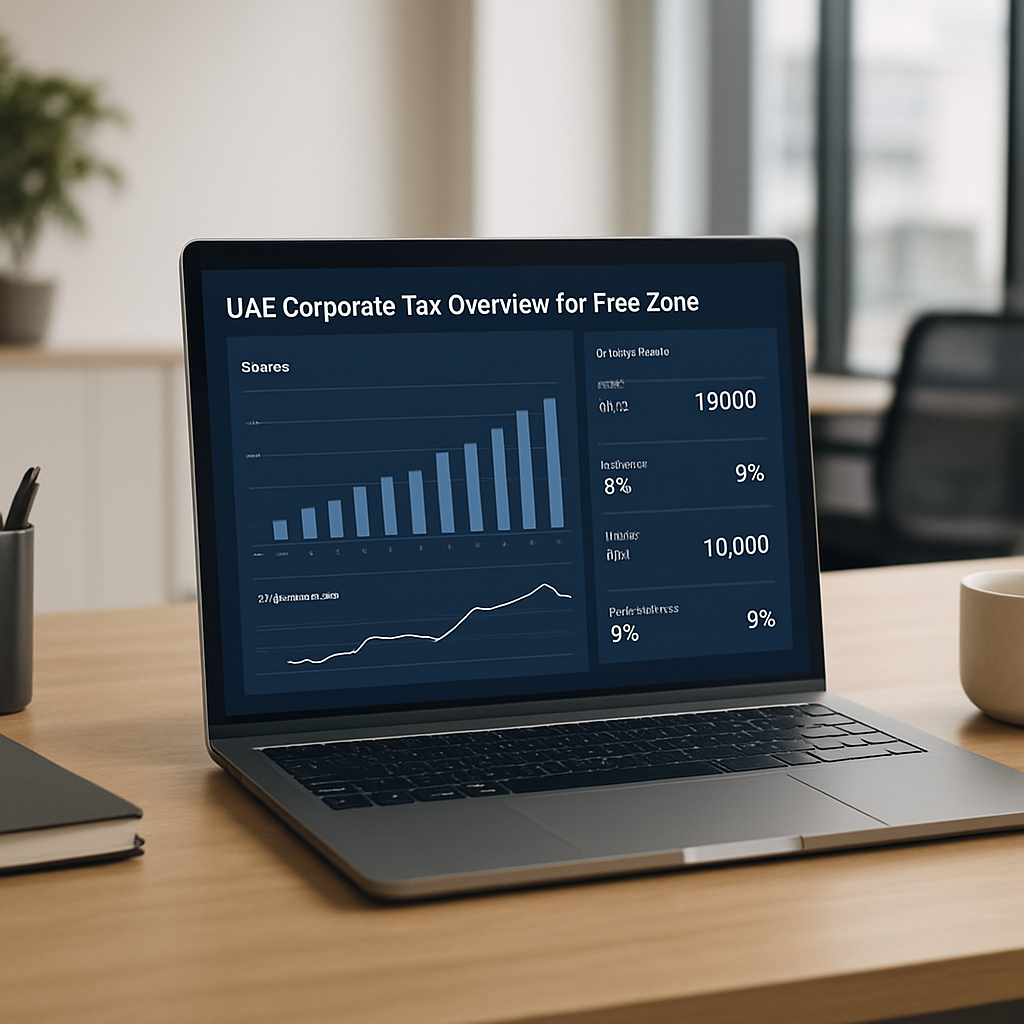
Understanding UAE Corporate Tax for Free Zone Companies: A Practical Guide
If you’ve just started dreaming about launching a tech startup or a boutique consultancy in the UAE, the first thing that probably pops into your head is the tax picture. You’ve heard about the 0% corporate tax promise in free zones, but you also know the UAE introduced a federal corporate tax regime in 2023 that applies to many businesses. So, how does that impact a free‑zone company? Let’s unpack the reality behind the headline and see what it really means for you. The good news is that free‑zone entities still enjoy a generous tax exemption, but the exemption isn’t blanket. Companies whose taxable profit exceeds AED 375,000 per year fall into the standard 9% corporate tax bracket, while those under that threshold keep the 0% rate. In practice, that means a small‑scale e‑commerce store generating AED 200,000 a year pays nothing, whereas a fast‑growing logistics firm crossing AED 500,000 will start paying 9% on the excess. In our experience helping entrepreneurs set up in Dubai Internet City, we’ve seen a SaaS founder who kept her annual revenue under the threshold by strategically timing license renewals and deferring certain contracts. By doing so, she stayed in the 0% tier for the first two years, freeing cash to reinvest in product development. On the flip side, a manufacturing client in Sharjah Free Zone projected rapid growth, so we advised a proactive tax budgeting plan: allocate 9% of projected profit to a reserve fund, ensuring the corporate tax bill won’t surprise anyone. Here are three actionable steps you can take right now to stay compliant and optimise your tax position: Calculate your expected taxable income before you register. If you’re likely under AED 375,000, you can safely choose the standard free‑zone license without extra tax filings. Set up a simple accounting system early – even a spreadsheet that tracks revenue vs. expenses helps you see when you cross the threshold. Consider a corporate‑tax registration early on. The UAE’s e‑services let you register online, and the process is explained in detail on our Corporate Taxation – UAE Free Zone Finder page. Remember, corporate tax is calculated on net profit, not gross revenue, so every AED you can legitimately deduct – from office rent to employee salaries – reduces your liability. For example, a design studio that booked AED 400,000 in contracts but had AED 70,000 in allowable expenses paid tax only on AED 330,000, staying below the 0% threshold. Does all this feel a bit overwhelming? It’s normal. The key is to treat tax planning as part of your business model from day one, not as an after‑thought. By keeping an eye on your profit margins, using the exemption wisely, and leaning on professional advice when you near the AED 375,000 line, you’ll avoid nasty surprises and keep more of your hard‑earned money. TL;DR Navigating uae corporate tax for free zone companies is simple once you know the 0% threshold, track profit, and register early if needed. Follow our quick checklist—estimate taxable income, set up basic accounting, and use UAE Free Zone Finder’s guidance—to stay compliant and keep more cash in your business today. Table of Contents Overview of UAE Corporate Tax and Its Relevance to Free Zone Companies Eligibility Criteria and Taxable Activities for Free Zone Entities Filing Requirements and Compliance Timeline Exemptions, Incentives, and Strategic Tax Planning Comparative Table: Tax Rates & Benefits Across Major UAE Free Zones FAQ Conclusion Overview of UAE Corporate Tax and Its Relevance to Free Zone Companies When you first hear “corporate tax” it can feel like a wall of legalese, especially if you’re dreaming about setting up a boutique shop in Dubai Internet City. The good news? The UAE’s new tax framework is actually pretty transparent once you break it down. In 2023 the UAE introduced a federal corporate tax that applies to all businesses, but free‑zone companies still enjoy a special carve‑out. If your net profit stays below AED 375,000 per year, you sit comfortably in the 0 % bracket. Cross that line and the rate jumps to 9 % on the excess – nothing crazy, but it does mean you need to keep an eye on your numbers. So, why does this matter for you, the entrepreneur? Imagine you’re launching a SaaS startup. In year one you forecast AED 300,000 in profit – you’re safe, no tax bill. Year two you land a big client and profit rockets to AED 500,000. Suddenly you owe tax on AED 125,000 (the amount above the threshold). That’s AED 11,250 you didn’t anticipate unless you planned for it. Key things to watch Profit, not revenue: Tax is calculated on net profit after allowable deductions – office rent, salaries, marketing, even some tech expenses. Threshold monitoring: Set up a simple spreadsheet or use basic accounting software to flag when you’re approaching AED 375,000. Reserve fund: Allocate roughly 10 % of projected profit into a tax reserve once you think you’ll exceed the limit. But you don’t have to figure this out solo. Corporate Taxation – UAE Free Zone Finder breaks down the registration steps, filing deadlines, and what documents you’ll need. It’s a quick read that saves you from a nasty surprise. And here’s a practical tip: many free‑zone authorities now offer an online portal where you can pre‑register for corporate tax before you even get your trade license. Doing that early gives you a tax ID, which some banks require for opening a corporate account. Still feeling a bit fuzzy about how to actually file? Think about it like filing a simple quarterly report you already do for your accountant – just one extra line for the tax amount. The UAE’s Federal Tax Authority (FTA) portal is user‑friendly; you upload your profit‑and‑loss statement, the system calculates the tax due, and you pay it online. Now, let’s talk about making tax compliance less of a chore. Many entrepreneurs find that automating routine bookkeeping frees up mental bandwidth. Tools that handle receipt capture, expense categorisation, and even basic tax calculations can shave hours off your month. That’s where AI‑driven automation platforms come in handy. Check out Assistaix

Qualifying Free Zone Person Requirements UAE: Complete Guide for Individuals
Ever felt stuck trying to decode who exactly can qualify as a free‑zone person in the UAE? You’re not alone – the term pops up in every licence application, yet the fine print is easy to miss. In the UAE, a “free‑zone person” can be an individual, a foreign company, or a branch of an overseas corporation. The key is that the entity must not have a physical presence on the mainland, and it must be wholly owned or represented by a local sponsor approved by the specific free‑zone authority. For example, Ahmed, a solo tech entrepreneur from Germany, set up his SaaS startup in Dubai Internet City. He qualified because he registered as an individual free‑zone person, submitted his passport copy, and proved he had no existing UAE mainland office. On the other hand, a European retail chain wanted to open a showroom in Sharjah Free‑Zone. They had to create a local branch office, appoint a local service agent, and then register the branch as a free‑zone person. Without that step, the licence would have been rejected. What we’ve seen work best is to run a quick checklist before you start gathering documents: 1️⃣ Confirm the entity type you’re using (individual, foreign company, or branch). 2️⃣ Verify that the chosen free zone allows that entity type – some zones only accept individuals. 3️⃣ Prepare proof of no mainland operation – a simple declaration or a nil‑activity statement often suffices. 4️⃣ Secure a local sponsor or service agent if the zone requires one. 5️⃣ Keep your passport, notarised power‑of‑attorney, and a recent bank reference handy. Data from the Dubai Chamber shows that 68 % of new free‑zone licences in 2023 belonged to foreign individuals, while only 22 % were foreign corporations. That tells you most entrepreneurs prefer the individual route because it’s faster and costs less in sponsorship fees. If you’re unsure which structure fits, take a look at our CORPORATE STRUCTURING guide. It walks you through the pros and cons of each option and even includes a simple decision tree you can print out. TL;DR To qualify as a free‑zone person in the UAE, you must be an individual, foreign company, or branch with no mainland presence and meet the zone’s sponsorship rules. Our quick checklist—entity type, zone eligibility, nil‑activity proof, local sponsor, passport and POA—helps you verify those requirements fast and avoid costly rejections. Table of Contents Eligibility Criteria for Individuals Step-by-Step Process to Obtain Free Zone Person Status Documentation and Legal Proofs Needed Common Pitfalls and How to Avoid Them FAQ Conclusion Eligibility Criteria for Individuals When you think about becoming a free‑zone person, the first thing that pops into your head is usually paperwork. And that’s exactly why we start with the basics: who can actually qualify as an individual? In the UAE, any natural person who holds a valid passport, doesn’t own a mainland office, and can prove they have no existing UAE commercial activity is eligible. That sounds simple, but the devil is in the details – especially when the free‑zone authority asks for “nil‑activity” proof. Passport and Identity Verification Your passport copy is the cornerstone. The authority will check that it’s current (within six months of expiry) and that the name matches any power‑of‑attorney you’ll later submit. If you’re a dual‑national, bring both passports – it saves the back‑and‑forth. Tip: Scan your passport at 300 dpi, keep the file name clean (e.g., “JohnDoe_Passport.pdf”), and double‑check that the scanned image isn’t blurry. A fuzzy passport photo is the fastest way to get your file rejected. No Mainland Presence “No mainland presence” means you cannot have an office, warehouse, or even a virtual desk registered with the Department of Economic Development. If you already run a side‑hustle from a coworking space in Dubai Marina, you’ll need to either close that setup or relocate it to the free zone you’re applying for. Sometimes the line blurs – a shared desk is technically a lease, but most authorities treat it as a “presence.” The safest route is to get a written declaration from the coworking provider stating you have no permanent office space. Local Sponsor or Service Agent Most UAE free zones require a local sponsor or a service agent, even for individuals. The sponsor doesn’t own your business; they simply act as a liaison with the government. That’s where PRO Services in UAE – UAE Free Zone Finder can make life easier, handling sponsor appointments, visa paperwork, and document attestation. Ask yourself: do you have a trusted contact in the UAE, or would you rather let a professional service manage this step? For many first‑time entrepreneurs, the latter avoids costly delays. Bank Reference and Financial Standing The free‑zone authority often asks for a recent bank reference letter confirming you have sufficient funds to cover the initial licence fees and a modest operating capital. It doesn’t have to be a huge amount, but the letter should be on official letterhead, signed, and dated within the last three months. And here’s a quick checklist you can copy‑paste into a note: Valid passport (scanned copy) Nil‑activity declaration or landlord statement Power‑of‑attorney (if using a sponsor) Bank reference letter Completed application form Once you have those, you’re ready to submit. The next step is usually a short interview or a clarification call – don’t be surprised if the officer asks why you chose that particular free zone. Watching a short video walkthrough can demystify the submission portal, especially the part where you upload your nil‑activity proof. It’s worth the five minutes. [p]Now that the paperwork side is clear, let’s think about the next phase: getting your new venture noticed. Even after you secure the licence, you’ll need to market your business, build backlinks, and drive traffic. That’s where an automated content engine like Rebelgrowth can help you generate SEO‑friendly articles without spending hours at the keyboard.[/p] And if you’re already juggling multiple setup tasks – legal, banking, office fit‑out – you might appreciate a bit of AI‑driven efficiency. Assistaix offers automation tools that
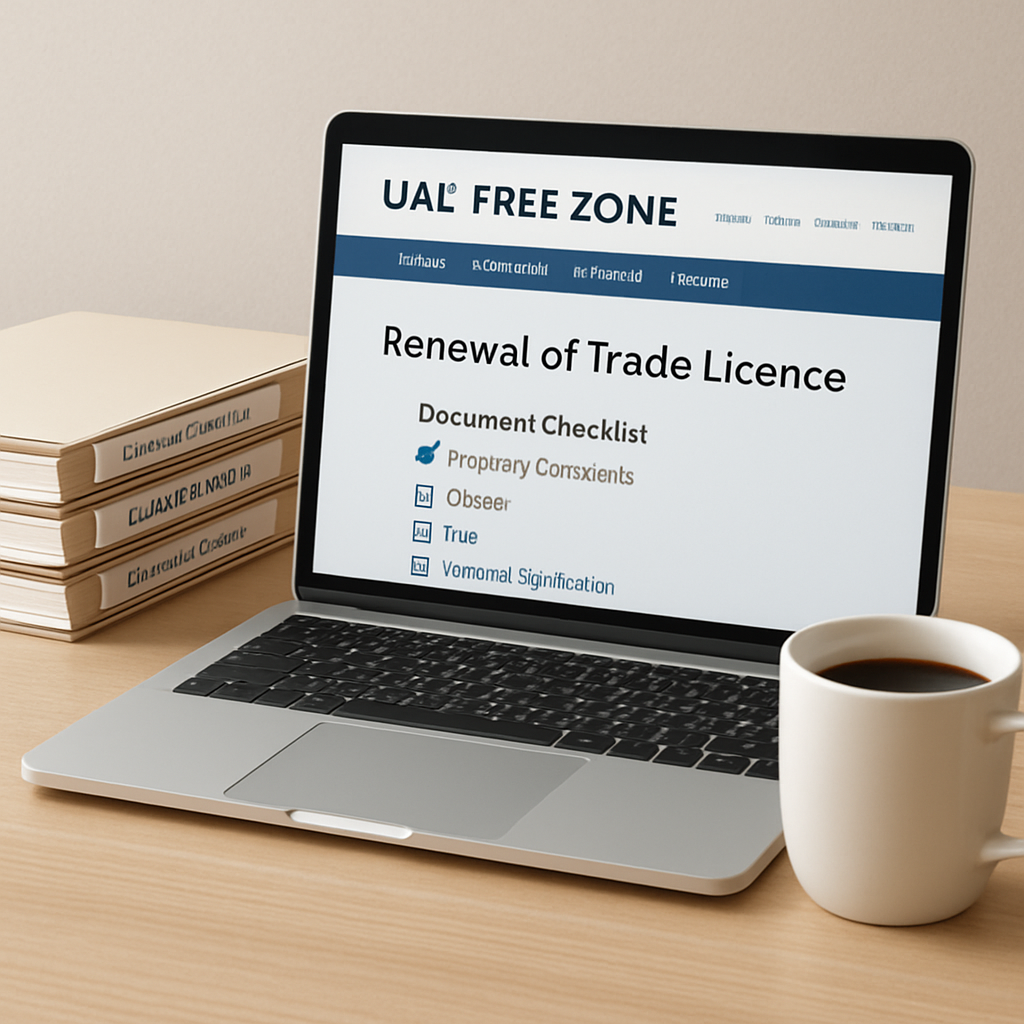
Renewal of Trade Licence Dubai Free Zone: Step-by-Step Guide for Businesses
Picture this: you’ve just paid the rent for your Dubai office, hired a few team members, and now the calendar reminds you that your trade licence is about to expire. That little notification can feel like a punch in the gut, especially when you’re juggling client meetings and product launches. But don’t worry—renewing your trade licence in a Dubai free zone isn’t a mystery. In our experience, the process becomes a lot smoother when you treat it like any other recurring business task: set a reminder, gather the paperwork, and tick the boxes methodically. First, mark the renewal date on your calendar at least 30 days before it lapses. This buffer gives you time to address any compliance hiccups, like updating your shareholder register or submitting audited financial statements. For many DMCC companies, the audit is the only piece that can cause a delay. Speaking of audits, many entrepreneurs overlook that the renewal packet often asks for the most recent audited financials. That’s where Our Auditing Services – UAE Free Zone Finder can save you a headache, ensuring your reports meet the free‑zone authority’s standards well before the deadline. Here’s a quick checklist you can copy‑paste into your project manager: Set a renewal reminder 30‑45 days early. Verify that all shareholder information is up‑to‑date. Confirm you have a valid tenancy contract (or virtual office proof). Gather the latest audited financial statements. Prepare the renewal fee payment (usually AED 10,000‑15,000 depending on the zone). Submit the renewal application through the free‑zone portal and keep the receipt. Real‑world example: Ahmed, a tech startup founder in Dubai Internet City, thought his renewal would be a quick online click. He missed the audit submission and got a “pending” status, which delayed his visa renewals for his staff. After he adopted a pre‑renewal checklist and used our auditing partner, his next renewal went through in under 48 hours. Another case: Fatima, running a boutique fashion label in the Jebel Ali Free Zone, leveraged the 30‑day buffer to negotiate a better tenancy rate with her landlord, turning a compliance chore into a cost‑saving opportunity. Bottom line: treat licence renewal as a strategic touchpoint, not a bureaucratic nuisance. By planning ahead, keeping your documents tidy, and using trusted service partners, you’ll keep your business humming without any unexpected interruptions. TL;DR Renewing your trade licence in a Dubai free zone doesn’t have to be a nightmare; with a simple checklist, early reminders, and the right paperwork, you can keep your business humming and avoid costly delays. Follow our quick TL;DR: set a reminder 30‑45 days ahead, verify shareholder details, secure audited financials, confirm tenancy proof, pay the fee, and submit the renewal online—so you stay compliant and focused on growth. Table of Contents Step 1: Gather Required Documents Step 2: Verify Eligibility and Deadlines Step 3: Submit Application Online Step 4: Pay Fees and Track Status Step 5: Collect Your Renewed Licence Step 6: Common Pitfalls and How to Avoid Them FAQ Conclusion Step 1: Gather Required Documents Alright, you’ve set the reminder, now it’s time to pull together the paperwork that the free‑zone authority will actually look at. Think of it as packing a suitcase: you don’t want to discover at the airport that you left your charger at home. First up, grab your current trade licence. It’s the baseline proof that you’re a legitimate business in the zone. If you can’t find it, request a duplicate from the authority’s portal – most free zones let you download a PDF instantly. Key documents checklist Original trade licence (or electronic copy) Shareholder passport copies and Emirates ID (if applicable) Latest audited financial statements – this is where Our Auditing Services – UAE Free Zone Finder can smooth out any snags. Tenancy contract or virtual office proof (make sure the dates cover the renewal period) Bank reference letter (some zones still ask for it) Corporate tax registration certificate, if you’re already registered Got all that? Great. But there’s a hidden gem most people overlook: the “Shareholder Register” update. If any shareholder’s details have changed – new passport, name change, or a new partner joining – you’ll need a notarised amendment. Ignoring it is a classic cause of “pending” status. Does this feel like a lot? It can, especially when you’re juggling client calls. That’s why many entrepreneurs automate the document‑collection workflow. For instance, Assistaix offers AI‑driven automation that can pull passport scans, sync tenancy PDFs, and even send reminders to shareholders to upload their files. A few minutes setting that up now can save you hours later. Once you have every file, store them in a single cloud folder – Google Drive, Dropbox, or a secure UAE‑based data room. Name each file clearly, e.g., “2024_Audit_Financials.pdf” or “Shareholder_JaneDoe_Passport.pdf”. Consistent naming prevents the dreaded “I can’t find the document” email from the free‑zone officer. Now, let’s talk branding. After you’ve nailed the paperwork, the next logical step is to make sure your company looks as professional on paper as it does online. A polished brand can boost confidence with vendors and investors. That’s where GHO Sydney comes in – they specialize in creating brand identities that resonate with the Middle Eastern market while keeping a global vibe. Quick tip: before you hit “submit”, run a final checklist: All passport copies are readable (no blurry scans) Financial statements are signed and stamped Tenancy contract reflects the exact renewal period Shareholder register reflects current ownership Bank reference is dated within the last three months If anything is missing, you’ll get a “documents incomplete” notice and the whole process stalls. It’s far better to catch those gaps now than to scramble after the deadline. Finally, keep a copy of the entire submission receipt. The portal usually emails you a PDF confirmation; store it alongside the original licence. If the authority asks for proof later, you’ll have it at your fingertips. By treating document gathering as a mini‑project rather than a chore, you turn a potentially stressful renewal into a smooth, almost routine task.

How to Set Up a Free Zone Company in Dubai: A Practical Step-by-Step Guide
Picture this: you’ve just landed in Dubai, coffee in hand, and the idea of launching your own venture is buzzing in your head. The city’s skyline promises opportunity, but the paperwork feels like a maze. You’re not alone—many entrepreneurs feel that mix of excitement and overwhelm when they first hear about free zone company formation. Let’s break it down together. The biggest draw of a Dubai free zone is the 100% foreign ownership—no local sponsor needed, which means you keep every profit. Add to that zero import/export taxes, streamlined visa processes, and a business environment that can get you licensed in as little as two weeks. That’s why you hear stories like Sarah, a tech startup founder from Berlin, who set up in Dubai Internet City and was issuing employee visas within ten days, letting her focus on product development instead of bureaucracy. So, where do you start? Here’s a quick snapshot: Pick the right free zone for your industry (e.g., logistics in Jebel Ali, media in Dubai Media City). Choose a company name and get it pre‑approved. Gather essential documents: passport copies, a business plan, and sometimes a No‑Objection Certificate from your home country. Submit your application and pay the licensing fee—typically ranging from AED 10,000 to AED 30,000 depending on the zone and activity. Once approved, you’ll receive your trade license, can open a corporate bank account, and apply for residence visas. One tip that often gets missed: engage a local PRO service early on. They handle document attestation, immigration paperwork, and can even speed up your bank account opening. Think of it as a shortcut that saves you weeks of back‑and‑forth. And if you’re wondering how to navigate the whole process step‑by‑step, check out our detailed guide How to Open a Company in Dubai Free Zone: Step‑by‑Step Guide. It walks you through every form, fee, and timeline with real examples. Finally, once you’re set up, consider automating routine tasks—like invoicing or CRM updates—with an AI business automation platform. It can shave hours off daily operations, letting you focus on growth instead of admin. Ready to turn that spark into a thriving Dubai free zone company? Let’s dive in and make it happen. TL;DR Setting up a free zone company in Dubai lets you keep 100% ownership, secure a fast‑track license, and obtain visas for you and your team. Follow our step‑by‑step checklist—choose a zone, prep documents, submit the application, and activate your bank account—so you can launch effortlessly in weeks, not months, smoothly. Table of Contents Step 1: Choose the Right Free Zone for Your Business Step 2: Gather Required Documents and Legal Proofs Step 3: Submit Application, Pay Fees & Compare Costs Step 4: Obtain Your Business License and Open a Bank Account Step 5: Meet Ongoing Compliance and Renewal Requirements FAQ Conclusion Step 1: Choose the Right Free Zone for Your Business Imagine you’ve just picked a name, paid the flight, and now you’re staring at a list of Dubai’s free zones wondering which one actually fits you. That moment of “too many choices” is totally normal, but it’s also where you can turn the whole process from daunting to downright exciting. Every free zone is built around a specific ecosystem – think tech hubs, logistics corridors, media clusters, or finance corridors. The trick is to line up your business model with the zone’s DNA, so you’re not just another tenant, but a player that actually benefits from the community. Know your industry, then match the zone Start by asking yourself: What does my company need to thrive? If you’re a fintech startup, Dubai International Financial Centre (DIFC) offers a regulatory sandbox and a network of banks. If you’re a creative agency, Dubai Media City gives you access to production studios and a talent pool that already speaks the language of media. Even something as simple as proximity to ports can matter. Logistics firms love Jebel Ali Free Zone (JAFZA) because it sits right next to the world‑class container terminal. On the other hand, an e‑commerce platform might prefer Dubai Silicon Oasis for its tech‑focused infrastructure and affordable office spaces. License types and activity approvals Each zone has its own licensing matrix. Some issue a generic commercial license that covers a wide range of activities, while others require you to pick a very specific activity code. It’s worth pulling the latest list from the zone’s website and cross‑checking it with your business plan. If you’re unsure, a quick call to the zone’s business development team can clear things up. They’ll tell you whether a “service” license covers consulting, or if you need a separate “trading” license to import hardware. Cost, facilities, and support services Fees can vary dramatically – from AED 10,000 for a basic flex‑desk package to over AED 30,000 for a premium office with full‑service support. Look beyond the headline price: does the fee include visa processing, PRO services, or access to shared meeting rooms? Those hidden costs can add up fast. Many zones also bundle value‑added services like legal advice, networking events, and even AI‑driven automation tools. Speaking of automation, once you’ve nailed down the zone, you might want to plug into an AI business automation platform to streamline invoicing and CRM updates right from day one. For a deeper dive into the whole process, our How to Set Up a Free Zone Company in UAE: A Step‑by‑Step Guide walks you through the paperwork, timelines, and common pitfalls. Once you’ve shortlisted a zone, schedule a virtual tour. Seeing the coworking spaces, meeting rooms, and community areas on video can give you a sense of the vibe before you sign anything. After the tour, ask yourself: Does this zone make it easy to hire talent? Are there nearby schools or transport links for my team? Will the local PRO be able to fast‑track my employee visas? Those practical questions often decide whether a free zone feels like a home or just a stop‑over. Finally, think about growth. Some zones have strict caps on office size or

How to Set Up a Free Zone Company in UAE: A Step‑by‑Step Guide
Imagine you’re scrolling through endless forums, trying to decode the maze of paperwork needed to launch a business in the UAE, and you keep hitting the same roadblock: ‘Do I need a local sponsor?’ That question alone can feel like a brick wall. Here’s the good news: setting up a free‑zone company in the UAE is actually one of the smoothest ways to get 100 % ownership, zero corporate tax for the first few years, and a visa that covers you and your family. Think of it as the fast‑track lane on a highway that usually has a toll. Let’s break it down with a real‑world snapshot. Meet Maya, a digital nomad from Berlin. She wanted to sell her e‑learning platform to Middle Eastern clients but was scared off by the idea of complex local partnerships. By choosing the Dubai Internet City free zone, she filed her paperwork in under three weeks, paid roughly AED 15,000 in total fees, and walked out with a trade license, a UAE‑based bank account, and three residency visas for her team. So, what does the journey look like for you? Pick the right free zone. Different zones cater to tech, media, logistics, etc. Align the zone’s focus with your business model. Reserve your company name. It’s quick—often a same‑day confirmation if the name meets the guidelines. Gather required documents. Passport copies, proof of address, a brief business plan, and sometimes a no‑objection letter from your current employer. Submit the application. Most free zones now offer an online portal that walks you step‑by‑step. Pay fees and collect your license. Fees vary: from AED 10,000 for a simple service license up to AED 30,000 for a more complex industrial setup. Open a corporate bank account. This is where many newcomers stumble; a clear business plan and proof of trade help smooth the process. If you want a deeper dive into each of those steps, check out our How to Open a Company in Dubai Free Zone: Step‑by‑Step Guide. It walks you through the paperwork, timelines, and common pitfalls with screenshots. Once you’re set up, the next challenge is getting noticed online. That’s where an automated backlink solution can save you hours of manual outreach and help your new company climb Google’s rankings faster. Bottom line: the UAE free‑zone route is built for entrepreneurs who want speed, ownership, and a global gateway. Ready to start ticking those boxes? TL;DR Want 100 % ownership, fast licensing, and visa support? Setting up a free‑zone company in the UAE takes just a few weeks, a clear business plan, and AED 10‑30 k in fees. Follow our step‑by‑step checklist, avoid common pitfalls, and let UAE Free Zone Finder guide you to a smooth, quick launch today. Table of Contents Step 1: Choose the Right Free Zone Step 2: Prepare Required Documents Step 3: Company Registration Process Step 4: Obtain Licenses & Approvals Step 5: Post‑Setup Compliance & Banking Conclusion FAQ Step 1: Choose the Right Free Zone When you first hear “free zone” you probably picture a glossy brochure and a fast‑track license, but the real challenge is picking the zone that actually fits your business DNA. Every free zone in the UAE has a niche – some cater to tech start‑ups, others to media, logistics, health or even crypto. The trick is to match that niche with what you sell, who you sell to, and where you need physical space. Here’s a quick sanity check you can run in under two minutes: Industry focus – Is your product digital, manufacturing, trading, or services? Target market – Do you need proximity to a port, an airport, or a cluster of similar firms? Cost tolerance – License fees range from AED 10 k for a simple service licence to AED 30 k+ for industrial setups. Visa package – Some zones bundle employee visas with office space, others charge them separately. Regulatory flex – Certain zones allow 100 % foreign ownership with no local sponsor, while others still require a local service agent. Take Maya’s story again: she runs an e‑learning platform, so she zeroed in on Dubai Internet City because it’s tech‑centric, close to a major data hub, and offers a visa‑friendly package for up to five employees. If you’re in fintech, the Abu Dhabi Global Market (ADGM) gives you a sandbox environment and a clear regulatory framework. If you’re into trading commodities, JAFZA’s proximity to Jebel Ali Port cuts shipping delays dramatically. Our BUSINESS SETUP – UAE Free Zone Finder page breaks down each zone’s core benefits so you can compare side‑by‑side without drowning in legalese. Before you sign anything, pull the latest free‑zone handbook from the authority’s website. Most zones publish a PDF that lists required documents, processing times, and any hidden fees like community service charges. Skipping this step often leads to surprise invoices later on. Once you’ve locked in the zone, think about the next bottleneck – day‑to‑day operations. An AI‑driven platform like Assistaix can automate invoicing, customer follow‑ups and even basic HR tasks, letting you focus on scaling rather than paperwork. If you’re a visual learner, this short walkthrough shows exactly how to filter zones on the official portal and what red flags to watch for. Notice how the portal asks for your business activity code – that’s your cue to double‑check the zone’s permitted activities list. Mismatched codes are the most common reason applications stall. After you’ve got the license, the next hurdle is getting found online. An automated backlink network like Rebelgrowth can jump‑start your SEO, feeding high‑quality links to your new site so potential clients discover you faster. Picture this: a sleek office in a modern free‑zone campus, your team logging in from a coffee‑shop in Dubai, and a dashboard flashing real‑time sales from the Middle East. Finally, lock in your office space or flex desk. Many zones offer a “smart office” package where you can start with a virtual address and upgrade as you grow – a cost‑effective way to keep overhead low during the first six months. Ready to shortlist your top three zones?

How to Open a Company in Dubai Free Zone: Step‑by‑Step Guide
Ever stared at the idea of launching your own business and felt that a little extra tax relief could be the game‑changer? You’re not alone. Many entrepreneurs picture a sleek office in Dubai, a passport‑friendly environment, and wonder, “how do I actually get my company off the ground there?” Here’s the thing: opening a company in a Dubai free zone isn’t a maze of red tape – it’s a step‑by‑step process that anyone with a clear plan can tackle. Think about the moment you first imagined your brand thriving under bright desert skies. That vision becomes real when you understand the core steps: picking the right free zone, gathering documents, submitting the application, and activating your license. So, what’s the first move? Choose a free zone that matches your industry. Whether you’re into tech, trading, or creative services, there’s a hub tailored to your niche, and the right fit can shave months off your timeline. Next, get your paperwork in order. A passport copy, a brief business plan, and a bank reference are usually enough to get the ball rolling. It feels a bit like packing for a trip – you only bring what you truly need. Once you’ve submitted the application, the authority reviews it, issues an initial approval, and then you pay the license fee. After that, you receive your trade license and can open a corporate bank account – the moment many founders describe as “the lights finally turning on.” And don’t forget the optional but valuable services like business feasibility studies or trade‑finance advisory that can smooth out any lingering doubts. By the end of this guide, you’ll walk away with a clear checklist, insider tips, and the confidence to say, “I’m ready to set up shop in a Dubai free zone.” Let’s dive in and turn that curiosity into a concrete plan. TL;DR If you’ve ever wondered how to open a company in Dubai free zone, this guide breaks down the four essential steps—choosing the right zone, prepping paperwork, submitting your application, and activating your license—so you can skip the guesswork. By the end you’ll have a clear checklist, insider tips, and the confidence to launch your business under the desert sun. Table of Contents Step 1: Choose the Right Free Zone Step 2: Prepare Required Documents Step 3: Submit Application & Pay Fees Step 4: Compare License Types & Costs Step 5: Finalize Setup & Open Bank Account Conclusion FAQ Step 1: Choose the Right Free Zone First thing’s first… you’ve decided to set up shop in Dubai, but the real question is: which free zone actually fits the DNA of your business? Think about the last time you bought a pair of shoes. You didn’t just walk into any store – you went where the style, price and vibe matched what you wanted. The same logic applies to free zones: you need a hub that speaks your industry’s language, offers the right infrastructure, and won’t eat up your budget. 1. Pin down your core activity Write down, in plain English, what you’ll be doing day‑to‑day. Are you importing raw materials and re‑exporting them? Are you building a SaaS platform that needs high‑speed data centres? Are you a media house that thrives on creative studios? Once the activity is crystal clear, you can filter zones that actually permit that line of business. For example, the Dubai Multi Commodities Centre (DMCC) licences over 600 activities, from precious‑metal trading to fintech, while Dubai Internet City (DIC) is tailor‑made for tech and digital agencies. 2. Match the zone’s strengths to your needs Here’s a quick way to think about it: create a three‑column table in a notebook – “Industry Fit”, “Cost”, “Location & Logistics”. Fill each free zone you’re eyeing with a score from 1‑5. The zone with the highest total wins. Real‑world example: Sara wanted to launch an e‑commerce platform that ships globally. She chose Jebel Ali Free Zone (JAFZA) because the zone sits next to the world‑class port, cutting shipping time by 30 % and giving her access to a fully automated inventory control system – a requirement highlighted by JAFZA inventory compliance requirements. That tech edge saved her both time and costly customs penalties. Another case: Ahmed, a fintech founder, opted for the Dubai International Financial Centre (DIFC) because its regulatory sandbox and proximity to banks made fundraising smoother. The zone’s reputation also helped him attract venture capital that might have stayed away from a generic industrial park. 3. Look at the cost structure Free zones charge a mix of licence fees, office rent (or flexi‑desk fees), and sometimes a minimum share capital. For instance, DMCC requires a minimum paid‑up capital of AED 50,000 per company, whereas Dubai Airport Free Zone starts at AED 1,000. Compare these numbers against your cash flow forecast. Don’t forget hidden costs: registration, visa processing, and mandatory insurance. A simple spreadsheet can help you see the total first‑year outlay versus the long‑term savings from tax exemptions. 4. Test the regulatory environment Some zones have extra layers of approval. If you’re dealing with food & beverage, you’ll need sign‑off from the Abu Dhabi Agriculture and Food Safety Authority, even if your licence is issued by a Dubai zone. The official guide on starting a business in a UAE free zone outlines these sector‑specific checkpoints. Non‑compliance can turn into a costly audit. JAFZA, for example, expects a fully computerized inventory system; missing a single entry could be flagged as smuggling under GCC customs law, leading to heavy fines. Now that you’ve scoped the big picture, it’s time to dive into the nitty‑gritty checklist. 5. Actionable checklist Write a one‑sentence description of your core activity. List three free zones that publicly allow that activity. Score each zone on industry fit, cost, and logistics (1‑5). Verify any extra regulatory approvals required for your sector. Contact a specialist to confirm the numbers – Understanding UAE Free Zones: Opportunities for Businesses and Investors can walk you through the comparison. When you’ve ticked every box, you’ll have a

Understanding the US Exit Tax: Guide to Renouncing Citizenship in 2025
“`html Understanding the US Exit Tax: Guide to Renouncing Citizenship in 2025 Renouncing U.S. citizenship is an emotionally charged and complex decision, influenced by both personal and financial considerations. One crucial aspect to understand when contemplating this move is the U.S. Exit Tax. This tax can have significant implications on your wealth and future financial planning. As we approach 2025, it’s essential to stay informed about the intricacies of this tax and how it may impact you if you’re considering renunciation. What is the U.S. Exit Tax? The U.S. Exit Tax is a tax that applies to certain individuals who decide to renounce their U.S. citizenship or terminate their long-term residency. Under the Heroes Earnings Assistance and Relief Tax Act (HEART) of 2008, this tax was conceived to ensure that individuals leaving the U.S. still pay taxes on their unrealized gains, essentially treating them as if they sold all their assets the day before renouncing their citizenship. Who is Subject to the Exit Tax? Not everyone who renounces their citizenship will face the U.S. Exit Tax. You may be subject to the tax if you meet any of the following criteria: Wealth Criteria: Your net worth is $2 million or more on the date of expatriation. Tax Liability Criteria: Your average annual net income tax liability over the past five years prior to the renunciation date is more than a specific threshold, adjusted yearly for inflation. Non-compliance with U.S. Tax Requirements: You fail to certify under penalty of perjury that you have complied with all U.S. federal tax obligations for the five years before the date of expatriation. Calculating the Exit Tax The calculation of the Exit Tax involves determining the mark-to-market value of your worldwide assets. This includes: Real estate Investments such as stocks and bonds Retirement accounts Any ownership in private businesses Once the total value is assessed, it is subjected to a notional sale to calculate the gain. The unrealized gains on these assets are taxed at the applicable capital gains rates. As of 2025, the first $600,000 of gain (adjusted annually for inflation) is typically exempt from the Exit Tax. Special Considerations and Exceptions While the general guidelines apply to most, there are special considerations to keep in mind: Eligible for Deferral: You might defer the Exit Tax by providing adequate security to cover the deferred tax. Tax Treaties: Certain tax treaties could influence the applicability of the Exit Tax. Inheritance Tax: Recipients of gifts from expatriates subject to the tax may face different tax implications. Renouncing Citizenship: The Process Renouncing your citizenship is more than just an administrative procedure. It’s a formal process that includes several steps: Step 1: Assess Your Situation Before proceeding, it’s essential to critically evaluate your financial situation against the criteria mentioned above. Consulting with a tax advisor can provide clarity regarding your specific circumstances. Step 2: Prepare Necessary Documentation Gather all required documentation for your case. This includes tax returns for the past five years, financial statements detailing your assets, and evidence of compliance with U.S. tax obligations. Step 3: Attend the Renunciation Meeting Schedule an appointment with a U.S. consulate or embassy to formally renounce your citizenship. During this meeting, you’ll need to sign an oath of renunciation. Step 4: File Your Final Tax Returns After renunciation, file a final tax return with the exit tax form (IRS Form 8854). This form is crucial for confirming your expatriation and assessing any tax liabilities associated with it. Navigating Living Abroad as a Former U.S. Citizen Once you’ve renounced your citizenship and handled your exit taxes, the journey of living outside the U.S. begins. Here are some considerations for life after expatriation: Tax Residency: Understand the tax obligations of your new country of residence. Banking and Investments: Adjust your banking and investment strategies to align with your new status and local laws. Citizenship Options: Explore citizenship or long-term residency options in your new home. In conclusion, navigating the U.S. Exit Tax requires deliberate planning and thorough understanding of tax laws. Whether driven by personal reasons, financial strategy, or lifestyle choice, renouncing U.S. citizenship in 2025 involves complex tax considerations. Smart planning and professional advice are paramount to ensure a smooth transition and compliance with all regulatory requirements. “`
Understanding UAE Free Zones: Opportunities for Businesses and Investors
Understanding UAE Free Zones: Opportunities for Businesses and Investors The United Arab Emirates (UAE), known for its vibrant economy, strategic location, and business-friendly environment, is a beacon for entrepreneurs and investors from around the globe. Among its numerous advantages, the concept of free zones stands out as a cornerstone of the country’s economic strategy, offering a multitude of opportunities for businesses and investors. In this detailed exploration, we’ll unpack what UAE free zones are, how they function, and why they present such a compelling proposition for those looking to expand or start new ventures. What Are UAE Free Zones? UAE free zones are specially designated areas that allow businesses to operate under more relaxed regulatory and tax guidelines compared to the general economic environment elsewhere in the country. These zones are created to foster specific industries, attract foreign investment, and stimulate economic growth. Key Features of UAE Free Zones Operating within a UAE free zone confers several distinct advantages, which include: 100% Foreign Ownership: Unlike many countries where foreign businesses must have a local partner, UAE free zones allow 100% foreign ownership, providing complete control over business operations. Full Repatriation of Profits and Capital: Businesses can remit all profits and capital back to their home country without restrictions. Tax Benefits: Most free zones offer zero corporate and personal taxes for a specified number of years, often renewable. No Currency Restrictions: Companies can operate in any currency without restrictions on currency exchange, which facilitates international transactions. Custom Duty Exemptions: Goods imported into a free zone are generally exempt from customs duties. How Do Free Zones Differ from Mainland UAE? Businesses in UAE free zones operate under different sets of rules and offer advantages that are not available to companies set up in mainland UAE, leading to distinctive opportunities: Location and Premises: Free zones are positioned in strategic locations such as ports, airports, and near business hubs, granting ease of connectivity. Business Activities: Each free zone caters to specific types of businesses or industries, such as media, finance, technology, or manufacturing, creating specialized ecosystems that are conducive to growth. Regulatory Environment: These zones have their own regulatory authorities and simplified processes for business registration, licensing, and operations. Why Consider a Free Zone in the UAE? The incentives and advantages offered by UAE free zones make them extremely attractive to international businesses. Here are some compelling reasons why entrepreneurs and companies of all sizes consider setting up in these zones: Strategic Location The UAE’s geographical position provides access to 1.5 billion consumers in the Middle East, Africa, and Asian subcontinent. This makes it an optimal hub for businesses looking to expand their regional footprint. Diverse Opportunities in Varied Industries The UAE houses over 45 free zones across its seven emirates. Each of these free zones is tailored for different industries and sectors, such as: Technology and Innovation: Dubai Silicon Oasis fosters tech-driven initiatives. Logistics and Trade: The Jebel Ali Free Zone aims at international trade via its extensive logistical setup. Media and Creative Industries: Dubai Media City drives media and advertising ventures. Infrastructure and Services Free zones offer state-of-the-art infrastructure and a plethora of services crucial for business growth. These include office spaces, warehouses, and amenities, all designed to streamline operations. Regulatory Support and Flexibility One of the significant advantages of UAE free zones is the ease of doing business. Each free zone is designed with its own set of legislation that simplifies registrations, licensing, and other administrative processes, providing flexibility and speed. Challenges and Considerations While the benefits are significant, it is crucial to consider potential challenges when opting for a free zone setup: Limited Scope of Business Activity Businesses operating in a free zone are typically restricted to carrying out activities within the zone itself or internationally. Direct trade with the UAE mainland requires a local distributor or agent. Regulatory Updates Although regulations are more favorable in free zones, they are subject to change. Businesses must stay informed about regulatory developments to ensure compliance. Choice of Free Zone Choosing the right free zone is paramount. Factors like proximity to supply chains, customer location, and industry focus should guide your decision. Conclusion UAE free zones represent a compelling opportunity for businesses and investors aiming to tap into the Middle East market. With their strategic advantages and the UAE’s liberal economic policies, these zones are not only conducive to growth but also serve as a launchpad to international markets. While there are challenges, with the right guidance and choice of free zone, businesses can significantly leverage the benefits to achieve their goals. Whether you’re a startup seeking growth or an established business looking to expand, UAE free zones offer a landscape ripe with potential.
Nomad Capitalist Earns 4.6/5 Trustpilot Rating for Excellent Service
“`html Nomad Capitalist Earns 4.6/5 Trustpilot Rating for Excellent Service In today’s increasingly interconnected world, the idea of global citizenship has never been more appealing. As many individuals search for financial freedom, tax optimization, and lifestyle flexibility, companies like Nomad Capitalist have emerged to meet these demands. With a stellar rating of 4.6 out of 5 on Trustpilot, Nomad Capitalist has garnered significant attention. But what makes this company stand out in the world of global citizenship consultancy? An Overview of Nomad Capitalist Founded by Andrew Henderson, Nomad Capitalist is a consulting firm dedicated to helping entrepreneurs, investors, and global citizens navigate the complexities of international living. With a mission to “Go where you’re treated best,” the company offers a range of services, including: Residency and citizenship by investment programs Offshore banking solutions Tax reduction strategies Asset protection services By understanding each client’s unique circumstances, Nomad Capitalist aims to create customized solutions that align with individual goals and aspirations. What Customers Appreciate About Nomad Capitalist 1. Personalized Consultations One of the primary reasons behind Nomad Capitalist’s exceptional Trustpilot rating is its client-focused approach. The team at Nomad Capitalist recognizes that each client has distinct needs and challenges. Through in-depth consultations, they tailor strategies to ensure optimal results. 2. Expertise and Knowledge The consultants at Nomad Capitalist are well-versed in international laws, regulations, and opportunities. Their expertise allows them to provide informed advice, guiding clients through the complexities of global finance and residency. This deep knowledge base is frequently highlighted in client reviews: “They truly understand the intricacies of international law.” “Their insights into tax reduction were invaluable.” 3. Transparency and Integrity Honesty and integrity are core values at Nomad Capitalist, and clients consistently appreciate the transparency of their services. Detailed consultations, clear communication, and transparent pricing ensure that clients know exactly what to expect, which fosters trust and confidence. 4. Successful Track Record With numerous successful cases under their belt, Nomad Capitalist has established a reputation for delivering tangible results. Many satisfied clients report substantial tax savings, improved lifestyle options, and secure asset protection after working with the firm. “The results exceeded my expectations!” “I’ve saved more on taxes than I ever thought possible.” Key Services Offered by Nomad Capitalist To better understand the scope of Nomad Capitalist’s offerings, let’s delve into the core services they provide: Residency and Citizenship by Investment For those seeking to obtain a second passport or residency, Nomad Capitalist offers expert guidance on various programs worldwide. From the Caribbean to Europe, the firm advises on the best options for securing residency or citizenship through investments in real estate, businesses, or government bonds. Offshore Banking Solutions Offshore banking can provide financial advantages in terms of tax efficiency, asset protection, and diversification. Nomad Capitalist helps clients set up reliable offshore accounts in jurisdictions that align with their strategic financial goals. Tax Reduction Strategies Reducing one’s tax burden is often a primary motivation for seeking Nomad Capitalist’s services. The firm crafts strategies to legally minimize taxes through international tax planning, residency solutions, and the utilization of tax-friendly jurisdictions. Asset Protection In a changing world, safeguarding personal wealth is crucial. Nomad Capitalist advises on effective asset protection strategies, including offshore trusts, foundations, and other structures, without compromising transparency and compliance. Conclusion: The Path to Global Citizenship with Nomad Capitalist As the world becomes increasingly borderless, the demand for global citizenship and financial freedom grows. Nomad Capitalist’s innovative approach to international finance and residency solutions has earned them a well-deserved 4.6/5 rating on Trustpilot. With a commitment to excellence, personalized service, and a deep understanding of global opportunities, the company is poised to continue its trajectory as a leader in the field. Whether you’re an entrepreneur looking to expand your horizons or an investor seeking tax efficiency, Nomad Capitalist offers a pathway to a more flexible and prosperous lifestyle. By leveraging their expertise, you can explore new frontiers with confidence, knowing you’re guided by a trusted partner dedicated to your success. “`
Benefits of UAE Free Zones for Business Growth and Innovation
“`html Benefits of UAE Free Zones for Business Growth and Innovation The United Arab Emirates (UAE) is recognized globally as a dynamic hub for business and trade, primarily due to its strategic location and innovative business policies. Among these policies, the establishment of free zones stands out as a significant catalyst for business growth and innovation. These zones are specially designated areas that offer uniquely favorable conditions for businesses to thrive. Let’s explore the benefits of UAE free zones and how they foster business growth and innovation. What Are UAE Free Zones? UAE free zones are specially designated economic areas where goods and services can be traded with preferential tax and customs rates. These regions are designed to encourage foreign investment by offering incentives that are not available within the mainland. Free zones, in the UAE, cater to a variety of industries, ranging from information technology and media to pharmaceuticals and logistics. The Key Benefits of Operating in UAE Free Zones 1. 100% Foreign Ownership One of the most attractive features of the UAE free zones is that they allow 100% foreign ownership, unlike mainland UAE, where owning a business typically requires a local partner. This provides foreign investors with greater control over their operations and profits. 2. Tax Exemptions Corporate tax exemptions Personal income tax exemptions No import or export duties These zones offer enticing financial incentives, including complete tax exemptions on corporate and personal income taxes for a specific period. Additionally, the absence of import and export duties makes these zones particularly appealing for businesses involved in trade. 3. Easy Business Setup Setting up a business in a UAE free zone is remarkably swift and hassle-free. The streamlined processes and fewer bureaucratic hurdles compared to other regions facilitate a fast-track setup, enabling entrepreneurs to focus on their core activities rather than paperwork. 4. World-Class Infrastructure Free zones are equipped with state-of-the-art infrastructure to cater to various industries, ensuring that businesses have access to the facilities they need to operate smoothly. This includes modern office spaces, warehouses, and logistics facilities. 5. Strategic Location The UAE is strategically located at the crossroads of Europe, Asia, and Africa, making it an ideal hub for international trade. Businesses based in free zones can leverage this strategic advantage for better access to global markets. 6. Innovation and Networking Opportunities UAE free zones are often designed with specific industries in mind, providing companies within these industries with opportunities to collaborate and drive innovation. These zones frequently host seminars, exhibitions, and networking events, allowing businesses to forge valuable partnerships. Case Studies: Success Stories from UAE Free Zones Several success stories illustrate how companies have flourished in UAE free zones: Dubai Internet City (DIC): A leading technology hub, DIC has attracted tech giants and startups alike. Companies benefit from the cutting-edge infrastructure and a thriving ecosystem of tech innovators. Jebel Ali Free Zone (JAFZA): One of the largest free zones in the world, JAFZA has become a logistics and industrial hub, accommodating thousands of companies in diverse sectors. Abu Dhabi Airport Free Zone (ADAFZ): This zone supports a wide range of businesses, particularly in the logistics and aviation sectors, by providing strategic access to regional and global markets. Challenges of Free Zone Operations While the advantages of free zones are numerous, businesses should also be aware of potential challenges: Regulatory Compliance: Companies must navigate the regulatory landscape, ensuring they meet all local and international legal requirements. Market Competition: The attractive conditions in free zones have led to increased competition, as numerous companies flock to these areas. Dependency on Location: The benefits of free zones are location-specific; thus, companies may face difficulties if they wish to expand operations to the mainland. Concluding Thoughts UAE free zones offer a compelling proposition for businesses looking to expand internationally or start new operations in a dynamic and supportive environment. The combination of financial incentives, world-class infrastructure, and strategic location makes these zones a fertile ground for business growth and innovation. As the UAE continues to enhance its free zones, businesses worldwide have the opportunity to capitalize on this vibrant ecosystem and drive forward their global ambitions. “`
Nomad Capitalist Achieves Excellent 4.5/5 Trustpilot Rating for Services
“`html Nomad Capitalist Achieves Excellent 4.5/5 Trustpilot Rating for Services In today’s globalized economy, more individuals and businesses are seeking new opportunities beyond their borders. Among the myriad of options, Nomad Capitalist continues to stand out as a leading consulting firm that guides clients in navigating the complex waters of global citizenship, offshore business, and a diversified lifestyle. Now, with an impressive 4.5/5 rating on Trustpilot, it’s clear that their services are held in high regard by their clientele. Understanding the Nomad Capitalist Approach Founded by Andrew Henderson in 2012, Nomad Capitalist was created to help individuals take back control of their financial and personal freedom. The firm emphasizes a proactive approach to planning, offering personalized solutions tailored to each client’s unique circumstances. The core philosophy revolves around the concept of ‘go where you’re treated best.’ Services Offered by Nomad Capitalist Nomad Capitalist provides a comprehensive range of services, including: Citizenship and Residency: Assisting clients in securing second citizenship or residency in countries that offer favorable conditions. Offshore Banking: Guiding clients to establish secure financial accounts in stable jurisdictions. Tax Optimization: Offering strategies to minimize tax burdens legally by leveraging international laws and treaties. Business Structuring: Helping entrepreneurs and companies structure their operations internationally for better asset protection and growth. The Trustpilot Factor Trustpilot is a well-known platform where consumers leave reviews about their experiences with companies. A high rating on this site is a testament to a business’s reliability and the quality of its offerings. Nomad Capitalist’s 4.5/5 rating places it among the top in its field, indicating a consistently positive client experience. What Clients Say Clients often praise Nomad Capitalist for its personalized service and deep expertise. Here are some key benefits highlighted in reviews: Expert Guidance: Clients appreciate the in-depth knowledge of global citizenship and offshore strategies provided by Nomad Capitalist’s consultants. Customized Solutions: The firm’s ability to provide tailored advice based on individual circumstances has been noted as a significant advantage. Transparent Communication: Reviewers frequently mention the clarity and transparency in communications, which builds trust and understanding. Real Results: Many clients have reported successful outcomes, such as acquiring second passports and optimizing their tax liabilities. The Importance of a Global Perspective In an era of increasing restrictions and pressures from governments, having a global strategy is not just beneficial but essential. Nomad Capitalist empowers individuals to leverage global opportunities to enhance their personal and financial freedom. Why Choose Nomad Capitalist? Here are several reasons why Nomad Capitalist is a leader in the field: Proven Track Record: With numerous success stories and a solid online reputation, they have demonstrated their capacity to deliver results. Comprehensive Resources: Nomad Capitalist provides a wealth of resources, including guides, podcasts, and blogs, empowering clients with information. Ethical Practices: Committed to following all legal guidelines, ensuring that strategies are both effective and compliant. Community of Like-minded Individuals: By working with Nomad Capitalist, you join a network of progressive thinkers who value freedom and prosperity. Conclusion Nomad Capitalist’s remarkable 4.5/5 Trustpilot rating speaks volumes about their commitment to quality and client satisfaction. By offering tailored solutions and maintaining transparent, ethical practices, they have solidified their reputation as a trusted partner in overhauling lives towards a more liberated and prosperous future. Whether you’re seeking advice on second citizenship, tax optimization, or offshore banking, Nomad Capitalist provides actionable, expert advice designed to help you ‘go where you’re treated best.’ Discover their services and join the ranks of satisfied clients who are capitalizing on their global possibilities. “`
Ultimate 2025 Guide to Gaining Italian Residence Effortlessly
“`html Ultimate 2025 Guide to Gaining Italian Residence Effortlessly With its rich history, stunning landscapes, and vibrant culture, Italy has become an attractive destination for those seeking a new chapter in life. Whether you’re drawn by the romantic allure of Tuscany, the bustling urban life of Milan, or the ancient wonders of Rome, securing Italian residence is your gateway to living la dolce vita. This 2025 guide aims to simplify the process for you, making your transition as seamless as possible. Why Consider Italian Residence? Italy offers numerous benefits to its residents, including access to the European Union, a high quality of life, and a diverse cultural experience. Here are a few compelling reasons: World-Class Cuisine: Italy is synonymous with exceptional food and wine. Cultural Heritage: Home to UNESCO World Heritage sites and historical landmarks. Health Care: Access to reliable and affordable healthcare services. Understanding the Types of Italian Residence Visas Before you embark on this journey, it’s critical to understand the various residence options available to you: Elective Residence Visa Ideal for retirees or those with independent financial means, the Elective Residence Visa allows one to live in Italy without the need to work. Requirements include: Proof of substantial income or savings. A recognized place of residence in Italy. Comprehensive health insurance. Work and Business Visas If you’re planning to work or start a business in Italy, you may consider applying for a Work Visa or a Self-Employed Visa. Necessary elements include: A valid job contract from an Italian employer. Proof of your professional qualifications. A detailed business plan for entrepreneurs. Family Reunification Visa This visa permits family members of Italian citizens or residents to relocate to Italy. To qualify, you must demonstrate a family relationship through documentation and meet certain income thresholds. Eligibility Requirements Regardless of the visa you choose, there are common eligibility criteria that you need to meet: Financial Resources: Applicants must have proof of financial resources to support themselves and any dependents. Accommodation: A suitable place of residence in Italy. Background Checks: A clean criminal record is essential. Health Insurance: Comprehensive coverage valid in Italy. The Application Process Navigating the application process for Italian residence may seem daunting, but breaking it into manageable steps can aid in reducing stress and potential delays: Step 1: Gather Required Documentation Start by collecting all necessary documents, including your passport, financial statements, and proof of accommodation. Ensure that all documents are up-to-date and correctly translated into Italian, if necessary. Step 2: Submit Your Application Visit the Italian Consulate or Embassy in your country of residence to submit your application. The process might vary slightly depending on your nationality and the type of visa. Step 3: Attend an Interview Once your application is processed, you may be asked to attend an interview. Be prepared to discuss your intentions to live in Italy and how you plan to finance your residency. Step 4: Wait for Approval Your application can take several weeks to process. In the meantime, maintain regular communication with the consulate and remain available for additional documentation requests. Step 5: Obtain Your Residence Permit Upon entering Italy, you must apply for a residence permit (Permesso di Soggiorno) within eight days. This involves a simple application process at the local Questura (police headquarters). Final Thoughts Envisioning a new life in Italy is only the beginning. With careful planning and thorough preparation, securing Italian residence can be a rewarding and life-changing adventure. By following this guide, you’ll be well on your way to enjoying everything the Italian lifestyle has to offer, from breath-taking scenery to an unparalleled cultural experience. To stay updated with the latest information and regulations, consider consulting with a professional immigration advisor or legal expert. This ensures you’re on the right path to turning your Italian dream into a reality by 2025. “`
Expat Living in Dubai: Your Ultimate Guide to UAE Lifestyle
“`html Expat Living in Dubai: Your Ultimate Guide to UAE Lifestyle When it comes to choosing a city for a vibrant expat lifestyle, Dubai stands out as a leading contender. This article explores the many facets of expat life in Dubai, offering a comprehensive guide on what to expect, opportunities available, and tips to make the most of your stay in the UAE. The Allure of Dubai for Expats Dubai has cemented its position as a global hub, attracting people from all over the world with its modern infrastructure, robust economy, and dynamic cultural scene. But what exactly makes it a top choice for expatriates? Diverse Opportunities: Dubai offers a wealth of career prospects in various sectors such as finance, hospitality, technology, and healthcare. Luxurious Lifestyle: With its high-end shopping, fine dining, and stunning architecture, Dubai promises a lifestyle of comfort and class. Strategic Location: Situated at the crossroads of Europe, Asia, and Africa, Dubai is a perfect base for travelers wishing to explore these regions. Cost of Living in Dubai Understanding the cost of living is crucial for any expat moving to Dubai. While the city can be expensive, it offers a range of options to suit various budgets. Accommodation Housing is typically the biggest expense for expats. Here’s a breakdown of what you can expect: Rental Prices: While luxury apartments and villas can be costly, there are more affordable options in neighborhoods like Deira and Al Qusais. Utilities: Expect to pay extra for electricity, water, and air conditioning, which is a necessity in Dubai’s climate. Other Expenses Besides accommodation, other daily expenses include: Transportation: Dubai offers an excellent public transport system. The Metro is clean, efficient, and a more economical choice compared to taxis. Food and Dining: From budget cafés to gourmet restaurants, dining options are endless, satisfying every palate and price range. Healthcare: Quality healthcare services are accessible, but remember that private healthcare can be expensive, making health insurance essential. Navigating the Cultural Landscape As an expat, immersing yourself in Dubai’s diverse cultural framework can enhance your experience. Language: While Arabic is the official language, English is widely spoken, easing communication challenges for expats. Customs and Etiquette: Respect for local traditions and values is important. Modest dressing and showing respect during the holy month of Ramadan is advisable. Social Life: Dubai hosts a variety of cultural and social events, from music festivals to art exhibits, offering ample opportunities to socialize and network. Legal and Administrative Essentials for Expats Getting familiar with the legal and administrative processes is crucial for a smooth transition to living in Dubai. Visa and Residency Work Visas: Most expats arrive via work permits sponsored by their employers, which often include residency permits. Renewal Process: Keeping track of visa renewal dates is essential to ensure compliance with UAE laws. Setting Up Banking Opening an Account: Expats typically need a residence visa and local address to open a bank account. Financial Services: The UAE offers a robust banking sector, providing comprehensive services to meet all financial needs. Making the Most of Your Expat Life in Dubai With its balance of modern amenities and a rich cultural heritage, Dubai offers expats a rewarding experience. Here are some tips to maximize your experience: Explore: Take time to discover the city’s sights such as the Burj Khalifa, The Palm Jumeirah, and the vibrant souks. Engage: Join expat clubs and community groups to meet people and make lasting friendships. Enjoy: Embrace the diversity of Dubai’s population, trying new cuisines, and celebrating different cultural festivals. In conclusion, expat living in Dubai offers a combination of professional opportunities and a high-quality lifestyle, making it an appealing choice for many global citizens. With careful planning and an open mind, your stay in the city is sure to be a memorable adventure. “`
Emirates Resumes Dubai to Heathrow Flights from Saturday
“`html Emirates Resumes Dubai to Heathrow Flights from Saturday In an eagerly awaited announcement, Emirates has confirmed the resumption of its flights between Dubai and London Heathrow starting this Saturday. This development marks a significant step towards the return to regular international travel and reconnects two major global hubs. The Return of a Critical Route Dubbed as one of the most crucial air travel routes globally, the Dubai to Heathrow segment is vital for business, tourism, and cultural exchange. The resumption is not just a matter of logistics but a beacon of hope for many who depend on this connection for various purposes. Why This Route Matters Business and Commerce: Dubai and London are significant financial centers, and this route facilitates countless business meetings and transactions. Tourism: Both cities are popular tourist destinations, and the ease of travel will boost tourism industries recovering from pandemic-induced slumps. Cultural Exchange: The link between these two multicultural cities promotes cultural exchange and understanding. Passengers from both the UAE and the UK have expressed excitement, as this route’s reinstatement allows for the rekindling of personal and professional ties. Enhanced Safety Measures In this new travel landscape, Emirates has put stringent health and safety protocols in place to ensure passenger safety and peace of mind. Here’s what travelers can expect: Comprehensive Cleanliness Protocols: Aircraft will undergo frequent deep cleaning, including disinfection of seats, amenities, and food preparation areas. Contactless Check-in and Boarding: To minimize contact, Emirates has introduced digital check-ins and updated boarding procedures for seamless travel. Onboard Safety: Passengers can expect personal hygiene kits and mandatory mask usage throughout the journey. These measures align with global health recommendations and make air travel safer for all involved. Travel Requirements and Updates While this route reopening is a positive step, travelers need to stay informed about the current travel requirements between the UAE and the UK. The evolving nature of the COVID-19 pandemic means changes can occur swiftly. Entry Requirements for the UAE Visitors must possess a negative PCR test taken within a specified time frame before departure. It is advised to check the most recent entry regulations as they might change with evolving circumstances. Entry Requirements for the UK Travelers may need to present a negative COVID-19 test result and complete a passenger locator form. Quarantine guidelines depend on the traveler’s vaccination status and recent travel locations. Both governments have been working closely to ensure smooth and safe travel experiences for their citizens and visitors. Keeping abreast of the latest news from official sources like embassies and government websites is strongly recommended. Economic Impact and Future Prospects The resumption of Emirates’ flights from Dubai to Heathrow is a boon for the economy. The travel and tourism sector, particularly hit hard by the pandemic, stands to gain: Increased Passenger Traffic: A rise in passenger numbers will significant boost airport activity in both cities. Growth in Hospitality: Hotels, restaurants, and tour operators in Dubai and London are preparing for an uptick in customers. Potential Job Creation: With more flights come increased demand for airline staff and related service positions. The recovery and growth in air travel are projected to positively impact other sectors like retail, supply chain logistics, and international collaboration. Looking Ahead The path to complete recovery is gradual, but this move by Emirates signals a promising future. As other international routes reopen, the interconnectedness of global cities will restore trust in air travel, bringing economic benefits and fostering global understanding. Observing how Emirates manages this transition can provide a blueprint for other airlines aiming to safely resume services. In Conclusion As Emirates resumes its Dubai to Heathrow flights this Saturday, the emphatic message is clear: the world is opening up again. While there’s caution due to prevailing health concerns, the focus is firmly on moving forward responsibly. For many, this is a reminder of the intrinsic value of travel not just for economic benefits but for personal connections that span continents. Are you planning a trip soon? Emirates’ proactive measures make it one of the safest choices for reconnecting with loved ones or fulfilling business responsibilities. Stay updated, prepare for your journey, and embrace the possibilities that lie ahead. For the latest travel updates and to book your flight, visit the Emirates website. “`
Top Reasons Online Shopping is Best for Kratom Buyers
“`html Top Reasons Online Shopping is Best for Kratom Buyers In recent years, online shopping has surged in popularity, becoming the preferred mode for purchasing a wide array of products. Among these items, kratom—a tropical plant with significant demand for its potential health benefits—has found a considerable market online. In this article, we’ll delve into the compelling reasons why online shopping emerges as the top choice for kratom buyers. 1. Accessibility and Convenience One of the primary advantages of online shopping is the unparalleled accessibility and convenience it offers. 24/7 Availability: Unlike physical stores, online shops are open round the clock, allowing you to make purchases at your convenience, whether it’s day or night. Global Reach: With online shopping, geographical constraints are a thing of the past. You can easily access a variety of kratom products from different parts of the world without stepping out of your home. Ease of Navigation: Most online kratom stores offer user-friendly interfaces, helping customers find desired products with a few simple clicks. 2. Wider Selection of Products Another significant benefit of purchasing kratom online is the vast selection available to consumers. Variety: Online platforms allow you to peruse a diverse range of kratom strains and products that are often not available in local stores. From powders to capsules and extracts, choices are abundant. Comparative Shopping: With online shopping, you can easily compare products from different sellers, ensuring that you find the best match for your needs and budget. 3. Competitive Pricing and Deals Price is often a crucial factor for consumers, and online shopping presents an opportunity to find cost-effective deals. Lower Prices: Online kratom vendors often offer more competitive prices than physical stores, partly due to lower overhead costs. Special Discounts and Promotions: Many online stores provide exclusive deals, discounts, and loyalty programs, allowing customers to save more on their purchases. 4. In-Depth Product Information and Reviews Shopping for kratom online not only offers convenience but also equips buyers with the information needed to make informed decisions. Detailed Descriptions: Online stores provide comprehensive product descriptions, detailing the origin, strain type, potential effects, and usage recommendations of each kratom product. Customer Reviews and Ratings: Access to feedback from other buyers offers valuable insights into product quality and vendor reliability, helping you make a well-informed purchase. 5. Privacy and Discreet Purchase Many kratom buyers prefer online shopping due to the privacy it affords. Discreet Packaging: Most reputable online kratom vendors offer discreet shipping to maintain privacy. This feature is particularly advantageous for buyers who prefer to keep their purchases confidential. Secure Transactions: Online shops employ advanced security measures to ensure that your payment information and personal details remain confidential. 6. Customizable Orders and Shipping Options Online shopping platforms often provide flexible shipping and customization options that cater to various buyer needs. Custom Orders: Many online vendors allow you to customize your order based on quantity, strain, and blend, providing a personalized shopping experience. Multiple Delivery Options: Whether you need your kratom urgently or prefer standard delivery, online shops offer a range of shipping options to suit your schedule and needs. Conclusion In conclusion, the advantages of purchasing kratom online are extensive and varied, making it the most appealing option for many buyers. From accessibility to privacy, and wide-ranging product selections to attractive pricing, online shopping stands out as a superior platform for kratom consumers. As the world continues to embrace digital solutions, the online kratom market is poised to expand further, offering even more possibilities to discerning shoppers. “`
Innovative Marketing Strategies for Business Success in UAE Free Zones
“`html Innovative Marketing Strategies for Business Success in UAE Free Zones In the dynamic business landscape of the United Arab Emirates (UAE), companies operating within the UAE Free Zones have an exceptional opportunity to thrive. Thanks to favorable business regulations, tax incentives, and cutting-edge infrastructure, these zones are fertile ground for innovation and entrepreneurial growth. To harness the full potential of UAE Free Zones, businesses must adopt innovative marketing strategies that not only differentiate them from competitors but also resonate with a diverse audience. In this article, we explore effective marketing tactics that can drive success for businesses in the UAE Free Zones. Understanding the Impact of UAE Free Zones The UAE boasts over 40 free zones, each designed to promote business activities and attract foreign investment. These free zones offer: 100% foreign ownership No personal income tax No corporate tax Simple company formation processes Top-notch infrastructure and facilities Given these advantages, businesses must leverage marketing strategies that capitalize on the unique setup of these free zones. The following sections delve into innovative approaches to marketing that can help businesses achieve sustainable growth and success. The Power of Digital Marketing Social Media Engagement With the UAE’s significant digital penetration, an effective social media strategy is indispensable. Businesses should: Establish a strong presence on platforms like LinkedIn, Instagram, and Facebook, which are popular within the region. Engage with audiences through interactive content such as: Polls, Surveys, and Live Videos. Utilize targeted advertising to reach potential customers based on their demographics and interests. Search Engine Optimization (SEO) SEO is crucial for businesses to appear at the top of search engine results, enhancing visibility and driving traffic to their online platforms. Companies should focus on: Incorporating relevant keywords related to their industry and location into their website content. Optimizing meta descriptions and title tags to enhance click-through rates. Publishing high-quality, informative blog posts that establish the business as an authority in the field. Embracing Content Marketing Storytelling and Brand Narratives Successful businesses understand the power of storytelling in connecting with audiences. By crafting compelling narratives that highlight their journey, core values, and community impact, companies can foster a deeper emotional connection with their customers. This approach can involve: Sharing success stories of client partnerships within the UAE Free Zones. Highlighting the cultural relevance and social responsibility initiatives of the business. Video Marketing Video content has emerged as a dominant force in marketing, offering an engaging way to convey messages. Businesses can create impactful video content by: Producing short explainer videos to detail product features and benefits. Leveraging testimonials and case studies from satisfied clients. Organizing virtual tours of their facilities within the free zones to showcase their state-of-the-art infrastructure. Leveraging Influencer Collaborations Influencer marketing is gaining traction in the UAE, where consumers are increasingly relying on endorsements from trusted personalities. Companies can benefit by: Partnering with local influencers who align with their brand values and have a genuine connection with their target audience. Developing authentic campaigns that integrate the influencer’s personal story with the brand narrative. Networking and Partnerships Business Networking Events The UAE Free Zones host numerous business networking events that provide invaluable opportunities for companies to connect with industry peers, potential clients, and collaborators. Attending and actively participating in these events can yield: Expanded business connections Insight into industry trends and innovations New partnership and collaboration opportunities Strategic Alliances Forming strategic alliances with complementary businesses within the free zones can enhance brand visibility and reach. This can be achieved by: Engaging in co-marketing initiatives that leverage the strengths of each partner. Collaborating on product innovation to cater to shared target audiences. Conclusion As businesses navigate the vibrant entrepreneurial ecosystem in the UAE Free Zones, adopting innovative marketing strategies is essential for long-term success. By maximizing digital marketing efforts, crafting compelling content, building strong influencer partnerships, and leveraging networking opportunities, companies can effectively position themselves for growth and differentiation in the market. These strategies not only harness the unique advantages of operating within the UAE Free Zones but also ensure a sustainable and prosperous future for businesses across diverse sectors. “`
Streamline UAE Free Zone Business Setup with Expert Guidance
“`html Streamline UAE Free Zone Business Setup with Expert Guidance The United Arab Emirates (UAE) has become a thriving hub for entrepreneurs and investors from around the globe. With its state-of-the-art infrastructure, strategic location, and business-friendly policies, it is no wonder that businessmen and women are flocking to this Middle Eastern oasis. One of the most attractive aspects of establishing a business in the UAE is the opportunity to set up in a free zone. In this article, we will explore how you can streamline your UAE free zone business setup with the help of expert guidance. What is a Free Zone? A free zone is a designated area within the UAE that offers tax exemptions and different business regulations compared to the mainland. These zones are designed to attract foreign investment by providing favorable conditions for businesses looking to establish a presence in the UAE. Some of the benefits of setting up in a free zone include: 100% foreign ownership No personal or corporate taxes Full repatriation of profits and capital No import or export duties Faster setup processes Why Seek Expert Guidance? While the benefits of establishing a business in a free zone are plentiful, the process can be complex and intimidating for those unfamiliar with the local regulations and processes. This is where expert guidance becomes invaluable. Here are some reasons to consider professional assistance: Understanding Local Regulations The UAE has multiple free zones, each with its own set of rules and regulations. Understanding these regulations is crucial for ensuring a smooth business setup. Expert consultants have in-depth knowledge and can provide insights to help navigate these legalities. Tailored Business Solutions No two businesses are the same, and the consultants recognize this. Experts can offer customized solutions that cater to the specific needs and goals of your business, ensuring that your setup is as efficient and effective as possible. Saving Time and Resources Embarking on the business establishment process alone can be time-consuming and costly. Professionals can aid in reducing the time taken for setup procedures and minimize unnecessary expenditures by providing strategic advice and efficient processes. Steps to Streamline Your Free Zone Setup Here are some streamlined steps to consider when establishing a business in a UAE free zone: Step 1: Choose the Right Free Zone Each free zone specializes in different industries. It’s essential to select one that aligns with your business’s nature. An expert advisor can help identify the most suitable free zone for you, considering your industry and business objectives. Step 2: Finalize Business Activity Determine which business activities you wish to undertake. This decision affects licensing requirements and regulations. Consulting with an expert ensures that your chosen activities comply with local rules and standards. Step 3: Determine Company Structure There are several company structures to choose from in a free zone, such as Free Zone Establishment (FZE) or Free Zone Company (FZC). An advisor can provide insights into which structure best suits your business aspirations and operational needs. Step 4: Register Your Company The registration process involves submitting required documents, such as passport copies, visa applications, and shareholder agreements. With expert guidance, you can ensure that all documents are accurate and submitted correctly, facilitating a faster approval process. Step 5: Obtain Necessary Licenses Your business will need specific licenses to operate legally. The type of license depends on the business activities chosen. An experienced consultant can guide you in acquiring all necessary licenses tailored to your business type. Choosing the Right Expert for Your Business Setup Partnering with the right consultant can significantly impact the success of your business setup. Here are some qualities to look for when selecting an expert: Experience and Expertise: Look for a track record of successful business setups in the UAE free zones. Comprehensive Services: Select a consultant that offers a wide range of services, from legal advice to logistics solutions. Local Connections: A consultant with strong relationships with local authorities can help expedite the setup process. Transparent Pricing: Ensure that their fee structure is clear and transparent with no hidden costs. Setting up a business in a UAE free zone offers unparalleled opportunities for growth and expansion. By leveraging expert guidance, you can ensure that your journey from concept to operation is seamless and stress-free. Start your UAE business venture today with confidence, knowing that expert assistance is by your side, guiding you through every step of the journey. “`
Why Startups Succeed in UAE Free Zones for Rapid Growth
“`html Why Startups Succeed in UAE Free Zones for Rapid Growth The United Arab Emirates (UAE) has rapidly emerged as a beacon of economic prosperity, drawing entrepreneurs and businesses from across the globe. At the heart of this thriving landscape are the UAE’s free zones, which offer an unrivaled environment for startups seeking rapid growth. In this article, we’ll explore the unique benefits that these free zones offer and why they are instrumental in promoting the success of startups. What Are UAE Free Zones? Free zones, sometimes known as free trade zones, are designated areas where businesses can operate with special incentives. These zones are set up to encourage foreign investment, and they offer various advantages over the mainland in terms of business operations. The UAE boasts over 40 free zones, each catering to specific industries, hence providing tailored business environments. Key Benefits of Operating in UAE Free Zones For startups eyeing rapid growth, UAE free zones provide numerous compelling advantages: 100% Foreign Ownership: Unlike some regions where foreign ownership is restricted, UAE free zones allow entrepreneurs to own their business entirely without the need for a local partner. Tax Exemptions: Startups can benefit from zero corporate and income taxes, allowing them to reinvest their earnings back into the business. Easy Business Formation: The process to set up a company in a free zone is streamlined and efficient, minimizing bureaucratic hurdles and enabling startups to launch quickly. Repatriation of Profits: Businesses can repatriate 100% of their capital and profits with no restrictions, ensuring financial flexibility for growth. World-Class Infrastructure: Free zones are equipped with state-of-the-art facilities, from modern office spaces to advanced communication systems, providing startups the tools they need to thrive. Tailored Support for Startups Beyond these tangible benefits, free zones offer tailored support that helps startups flourish: Incubators and Accelerators: Many free zones host business incubators and accelerators that provide mentorship, networking opportunities, and access to funding. Networking Opportunities: Free zones are hubs of entrepreneurial activity, offering numerous events and platforms for startups to connect, collaborate, and learn from each other. Industry-Specific Ecosystems: With free zones like Dubai Internet City for tech or JAFZA for logistics, startups benefit from industry-centric clusters that provide access to specialized resources and talent. Access to a Strategic Location The UAE’s strategic location between Europe, Asia, and Africa provides startups with geographical advantages that are unrivaled: Gateway to Emerging Markets: Startups can easily access some of the world’s fastest-growing markets, making the UAE an ideal base for regional expansion. Connectivity: The UAE boasts highly developed transport and logistics infrastructure, facilitating swift and efficient connections across the globe. Fostering Innovation and Technology The UAE has made significant investments in becoming a global hub for innovation and technology. Free zones play a crucial role in this vision: Tech-Based Zones: Areas like Dubai Silicon Oasis and Abu Dhabi’s Masdar City provide an ecosystem dedicated to tech startups, fostering innovation through specialized facilities and initiatives. Government Support: Initiatives such as Smart Dubai and Innovation Month highlight the government’s commitment to integrating technology across all facets of life and business, providing startups with a supportive, innovative environment. Challenges and Considerations While free zones offer significant advantages, startups must consider potential challenges: Regulatory Changes: Staying abreast of the evolving legal landscape is crucial for compliance and longevity. Competition: With the welcoming business environment, competition can be fierce. Startups should focus on differentiation and value creation. Conclusion The UAE’s free zones offer a unique and powerful platform for startups aiming for rapid growth. By providing a business-friendly environment, financial incentives, and access to resources, these zones help promising ventures scale swiftly and efficiently. As the UAE continues to establish itself as a leading economic power, its free zones remain crucial for nurturing the world’s next generation of successful startups. For any aspiring entrepreneur or startup looking to leverage the benefits of the UAE’s dynamic economy, understanding and utilizing the opportunities within these free zones is a strategic pathway to success. “`
Driving Business Success with Innovative Marketing in UAE Free Zones
“`html Driving Business Success with Innovative Marketing in UAE Free Zones The United Arab Emirates (UAE), renowned for its strategic location and thriving economy, has established itself as a hub for businesses, particularly through its unique free zones. These areas offer attractive benefits such as tax exemptions and 100% foreign ownership, drawing enterprises from around the world. But what truly drives business success in these zones is innovative marketing strategies. The Importance of Marketing in UAE Free Zones Marketing is the lifeblood of any business, and in UAE free zones, it becomes even more critical due to the competitive landscape. Companies must stand out in this bustling marketplace, and the key to differentiation lies in adopting creative and forward-thinking marketing strategies. Embracing Digital Transformation The digital revolution has transformed how businesses operate and market themselves. In the UAE free zones, companies are leveraging digital platforms to reach a global audience effectively. Here’s how: Social Media Engagement: Businesses engage potential and existing customers through platforms like LinkedIn, Instagram, and Facebook. This not only increases brand visibility but also fosters customer loyalty. SEO Optimization: Implementing search engine optimization strategies ensures that companies rank higher in search results, enhancing their online presence and attracting more traffic. Data Analytics: Utilizing analytics tools helps businesses understand consumer behavior, allowing for tailored marketing strategies that resonate with the target audience. Content Marketing: A Key to Engagement High-quality content is king when it comes to marketing, especially in a region as dynamic as the UAE. By producing engaging content, businesses can establish authority and build trust with their audience. Effective content strategies include: Blogging: Regularly updated blogs with insightful information about industry trends and business solutions keep audiences engaged and informed. Video Marketing: Video content is becoming increasingly popular for its ability to convey messages effectively and emotionally connect with viewers. Webinars and Online Workshops: These interactive sessions provide value to participants while positioning the company as a thought leader in its field. Leveraging Influencer Collaborations Influencer marketing has emerged as a powerful tool in the UAE free zones. By partnering with influencers who share similar values and have a significant following, businesses can extend their reach and credibility. Authentic Partnerships: Collaborating with influencers who genuinely believe in and use your products increases authenticity and trust among their followers. Diverse Audiences: Influencers often have diverse audiences, enabling businesses to tap into new markets and demographics. Localization Strategy: Understanding the Market In a multicultural and multilingual environment like the UAE, understanding the local market is crucial. Adapting marketing strategies to suit the cultural preferences and languages of the target audience is essential for success. Multilingual Content: Offering content in various languages ensures inclusivity and wider reach. Cultural Sensitivity: Tailoring campaigns to reflect cultural nuances resonates better with local audiences. Networking and Partnerships: Beyond Traditional Marketing Networking plays a pivotal role in the business ecosystem of the UAE free zones. Building partnerships and participating in networking events can significantly boost a company’s presence and credibility. B2B Collaborations: Partnering with other businesses can lead to mutual benefits and expanded market reach. Industry Conferences and Fairs: Attending these events allows companies to showcase their offerings and connect with potential clients and partners. Conclusion With the rapid development and global connections provided by the UAE free zones, businesses have a unique opportunity to succeed, provided they employ innovative marketing strategies. By embracing digital transformation, producing quality content, leveraging influencer partnerships, localizing strategies, and engaging in networking, companies can thrive in this competitive arena. The future of business success in UAE free zones hinges on adaptability and innovation in marketing approaches. As we look to the future, businesses must embrace these strategies to not only thrive in the UAE free zones but also pave the way for long-term global success. “`
Simplify UAE Free Zone Business Setup with Expert Assistance
# Simplify UAE Free Zone Business Setup with Expert Assistance Setting up a business in one of the United Arab Emirates (UAE) free zones can be a game-changing move for entrepreneurs and established companies alike. These zones are known for their attractive business incentives, strategic locations, and thriving economic environment. However, the process of establishing a presence can be daunting without the right guidance. This is where expert assistance becomes invaluable. Below, we delve into how leveraging professional expertise can streamline your business setup experience in UAE free zones. ## Understanding UAE Free Zones ### What Are UAE Free Zones? UAE free zones are special economic areas designed to attract foreign investment by offering favorable policies such as tax exemptions, 100% foreign ownership, and simplified business procedures. These zones cater to various industries, ranging from media and technology to logistics and finance. ### Advantages of Setting Up in a Free Zone Establishing a business in a UAE free zone comes with numerous advantages: TAX INCENTIVES: Enjoy zero corporate and income taxes for up to 50 years. FULL OWNERSHIP: 100% foreign ownership without the requirement of a local partner. SIMPLE SETUP: Simplified incorporation procedures and quick licensing processes. REMITTANCE BENEFITS: Full repatriation of profits and capital. STRATEGIC LOCATION: Proximity to major global markets and excellent connectivity. ## The Challenges of Business Setup While the advantages are clear, the process of setting up a business in a free zone can be fraught with complexities. The bureaucratic landscape is intricate, with specific legal requirements and numerous steps that must be meticulously followed. ### Key Challenges COMPLEX REGULATIONS: Navigating the various regulations and compliance requirements can be overwhelming. DIVERSE OPTIONS: Choosing the right free zone that best suits your business model can be confusing due to the abundance of choices. PAPERWORK: Completing the necessary documentation and obtaining approvals involves attention to detail and time. ## The Role of Expert Assistance ### Why You Need Professional Guidance Engaging with professionals who specialize in UAE free zone business setup can significantly ease the process. These experts provide bespoke services tailored to your specific needs and ensure a seamless transition into the UAE market. ### Benefits of Hiring an Expert KNOWLEDGE & EXPERIENCE: Access to seasoned professionals who understand the nuances of each free zone. TIME-SAVING: Expedite the setup process by avoiding common pitfalls and challenges. CUSTOMIZED SOLUTIONS: Receive solutions that fit your business requirements and goals. COMPLIANCE ASSURANCE: Stay on the right side of the law with expert oversight on legal and compliance matters. HASSLE-FREE DOCUMENTATION: Proper handling of the extensive paperwork involved in the process. ## Choosing the Right Setup Expert ### What to Look For When selecting a professional service to assist with your business setup, consider the following: EXPERIENCE: Track record of successful business setups within various free zones. CREDIBILITY: Recognized and recommended by past clients and industry bodies. CUSTOMER SERVICE: Personalized attention and prompt communication. NETWORK: Strong connections within the industry and access to essential resources. ## Step-by-Step Guide to Simplified Setup ### Step 1: Business Plan Development A well-defined business plan is crucial. Experts can help craft a strategy tailored to UAE’s economic climate, factor in local competition, and align with free zone benefits. ### Step 2: Selecting the Right Free Zone Guidance in selecting a free zone that complements your industry and business objectives is essential. Experts analyze your business needs against free zone offerings to find the best match. ### Step 3: Handling Documentation Professionals manage the submission of all necessary papers such as visa applications, license approvals, and registration forms, ensuring every detail is finalized correctly and efficiently. ### Step 4: Infrastructure Setup Experts assist in securing physical and digital infrastructure within the free zone, setting up offices, and facilitating connection to utilities and IT services. ### Step 5: Ongoing Support and Compliance Even after the setup, professionals offer continued support, helping with renewals, legal compliance, and any administrative needs that arise. ## Conclusion For businesses eager to tap into the thriving and strategic market offered by UAE’s free zones, starting right is imperative. Engaging with an expert can make a substantial difference by smoothing the setup process and paving the way for future success. Whether you’re navigating through complex regulations or sifting through the array of options available, the right guidance can transform a daunting journey into a smooth and rewarding experience. Don’t let the potential challenges deter you; instead, embrace professional assistance and set a solid foundation for your business’s UAE venture.
Startups Thrive in UAE Free Zones for Unmatched Business Growth
Startups Thrive in UAE Free Zones for Unmatched Business Growth The United Arab Emirates (UAE) has transformed into a global business hub, attracting entrepreneurs and startups from all corners of the world. **UAE Free Zones** stand out as particularly attractive locations for startups seeking rapid growth and expansive opportunities. In this blog post, we explore the unique advantages of launching a startup in one of these free zones and how they contribute to unmatched business growth. Understanding UAE Free Zones Before diving into the benefits for startups, it’s essential to understand what UAE Free Zones are. **Free zones** are designated areas where businesses can operate under specific regulations that differ from the mainland rules. Each free zone caters to specific types of businesses, providing tailored solutions for industry-specific needs. Characteristics of UAE Free Zones – **Tax Benefits**: One of the most appealing aspects is the tax incentives offered. Startups benefit from 0% corporate tax and no personal income tax, allowing business owners to retain more profits. – **100% Foreign Ownership**: Unlike in the mainland, where local sponsorship is required, free zones allow full foreign ownership. This autonomy provides greater control over business operations and decisions. – **Repatriation of Profits**: Businesses in free zones can repatriate 100% of their profits and capital, providing financial flexibility and facilitating international growth. – **Easy Company Setup**: Streamlined processes and support services make it much easier to establish a company. This efficiency saves time and reduces the bureaucratic hassle typically associated with setting up a new business. Advantages for Startups The dynamic environment of UAE Free Zones offers a myriad of advantages that make them an ideal choice for startups aiming for rapid growth. Strategic Location The UAE’s geographic location serves as a strategic gateway between the East and West. This positioning allows companies to easily access emerging markets in Asia, Europe, and Africa. **The UAE is a hub for global trade and logistics**, providing startups with convenient access to international markets. World-Class Infrastructure The UAE is renowned for its state-of-the-art infrastructure. From futuristic skyscrapers to advanced digital frameworks, the supportive infrastructure in free zones ensures businesses can operate smoothly and efficiently. **Free zones are equipped with cutting-edge facilities**, including modern office spaces and top-tier telecommunications networks. Access to Innovation and Talent **The UAE is home to a diverse pool of international talent** thanks to its large expatriate population and reputable universities. Startups in free zones can tap into this talent pool, recruiting skilled professionals across various industries. Additionally, the UAE government actively promotes innovation by fostering a startup ecosystem that encourages creativity and technological advancements. Government Support and Initiatives The UAE government has shown unwavering commitment to nurturing a startup-friendly environment. Numerous initiatives and policies are in place to support new businesses and encourage entrepreneurial activity. Startup-Supportive Policies – **Ease of Doing Business**: Ranked consistently high on the global Ease of Doing Business index, the UAE offers simple, streamlined processes for business registration, licensing, and compliance. – **Cost-Effective Licensing Options**: Free zones provide a range of cost-effective licensing packages, making setup more affordable for startups. Entrepreneurs can choose from different license types according to their business model. – **Business Support Services**: Startups benefit from extensive support services, including financing and mentorship programs, offered through various free zones and government-sponsored initiatives. Collaborative Ecosystem The collaborative spirit in UAE Free Zones fosters a productive environment for growth. Networking events, startup incubators, and industry-specific gatherings provide ample opportunities for business collaboration and knowledge sharing. Entrepreneurs can connect with like-minded individuals, investors, and potential business partners, fueling innovation and expansion. Conclusion The multitude of benefits offered by UAE Free Zones creates an environment where startups can thrive and achieve unmatched business growth. With strategic location advantages, world-class infrastructure, and unwavering government support, the UAE is a beacon for entrepreneurs seeking rapid growth. For startups looking to expand their reach, capture new markets, and drive innovation, **UAE Free Zones** represent a compelling choice. Entrepreneurs ready to embark on the journey will find a prosperous future waiting in these dynamic spaces.
Innovative Marketing Strategies Driving Growth in UAE Free Zones
“`html Innovative Marketing Strategies Driving Growth in UAE Free Zones The UAE free zones have become a hotbed for innovation, providing a fertile ground for businesses to thrive. These zones offer numerous advantages, such as tax exemptions, full foreign ownership, and ease of business setup. To ensure sustainable growth, businesses in these zones are leveraging innovative marketing strategies to gain a competitive edge. Let’s explore some of these strategies that are transforming the business landscape in the UAE free zones. The Importance of Marketing in UAE Free Zones In the competitive arena of UAE free zones, effective marketing is the linchpin that connects businesses with their target audience. With more than 45 free zones across the country, each offers unique opportunities and challenges. It becomes essential to craft marketing strategies that not only elevate the brand but also resonate with the diverse and dynamic market of the UAE. 1. Digital Transformation: Harnessing the Power of Technology Digital marketing has become the cornerstone of business growth in the UAE free zones. Companies are increasingly turning to technology to expand their reach and engage with their audience in real-time. Here are some of the digital transformation techniques prevalent in the region: Social Media Marketing: Platforms like Instagram, LinkedIn, and Facebook are pivotal for engaging the tech-savvy audience of the UAE. Tailored content, influencer collaborations, and interactive campaigns are yielding high returns. Search Engine Optimization (SEO): Businesses are leveraging SEO to enhance their online visibility. Being prominent on search engines ensures that potential customers easily discover the companies operating in these free zones. Data Analytics: By utilizing advanced analytics tools, businesses can gain insights into consumer behavior, which aids in refining marketing strategies and enhancing customer experiences. 2. Personalized Marketing: Building Stronger Customer Connections In an era where customers demand personalized experiences, businesses in UAE free zones are adopting personalized marketing techniques to build a deeper connection with their audience. Key strategies include: Email Marketing: Customized emails that address individual preferences increase customer engagement and conversion rates. Segmented Campaigns: By dividing audiences into segments based on demographics, interests, or behaviors, businesses can deliver more relevant content. Loyalty Programs: Personalized rewards and incentives encourage repeat business, enhancing brand loyalty in the competitive market. 3. Content is King: Crafting Compelling Narratives Content marketing remains a powerful tool for businesses in the UAE free zones. Compelling narratives not only build brand authority but also foster trust and credibility. Essential content strategies include: Blogging: Consistent, high-quality blog posts that resonate with the target audience can drive traffic and position businesses as thought leaders in their industry. Video Marketing: Engaging videos that showcase products, services, or company values can captivate audiences and are often shared across social media platforms. Webinars and Virtual Events: Hosting virtual events allows businesses to engage directly with potential customers, providing value and showcasing expertise. Collaborative Efforts: Networking and Partnerships Another essential aspect of driving growth in the UAE free zones is through collaborative efforts. Networking and strategic partnerships provide businesses with opportunities to expand their reach and strengthen their market position. Here’s how: 4. Strategic Partnerships and Alliances Forming strategic partnerships within the free zones can lead to mutual benefits and innovation. Whether it’s joint ventures or collaboration with local experts, these alliances can expedite business growth and access new markets. 5. Networking Events and Industry Conferences Participating in networking events and industry conferences is crucial for staying updated on trends and connecting with key stakeholders. These platforms offer a chance to showcase your brand, learn from peers, and forge valuable relationships. Leveraging Localization for Greater Impact Localization is a strategy that businesses in UAE free zones are increasingly adopting to cater to the diverse cultural landscape of the region. This involves tailoring products, services, and marketing messages to meet the specific needs and preferences of the local market. 6. Translation and Cultural Adaptation Translating content into Arabic or other relevant languages ensures that marketing messages resonate with the local audience. Additionally, understanding cultural nuances and preferences allows businesses to design campaigns that are culturally sensitive and effective. 7. Geo-Targeted Advertising Using geo-targeted advertising enables businesses to reach audiences in specific locations, ensuring that marketing efforts are concentrated where they will have the most impact. Conclusion As businesses navigate the dynamic landscape of the UAE free zones, adopting innovative marketing strategies is paramount for sustained growth and success. By embracing digital transformation, personalization, content creation, collaboration, and localization, companies can not only broaden their reach but also deepen their connection with the diverse market of the UAE. In doing so, they are poised to thrive in a region that is synonymous with growth and opportunity. “`
Streamline UAE Free Zone Business Setup with Professional Expert Guidance
“`html Streamline UAE Free Zone Business Setup with Professional Expert Guidance Setting up a business in the dynamic landscape of the United Arab Emirates (UAE) offers a plethora of opportunities, especially within its renowned free zones. The UAE free zones provide a conducive environment for businesses to thrive by offering numerous advantages. However, the process of establishing a company can be intricate and challenging without the right expertise. This article highlights the importance of professional guidance in streamlining the business setup in UAE free zones, making the journey smoother and more efficient. Understanding UAE Free Zones The UAE free zones are designated areas offering an array of benefits tailored specifically to attract foreign investments and foster economic growth. These zones are strategically located across the UAE, each with distinct features and regulations. Some of the key advantages of setting up in a UAE free zone include: 100% Foreign Ownership: Investors can fully own their businesses without the need for a local partner. Taxation Benefits: Zero corporate and personal income taxes. Repatriation of Profits: Full profit repatriation and capital return without restrictions. No Customs Duty: Waiver of duties on importing and exporting goods. Efficient Infrastructure: World-class business facilities and logistics support. Despite these enticing benefits, setting up a business in a free zone requires careful navigation through legal and regulatory frameworks, making expert guidance invaluable. The Role of Professional Experts Professional experts bring a wealth of experience and in-depth knowledge of the UAE’s business ecosystem. They not only assist with paperwork and compliance but also provide strategic advice tailored to an entrepreneur’s unique business needs. Here’s how they can make a difference: 1. Navigating Legal Complexities The legal landscape of the UAE includes various rules and regulations that can be overwhelming for foreign investors. Professional experts ensure: Proper documentation and record keeping, which is crucial for compliance. Interpretation of complex legal requirements to meet licensing and regulatory standards. Liaison with local authorities to facilitate smooth communication and processes. 2. Selecting the Right Free Zone With numerous free zones to choose from, each offering unique benefits, selecting the right one is critical. Experts help in: Matching business objectives with free zone offerings to ensure optimal benefit realization. Identifying specific industry-focused zones that align with the business’s strategic goals. Guiding through the cost-benefit analysis to select the most reliable and cost-effective option. 3. Customizing Business Plans A successful business setup starts with a well-drafted business plan. Professional guidance involves: Crafting a strategic business plan aligned with local and international market trends. Identifying key performance indicators and setting achievable goals. Offering market insights and opportunities to gain a competitive edge. 4. Streamlining Administrative Processes Experts simplify the intricate administrative processes involved in establishing a business, ensuring a hassle-free experience: Handling all governmental and procedural paperwork efficiently. Obtaining necessary licenses and permits in a timely manner. Setting up banking, legal, and HR frameworks essential for smooth operations. The Benefits of Expert Guidance Opting for professional expert guidance in the UAE free zone business setup process yields several significant advantages: Time Efficiency: Significantly reduce the time required to navigate through bureaucratic procedures. Cost Savings: Avoid potential fines or costs due to legal missteps or misinterpretations. Enhanced Success Rate: Increase the likelihood of successful business setup and operation. Moreover, professional experts not only facilitate a smooth setup but also provide ongoing support and consultancy, helping businesses adapt to changing market conditions and regulatory updates. Conclusion Starting a business in the UAE’s free zones is an astute decision that can lead to significant business growth and success. However, navigating the complexities of setting up a business requires more than just enthusiasm. Leveraging the services of professional experts helps businesses overcome the challenges that come with the legal and regulatory landscape, ensuring a streamlined and efficient setup process. By choosing the right professional partners, entrepreneurs can transform the intricate process of business setup into a seamless journey towards success in one of the world’s most promising economic hubs. Take the first step towards your global business aspirations by engaging with professional experts who can turn the intricate process of setting up a business in UEA free zones into a seamless journey of entrepreneurial success. “`
Why Startups Succeed in UAE Free Zones for Rapid Growth
“`html Why Startups Succeed in UAE Free Zones for Rapid Growth The United Arab Emirates (UAE) has emerged as a haven for startups, especially those looking to grow quickly and efficiently. One of the key elements behind this growth is the presence of free zones across the country. These designated areas offer numerous incentives and benefits that make them attractive to budding entrepreneurs. This article explores why startups thrive in UAE free zones and what makes these regions so conducive to rapid growth. Understanding UAE Free Zones UAE free zones are special economic regions where businesses enjoy a range of benefits designed to encourage foreign investment and stimulate economic development. Central to their appeal are benefits such as: 100% foreign ownership No personal income tax No corporate tax for a designated period Full repatriation of profits and capital Ease of company setup These incentives, among others, serve as a powerful magnet for startups searching for a supportive business environment. Key Advantages of UAE Free Zones for Startups Strategic Location and Infrastructure The UAE’s geographical position is ideal for startups seeking to tap into global markets. Situated at the crossroads between Europe, Asia, and Africa, the country offers unprecedented access to a vast customer base. Additionally, the UAE is home to state-of-the-art infrastructure, including world-class ports, airports, and connectivity systems, which facilitates business operations. Business-Friendly Regulations Setting up a business in the UAE free zones is relatively straightforward, thanks to streamlined regulatory processes. Most free zones offer business setup packages that simplify the administrative process, ensuring startups can get off the ground quickly without unnecessary red tape. Many free zones also provide dedicated support services for license acquisition, visa processing, and banking facilities, making it easier for entrepreneurs to focus on their core business activities. Access to a Skilled Workforce The UAE hosts a diverse and skilled workforce drawn from around the globe, making it easy for startups to find employees with the right expertise. With a mix of expatriates and local talent, startups have access to a wide pool of potential hires, from technical experts to business managers. Networking and Collaboration Opportunities UAE free zones are designed to foster collaboration and innovation. Many are industry-specific, which allows startups to reside in an ecosystem rich with potential partners, mentors, and collaborators. Regular events, seminars, and networking opportunities are hosted in these zones to encourage interaction and knowledge exchange, which can drive business growth. Success Stories: Startups Blossoming in Free Zones The benefits offered by UAE free zones have seen numerous startups grow from fledgling ventures into successful enterprises. Tech Startups Free zones such as Dubai Internet City have become a key hub for tech startups. Companies operating from these zones enjoy access to cutting-edge facilities, a supportive tech community, and even initiatives backing innovation and tech development. These environments provide startups with the resources needed to evolve and scale efficiently. E-commerce and Retail With the rise of e-commerce, free zones like Sharjah Publishing City have become focal points for retail startups. These zones equip startups with the infrastructure and logistical support essential for managing supply chains and distribution. Furthermore, the growing number of online consumers in the region provides a ready market for e-commerce startups. Conclusion: The Future is Bright for UAE Startups in Free Zones The UAE continues to position itself as an attractive destination for entrepreneurs. Thanks to the myriad benefits offered by free zones, startups can enjoy rapid growth in a conducive environment. From strategic locations and excellent infrastructure to business-friendly regulations and networking opportunities, the advantages are plenty. For startups looking to leverage their potential, the UAE’s free zones offer a springboard to success. Whether it’s in tech, retail, or any other burgeoning industry, the resources, incentives, and environment provided by these zones point to promising prospects ahead. As the UAE strengthens its role as a global business hub, startups will find unparalleled opportunities for growth and success. “`
Innovative Marketing Strategies Boost Business Growth in UAE Free Zones
“`html Innovative Marketing Strategies Boost Business Growth in UAE Free Zones The United Arab Emirates (UAE) has long been known as a global hub for business, commerce, and innovation. Among its many competitive advantages, the proliferation of free zones stands out as a beacon for international companies looking to establish a strong foothold in the Middle East. What truly makes these free zones thrive are the diverse and innovative marketing strategies that businesses employ to drive growth and sustainability. This article delves into these strategies, highlighting how they are transforming the business landscape in UAE free zones. Understanding UAE Free Zones Before diving into specific marketing strategies, it’s essential to understand what makes UAE free zones so attractive to businesses: Tax Benefits: Companies enjoy significant tax exemptions and full repatriation of profits, making free zones financially enticing. Ease of Business: Streamlined regulations, quick setup procedures, and state-of-the-art infrastructure facilitate hassle-free business operations. Strategic Location: Proximity to global markets makes the UAE a strategic gateway between the East and the West. These features make the UAE free zones a fertile ground for implementing cutting-edge MarTech (Marketing Technology) strategies that drive business growth and customer engagement. Embracing Innovative Marketing Technologies Businesses in UAE free zones are increasingly leveraging technology to refine their marketing efforts. Here are some key technologies making a substantial impact: Data Analytics and Personalization In today’s digital age, data is the new gold. Companies are heavily investing in data analytics to gain insights into customer behavior and preferences. By tailoring marketing campaigns to meet individual preferences, businesses can increase customer loyalty and improve conversion rates. These insights enable: Personalized marketing experiences that resonate with the target audience. Informed decision-making based on real-time data analysis. Artificial Intelligence (AI) Integration AI is reshaping marketing efforts by predicting trends, optimizing campaigns, and enhancing customer interactions. In UAE free zones, AI integration is helping businesses to: Automate routine tasks, reducing operational costs. Deliver customized content recommendations. Enhance customer service through AI-driven chatbots. Social Media and Influencer Marketing Social media platforms have become vital channels for reaching customers directly. The UAE’s high digital penetration makes it an ideal environment for employing influencer marketing alongside traditional social media strategies: Brand Building: Collaborating with influencers for authentic content creation. Community Engagement: Utilizing social media for real-time interaction and feedback. Integrating E-commerce Capabilities With the rapid rise of online shopping, businesses in UAE free zones are increasingly adopting e-commerce platforms to reach a global audience. This shift entails: Building user-friendly online stores that cater to diverse consumer needs. Incorporating secure payment gateways for seamless transactions. Utilizing SEO and digital advertising to drive traffic and enhance online visibility. Building Strategic Partnerships Strategic partnerships with local and international firms can significantly bolster marketing efforts. By joining forces with relevant industry players, businesses can: Share resources and knowledge. Expand market reach through collaborative promotions. Amp up their distribution channels within and beyond the UAE. These partnerships are often accompanied by co-marketing campaigns that combine strengths and reach of allied businesses. Focus on Customer Experience In the competitive landscape of the UAE, companies are prioritizing customer experience as a key marketing strategy: Implementing comprehensive feedback systems to enhance product offerings. Cultivating brand loyalty programs to incentivize repeat business. Ensuring consistent and reliable service delivery. Conclusion As the UAE continues to evolve as a pioneering business hub, the importance of innovative marketing strategies in free zones cannot be overstated. By embracing technology, forming strategic partnerships, and focusing on customer experience, businesses can secure robust growth and a competitive edge. These strategies not only promote business success but also contribute to the dynamic economic fabric of the UAE, reinforcing its position as a global leader in business excellence. “`
Simplify Business Setup in UAE Free Zones with Expert Guidance
Simplify Business Setup in UAE Free Zones with Expert Guidance Starting a business can be a complex and daunting task, especially in a foreign country. However, the UAE offers an advantageous solution with its **free zones**, designed to facilitate business establishment for foreign investors. These free zones offer numerous benefits, including 100% ownership, tax exemptions, and more. In this article, we’ll delve into the advantages of setting up businesses in these areas and how expert guidance can make the process seamless. Understanding UAE Free Zones The UAE is home to over 45 free zones, each catering to distinct industries and offering various incentives tailored to the needs of different business types. Before diving into the specifics of setting up a business, it’s crucial to understand what makes these free zones so enticing: Full Ownership: One of the most significant advantages is that foreign investors can retain 100% ownership of their business without needing a local partner. Tax Benefits: **Corporate and personal income taxes** are either minimal or non-existent in many free zones. Import and Export Advantages: Duty exemptions and competitive freight costs make trading and logistics simple and cost-effective. Repayment and Capital Repatriation: No limitations on currency repatriation, offering greater financial freedom. A Diverse Range of Free Zones To highlight the diverse options available, here are a few of the popular free zones in the UAE: Jebel Ali Free Zone (JAFZA): Known for its strategic location near Jebel Ali Port and Al Maktoum International Airport, JAFZA caters primarily to trade, logistics, and manufacturing companies. Dubai Multi Commodities Centre (DMCC): Renowned as a global hub for commodities trade, DMCC is ideal for businesses dealing in gold, diamonds, and other precious goods. Sharjah Media City (Shams): Perfect for media and creative industries, Shams offers innovative business services and a vibrant environment for creatives. The Importance of Expert Guidance Despite the benefits, setting up a business in a foreign country involves navigating through various regulations, legal procedures, and paperwork. This is where expert guidance comes into play, ensuring that your business setup is both compliant and efficient. Streamlining the Setup Process By leveraging professional services, businesses can drastically reduce the time and stress involved in launching their ventures. Here’s how expert consultants assist: Customized Guidance: With a deep understanding of local laws and regulations, expert consultants offer tailored advice that aligns with your business model and objectives. Document Preparation: Proper documentation is crucial. Experts ensure that all paperwork, from licenses to visas, is completed accurately and punctually. Regulatory Navigation: Professionals facilitate smooth interaction with local authorities, helping you navigate complex bureaucratic processes. Strategic Planning: Assistance with strategic planning for market entry, financial forecasts, and growth strategies, ensuring a solid business foundation. Steps to Establish Your Business in a Free Zone Starting a business in a UAE free zone can be broken down into several key steps. By following these, entrepreneurs can ensure a smooth transition and successful launch: Step 1: Choose the Right Free Zone Conduct thorough research to select a free zone that aligns with your business sector. Consider factors like: The industry focus of the free zone Proximity to logistics hubs like ports and airports Available office and warehouse space Regulatory framework and ease of conducting operations Step 2: Determine Your Business Activity Define the nature of your business activity, as this will influence the type of license you require. UAE free zones offer various licenses, such as: Trade License Service License Industrial License It’s essential to match your business activity with the appropriate licensing criteria. Step 3: Complete Legal Requirements Registering your business involves several legal obligations: Reserve your company name Submit the required documents Open a corporate bank account Get your trade license approved Step 4: Hire The Right Talent Once your business is registered, focus on building a team. Some free zones offer visa and employment services to assist with talent acquisition. Conclusion Setting up a business in the UAE’s **free zones** presents an impressive array of opportunities for foreign investors. With the added advantage of expert guidance, entrepreneurs can seamlessly navigate the complexities of the business setup process. By understanding the benefits, choosing the right location, and following a structured approach, your business can thrive in the dynamic environment the UAE offers. In conclusion, whether you are launching a startup or expanding an existing business, the UAE free zones provide a fertile ground to grow and succeed with the support of seasoned consultants guiding you every step of the way. “`