
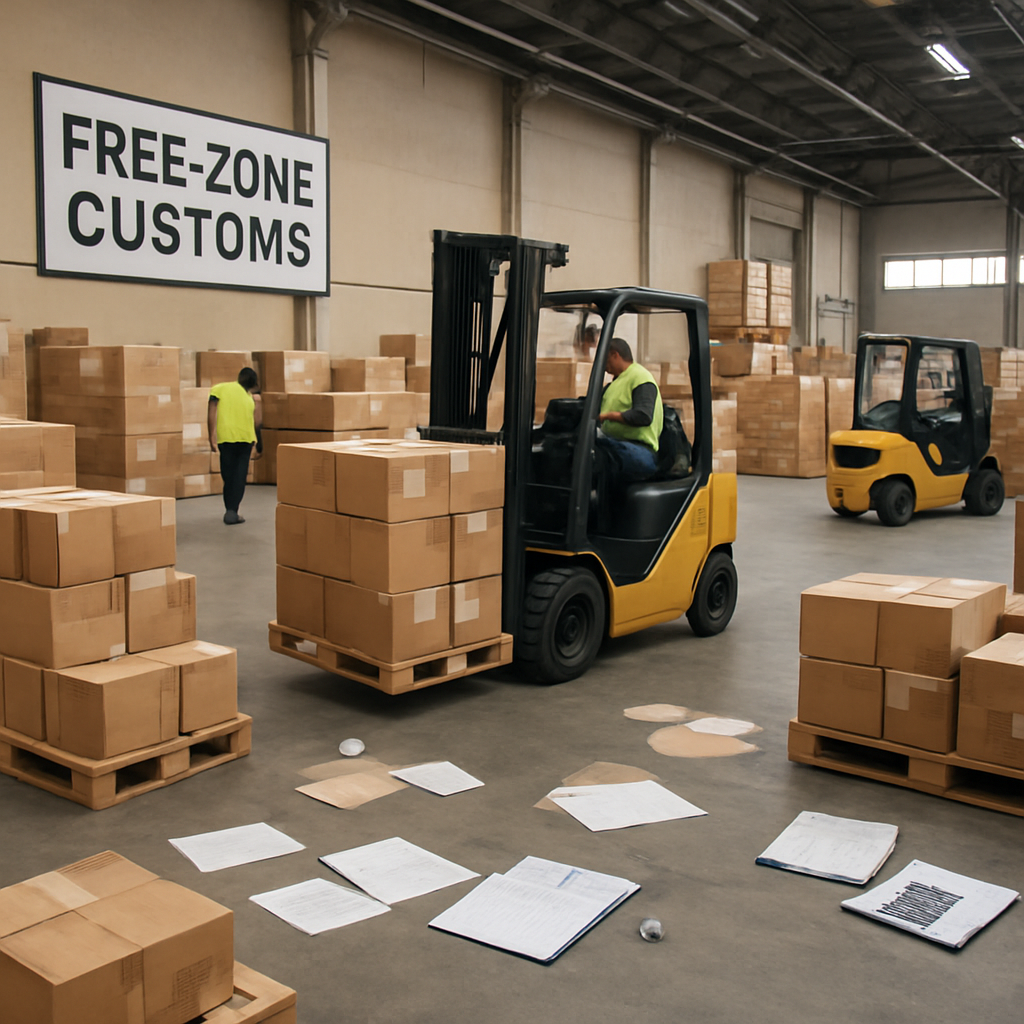
Ever stood in a shipping yard, watching pallets being loaded, and thought, “Why am I paying customs duties on goods that are just passing through?” That’s the exact frustration many entrepreneurs feel when they first explore importing to the UAE.
The good news? If you set up in a UAE free zone, most of those duties disappear. Customs duty exemption UAE free zones means you can bring in raw materials, equipment, or finished products without the usual 5 % import tax, and in many cases you won’t pay any VAT on the transaction either.
Take Ali, a tech startup founder who needed high‑end servers for his data‑center. By registering in Dubai Internet City, he moved the hardware straight from Shenzhen to the zone and saved roughly AED 30,000 in duties alone – money he could reinvest in software development.
Or consider Fatima, who runs a boutique fashion label. She sources fabrics from Bangladesh; once her garments are stored in Jebel Ali Free Zone they’re exempt from customs until she decides to sell them on the UAE mainland, at which point a modest duty applies only on the final sale.
So how does the exemption actually work? First, your company must be a legal entity licensed within the free zone. Second, the goods must enter the zone’s designated customs warehouse or logistics hub. Third, you’ll need a valid import‑export licence – the same document that lets you move items in and out without triggering standard customs procedures.
Here’s a quick checklist you can run through right now: 1️⃣ Choose a free‑zone that aligns with your industry (tech, logistics, manufacturing, etc.). 2️⃣ Apply for the free‑zone license and the import‑export permit. 3️⃣ Set up a customs account with the UAE Federal Customs Authority. 4️⃣ Declare your goods as ‘in‑zone’ to benefit from the duty‑free status.
If you’re unsure which zone offers the best mix of infrastructure and tax breaks, our guide Understanding UAE Free Zones: Opportunities for Businesses and Investors walks you through the top options, from Sharjah Airport International Free Zone’s proximity to the air cargo hub to Ras Al Khaimah’s low‑cost warehousing.
Finally, remember that duty exemption isn’t a blanket free‑ride. Keep records of all import documents, track the movement of goods, and file periodic reports to avoid penalties. A disciplined approach ensures you reap the savings year after year.
Ready to stop overpaying on customs? Start by mapping your supply chain, pick the right free zone, and get that import‑export licence. The exemption is there – you just have to claim it.
TL;DR
If you set up your business in a UAE free zone, you can tap into customs duty exemption uae free zones, eliminating the standard 5% import tax and often avoiding VAT on inbound goods.
Follow our checklist—choose the zone, secure an import‑export licence, and track paperwork to lock in savings.
Step 1: Determine Eligibility for Customs Duty Exemption
Imagine you’re standing on the loading dock, watching a container truck roll in, and you realize you could be paying an extra 5 % on everything inside. That gut‑check moment is what pushes many entrepreneurs to dig into the customs duty exemption UAE free zones rules.
First thing you need to confirm: is your company a legally‑registered free‑zone entity? If you’ve already secured a free‑zone license (or are about to), you’re halfway there. The exemption only applies when the business itself is the owner of the goods, not a third‑party distributor.
Check the company structure
Free‑zone companies must be 100 % owned by the investor, with a clear trade name and a registered office inside the zone. If you’re a foreign investor, that’s actually a plus – you don’t need a local sponsor, and the customs authority recognises your entity straight away.
In our experience, the simplest way to verify this is to pull your licence copy and look for the clause that mentions “Customs duty exemption applies to all imports under this entity”. If that line is missing, you’ll need to request an amendment from the zone authority.
Identify the eligible goods
Not every item qualifies. The exemption covers raw materials, components, and capital equipment that will be used in your free‑zone‑based operation. Finished goods destined for re‑export are also covered, but once they move to the mainland market the standard 5 % duty kicks in.
Think about your supply chain: are you importing fabric for a fashion line, or servers for a data‑center? Both are classic examples that usually meet the criteria, as long as you can prove they’ll stay in‑zone until you decide to sell locally.
Tip: keep a simple spreadsheet that logs the HS code, invoice value, and intended use for each shipment. Customs officers love paperwork – the more transparent you are, the smoother the process.
Secure an import‑export licence
This is the magic ticket. Without a valid import‑export licence, even a perfectly structured company can’t claim the duty‑free status. The licence ties your customs account to your free‑zone entity and tells the Federal Customs Authority that the goods are moving under a “in‑zone” declaration.
We often recommend using the detailed guide on custom duty exemptions overview to double‑check the exact paperwork required for each free‑zone you’re considering.
Once the licence is approved, you’ll receive a customs account number. Plug that into your shipping documents, and you’ll see the duty line disappear on the entry form.
Practical checklist
- Verify your free‑zone licence mentions customs exemption.
- Confirm the goods fall under eligible categories (raw materials, capital equipment, re‑exportable items).
- Apply for and obtain a valid import‑export licence linked to your customs account.
- Maintain a clear record of HS codes, invoices, and intended use for every shipment.
And don’t forget the little things that can trip you up: make sure the product descriptions on the commercial invoice match the HS codes you’ve declared, and double‑check that the shipment is routed to the free‑zone’s designated customs warehouse.
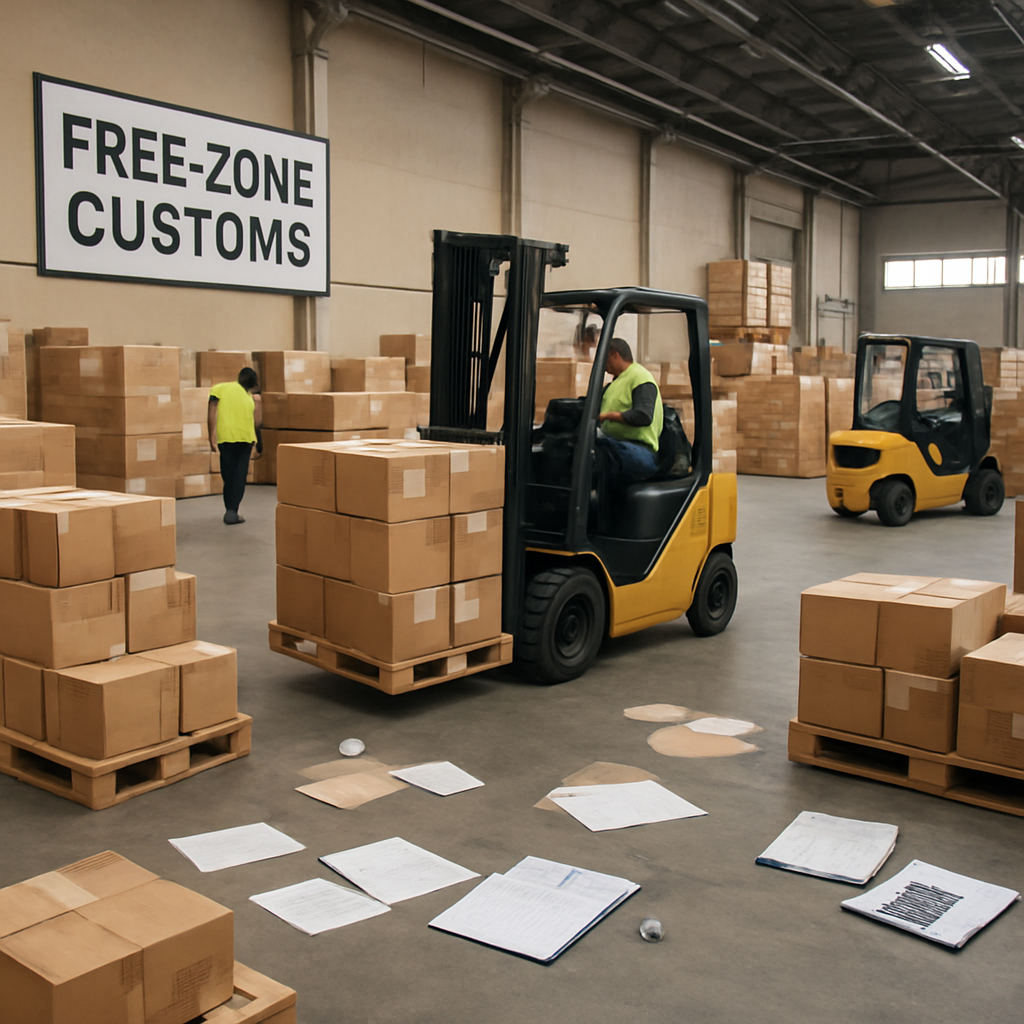
Now, let’s talk about the paperwork you’ll actually need to print. That’s where a partner like JiffyPrintOnline comes in handy – they specialise in affordable custom labels and shipping forms that keep your documentation looking professional and compliant.
If you’re wondering about the broader business implications – like how the exemption fits into your overall tax strategy – you might also want to explore SEO and positioning services that help you market your duty‑free advantage. A quick read on Referencement Positionnement shows how businesses leverage this benefit in their branding.
Bottom line: eligibility isn’t a mystery; it’s a checklist. Walk through each item, keep your records tight, and you’ll unlock the customs duty exemption UAE free zones without a hitch.
Step 2: Gather Required Documentation
Alright, you’ve cleared the eligibility hurdle – now it’s time to pull together the paperwork that will actually get your goods into a free‑zone without a duty bill attached. It can feel a bit like packing for a trip: you don’t want to forget the passport, but you also need that travel insurance, the charger, maybe a spare pair of socks. Same idea here, just with more PDFs.
Start with the basics: licence copies
First up, grab a clean, high‑resolution scan of your free‑zone licence. The licence should explicitly mention “customs‑free import” – if the wording is vague, request an amendment from the zone authority. In our experience, a licence that reads “Industrial Licence – Customs‑Free Import of Equipment” saves you endless back‑and‑forth with Dubai Customs.
Next, pull the import‑export licence certificate. This is the passport that tells the customs system you’re allowed to move goods in and out. Import Export Licence UAE Free Zone Cost: Complete Guide to Fees and Application walks you through the exact fee breakdown, so you know exactly what you’re paying for.
Commercial invoice and packing list – be meticulous
The commercial invoice isn’t just a number‑crunching sheet; it’s the story of what’s inside each box. Include product descriptions, HS codes, unit values, and the country of origin. Customs officers love detail – the more precise you are, the less likely they’ll flag your shipment for a manual review.
Pair that with a packing list that shows container numbers, weight, dimensions, and how each line item is packed. Think of it as the map that helps the customs scanner find the treasure without getting lost.
Certificates that matter
If you plan to re‑export to GCC markets later, you’ll need a Certificate of Origin. Even if you’re staying within the UAE, having one on hand can speed up any future audits. For manufacturers, a “Certificate of Conformity” (if required by the product type) can be the difference between a smooth release and a costly hold.
And don’t forget the warehouse registration proof – a lease agreement or a warehouse licence that shows your storage location is officially recognised by the Federal Customs Authority.
Digital organization: cloud folders and naming conventions
Here’s a quick tip: create a dedicated cloud folder named Customs_Duty_Exemption_Docs. Inside, use sub‑folders like Licences, Invoices, Certificates. Name files with dates and shipment IDs (e.g., 2024‑08‑15_Invoice_ABC123.pdf). This makes it painless to pull a full dossier if customs asks for an audit.
Run a test declaration
Before you ship the first pallet, log into the UAE Federal Customs Authority portal and file a test declaration. Select the “in‑zone” option and upload the PDFs you just gathered. If the system shows a green tick next to “customs duty exemption uae free zones”, you’re good to go. If not, the portal will flag which document is missing – a cheap way to avoid a surprise at the dock.
Real‑world example: a tech startup’s first shipment
Take Maya, a founder of a smart‑home device startup. She thought the licence she’d received was enough, but when she tried to declare a shipment of IoT modules, customs asked for a separate “equipment import approval” document. Maya went back, requested the specific clause from Dubai Internet City, added it to her licence copy, and re‑uploaded. The next test run passed instantly, saving her an estimated AED 18,000 in duties.
Legal safety net
Customs duty exemption isn’t a free‑for‑all; it’s a privilege that comes with reporting obligations. Keep a master log of every declaration, the date you filed it, and the reference number. If you ever need to prove compliance – say, during a tax audit or a GCC‑value‑addition review – you’ll have a ready‑made paper trail.
For entrepreneurs eye‑ing the crypto space, the regulatory landscape can get tricky. NeosLegal UAE Crypto Lawyers specialize in navigating the legal nuances that arise when you import hardware for blockchain mining or token‑related devices into a free zone. A quick consult can save you from unexpected licensing snags.
So, what’s the next move? Pull those PDFs together, double‑check every line, run that test declaration, and you’ll be standing at the customs gate with a green light and a smile. The paperwork might feel tedious, but it’s the key that unlocks the duty‑free advantage you’ve been chasing.
Step 3: Apply Through the Free Zone Authority
Alright, you’ve cleared the eligibility hurdle and gathered every piece of paperwork. Now comes the part that feels a bit like filling out a passport application for your cargo – you have to go through the free‑zone authority itself. Trust us, once you know exactly what to click and which form to sign, the process is smoother than a Friday‑morning coffee run.
Why the authority matters
The free‑zone authority is the gatekeeper that stamps “in‑zone” on your shipment. Without their sign‑off, the customs system treats your goods as a regular import and slaps the 5 % duty back on. Think of the authority as the friend who vouches for you at a club – the bouncer (customs) will let you in only if your friend (the authority) gives a nod.
In our experience, most entrepreneurs stumble on two tiny details: the exact wording of the application and the timing of the electronic submission. Miss either, and you’ll end up in a back‑and‑forth loop that can cost you weeks and thousands of dirhams.
Step‑by‑step checklist
Below is a practical checklist you can copy‑paste into your notes. Follow it in order, and you’ll have the authority’s approval before your first pallet rolls out of the port.
| Step | What to Do | Key Tip |
|---|---|---|
| 1️⃣ Register on the authority portal | Create a user account on the free‑zone authority’s online portal (usually a .gov.ae site). | Use the same email you used for your licence – it speeds up verification. |
| 2️⃣ Upload core documents | Attach the licence copy, import‑export licence, and warehouse registration. | Rename each file with the format YYYYMMDD_Licence.pdf to avoid “file not found” errors. |
| 3️⃣ Fill the “Customs Duty Exemption” form | Select “In‑zone import – duty free” and enter the HS codes for each item. | Double‑check HS codes against the UAE tariff database; a wrong code can trigger a manual review. |
| 4️⃣ Submit a test declaration | Run a zero‑value test on the portal. The system will show a green tick if everything lines up. | If the tick stays red, the portal will highlight the missing field – fix it and try again. |
| 5️⃣ Obtain the authority’s approval letter | Download the PDF approval (usually titled “Customs Duty Exemption Confirmation”). | Store this letter in the same cloud folder as your other customs docs; you’ll need it for every shipment. |
Does that look like a lot? Not really. Each step takes about 10‑15 minutes if your files are already organized. The real time‑saver is the test declaration – it catches errors before you ship.
Real‑world examples
Take Omar, who runs a small electronics assembly line in Sharjah Airport International Free Zone. He thought uploading just the licence would be enough. The portal rejected his first attempt because he omitted the warehouse tenancy agreement. After adding that single PDF, the test declaration turned green and his first shipment of printed circuit boards landed duty‑free, saving him roughly AED 22,000.
Another example: Sara, a fashion entrepreneur, imported luxury silk fabrics through Ras Al Khaimah Free Trade Zone. She used the authority’s “bulk upload” feature to attach all invoices at once. The system flagged one invoice with a mismatched currency (USD instead of AED). She corrected it, re‑uploaded, and got the exemption confirmation within a day. Her fabrics were stored for three months before her next collection launch, all without incurring any duty.
Expert tips from the field
• Ask the authority for a “pre‑approval” note if you’re importing high‑value items (above AED 500,000). It reduces the chance of a random audit later.
• Keep an eye on the portal’s maintenance schedule. A weekend outage can delay your submission by 48 hours – plan ahead if you have a tight shipping window.
• If you’re a foreign investor, request the authority’s English‑language version of the exemption form. Some zones only provide Arabic templates, and a mistranslation can cost you a duty bill.
Putting it all together
Once you have the approval letter, you’re ready to file the actual import declaration with the Federal Customs Authority. The letter acts like a VIP pass – the system automatically marks your goods as “in‑zone” and waives the duty.
Need a quick refresher on why the exemption matters? Check out customs duty exemption overview for a concise breakdown of the financial impact across different zones.
Step 4: Meet Compliance and Reporting Requirements
You’ve cleared the eligibility hurdle and secured that sweet exemption letter – now the real work begins. Does paperwork sound boring? Trust me, a clean compliance routine saves you cash and headaches.
First, open a customs account on the Federal Customs Authority portal and link it to your free‑zone licence. This tiny step tells the system “yes, I’m authorized” and lets you file the exemption flag automatically.
Next, line up the core documents: your free‑zone licence, the import‑export permit, commercial invoice, packing list, certificate of origin, and a lease or tenancy agreement for the approved warehouse. All of these are listed in the UAE customs compliance guide published by PwC.
Organise everything in a dedicated cloud folder – think Customs_Duty_Exemption_UAE_Free_Zones – and use a consistent naming convention like 2024‑08‑15_Invoice_ABC123.pdf. When auditors ask, you can point to the exact file in seconds.
Before you even load a container, run a zero‑value test declaration on the portal. If you see a green tick next to the “in‑zone” flag, you’re good to go. If the system flags a missing field, you’ll know exactly what to fix before the cargo even leaves the port.
Real‑world example: Fatima’s fashion label once forgot to attach the warehouse tenancy agreement. The test declaration failed, the customs portal highlighted the missing document, and she corrected it within an hour. The result? No delay, no unexpected duty, and a smooth flow of silk fabrics to her showroom.
Expert tip: for shipments above AED 500,000, request a pre‑approval note from the authority. It acts like a “VIP pass” and dramatically reduces the chance of a random audit later.
Another practical tip: keep an eye on the portal’s maintenance schedule. A weekend outage can add 48 hours to your clearance timeline, so plan your uploads around those windows.
Quick compliance checklist
- Activate your customs account and link the free‑zone licence.
- Gather licence, import‑export permit, invoice, packing list, certificate of origin, and warehouse lease.
- Store all PDFs in a clearly labelled cloud folder.
- Run a zero‑value test declaration – look for the green tick.
- Submit the official quarterly compliance report with the same document set.
Finally, file your periodic compliance report every quarter. The report should recap total imports, the value of goods, and attach the same supporting documents you used for the test declaration. Keeping this report for at least five years satisfies the Federal Customs Authority’s audit requirements.
Remember, auditors love a tidy trail. A well‑structured folder, a saved test‑declaration screenshot, and a consistent reporting cadence make it virtually impossible for anyone to raise a compliance question.
And if you ever wonder why free zones are such a magnet for foreign investors, it’s because they allow 100 % ownership of the company – a benefit highlighted by the Ministry of Economy’s free‑zone overview UAE free zone ownership benefits.
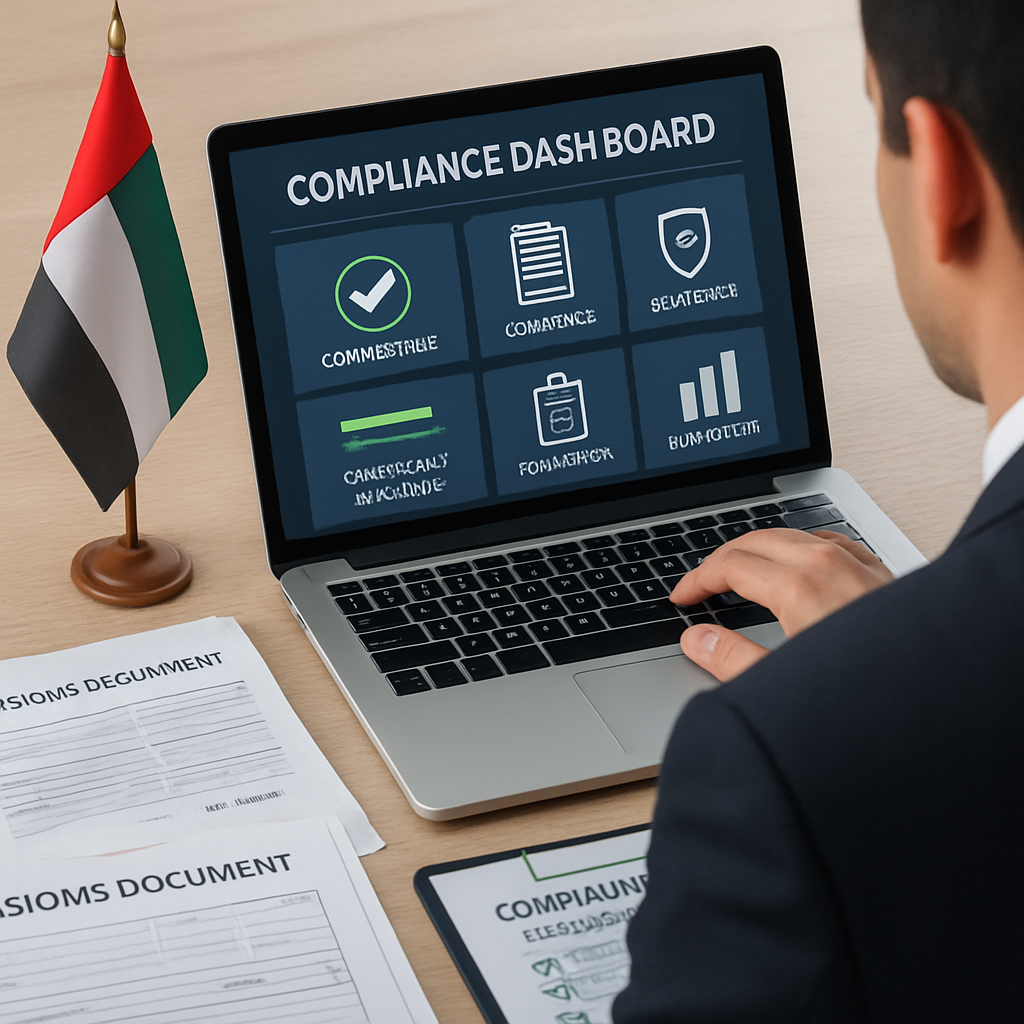
Step 5: Leverage Tax Benefits & Ongoing Support
Let’s talk about the part most entrepreneurs skip: turning the one‑off customs duty exemption uae free zones win into a steady stream of savings and peace of mind. You’ve already proved the system works – now it’s time to make that advantage stick.
Why does the exemption matter beyond the first pallet? Because every new shipment, every invoice, and every quarterly report is another chance to keep 0 % duty out of your bottom line. Miss a step and you could see that 5 % creeping back in, eroding the margin you fought hard to protect.
Map your ongoing tax landscape
The UAE’s tax environment is famously friendly, but it’s not a free‑for‑all. While customs duties disappear for qualified imports, corporate tax (currently 9 % on profits above AED 375,000) and VAT (5 %) still apply on domestic sales. Personal income tax stays non‑existent, which means you can attract talent without worrying about payroll tax.
What you really need is a simple cheat‑sheet that shows exactly when each tax rule kicks in. For example, goods that stay in the free zone forever stay duty‑free. The moment you move them to the mainland for sale, a modest customs duty (usually 5 %) and VAT apply on the sale price. Knowing that timeline lets you plan inventory moves strategically.
Build a tax‑benefit calendar
- Mark the end of each fiscal quarter – that’s when you file your compliance report (the same documents you used for the zero‑value test).
- Schedule a quarterly review of your VAT obligations – even if you’re only selling inside the free zone, intra‑zone services can trigger VAT under certain conditions.
- Set a reminder 30 days before your corporate tax filing deadline to reconcile any mainland sales that escaped the duty‑free umbrella.
- Every six months, run a quick “what‑if” scenario: what happens if you increase the proportion of goods that move to the mainland? This helps you decide whether to keep inventory in‑zone or ship out sooner.
These tiny habits keep the tax man from surprising you and make the customs duty exemption uae free zones benefit a predictable line item rather than a lucky break.
Unlock mainland reach with dual‑licensing
One of the smartest ways to stretch that exemption is through dual‑licensing – a feature highlighted by Masdar City Free Zone. With a dual licence you keep your free‑zone company, but you also get a legal foothold to serve mainland clients without setting up a separate entity. That means you avoid the extra registration fees, legal paperwork, and the headache of juggling two sets of compliance calendars.
Imagine you run a consulting boutique that mostly serves UAE‑based firms. With a dual licence you can invoice mainland clients directly, yet every piece of equipment you import for the project still rides on the 0 % customs duty shield. The net effect? Lower overhead, faster market entry, and a cleaner audit trail.
Keep the support loop tight
Even the best‑crafted tax plan can unravel if you lose track of paperwork or miss a regulatory update. That’s where ongoing support – both internal and external – becomes your safety net.
Here’s a quick checklist to keep the support engine humming:
- Assign one team member (or a trusted advisor) as the “tax‑benefit champion” who owns the calendar and reminders.
- Store every new licence amendment, dual‑licence approval, and tax authority notice in the same cloud folder you use for customs documents. Name files consistently, e.g.,
2024‑11‑DualLicence_Approval.pdf. - Subscribe to the free‑zone authority’s newsletter or RSS feed so you hear about rule changes the moment they happen.
- Schedule an annual “tax health check” with a UAE‑based accountant familiar with free‑zone nuances. They can spot hidden VAT exposure or corporate‑tax optimisation opportunities you might miss.
- Leverage platforms like UAE Free Zone Finder for quick reference guides – they often publish updated compliance calendars and FAQ sheets that save you hours of research.
By turning compliance into a habit rather than a chore, you protect the customs duty exemption uae free zones advantage and free up mental bandwidth for growth.
So, what’s the next move? Pull up your cloud folder, add the tax‑benefit calendar events, and schedule that first dual‑licence discussion with your advisor. Once the paperwork is in place, you’ll watch the savings compound month after month, and the free zone’s tax perks will feel less like a bonus and more like a core part of your business model.
Step 6: Compare Major UAE Free Zones for Duty Exemption Efficiency
Okay, you’ve got the paperwork sorted and the test declaration turned green. Now the real question is – which free zone actually gives you the smoothest, most cost‑effective customs duty exemption uae free zones experience? It’s not enough to pick a zone because the name sounds fancy; you need to match the zone’s processes to the way you move goods.
What to look at when you compare
First, ask yourself: how fast can I get the exemption flag on a new shipment? How many extra forms do I have to chase? And, crucially, does the zone’s logistics network keep my inventory safe while it stays duty‑free?
In our experience, the three factors that make the biggest difference are:
- Process simplicity – Does the authority’s portal auto‑populate the exemption field, or do you need a manual “pre‑approval” note each time?
- Lead time – From licence issuance to the first duty‑free import, how many days does it usually take?
- Infrastructure – Are there dedicated customs‑free warehouses, temperature‑controlled storage, or 24/7 cargo handling?
Below is a quick snapshot of the four zones that most entrepreneurs, small business owners, and foreign investors gravitate toward.
| Free Zone | Process Simplicity | Typical Lead Time (days) | Notable Infrastructure for Duty‑Free Goods |
|---|---|---|---|
| Dubai Internet City (DIC) | Online portal auto‑flags “in‑zone” once licence linked; no extra pre‑approval needed. | 7‑10 | State‑of‑the‑art data‑center warehouses, high‑security racks, 24 hr customs liaison. |
| Jebel Ali Free Zone (JAFZ) | Requires a single “customs‑free warehouse” certificate upload; straightforward. | 10‑12 | Largest container yard in the region, bonded warehouses, temperature‑controlled sections. |
| Sharjah Airport International Free Zone (SAIF Zone) | Portal asks for HS‑code validation each time; slightly more manual. | 12‑15 | Air‑cargo hub with rapid clearance, dedicated duty‑free storage near the runway. |
| Ras Al Khaimah Free Trade Zone (RAK FTZ) | Simple two‑step upload (licence + warehouse lease); fast review. | 8‑11 | Cost‑effective warehousing, easy access to Port Khalifa, flexible pallet‑stacking. |
Notice the pattern? Zones that sit next to major ports – JAFZ and RAK FTZ – tend to have the shortest lead times because customs officials already have the infrastructure to scan and approve shipments on the spot.
Real‑world examples
Take Omar, the electronics assembler we mentioned earlier. He chose JAFZ because the bonded warehouse was already integrated with his supplier’s shipping line. The exemption flag appeared in the customs portal within nine days, and he saved roughly AED 22,000 on his first batch of printed circuit boards.
On the other side, Sara, a luxury‑fashion entrepreneur, tried SAIF Zone for its proximity to the airport. She loved the quick air‑freight but discovered that every time she added a new HS code, the portal threw a warning. After a couple of back‑and‑forth emails, she set up a monthly “HS‑code audit” with her accountant – a tiny habit that now costs her nothing extra but prevents delays.
And then there’s Maya (not a real name, just a placeholder), who runs a small food‑processing unit. She opted for RAK FTZ after we showed her the low‑cost warehousing rates. Within ten days she had the exemption confirmed, and the zone’s temperature‑controlled storage kept her perishable goods fresh without any duty hit.
Actionable checklist for picking the right zone
1. Map your supply‑chain touchpoints. If most of your freight arrives by sea, JAFZ or RAK FTZ are natural fits. If you rely on air, SAIF Zone might win despite the extra HS‑code step.
2. Run a test declaration in each portal. It only takes 15 minutes, and you’ll see instantly whether the exemption flag turns green or stays red.
3. Ask the authority for a pre‑approval note. For shipments over AED 500,000, a pre‑approval can shave days off the clearance time.
4. Factor in ancillary costs. Some zones charge a modest warehouse‑usage fee for duty‑free storage; compare that against the duty you’d otherwise pay.
5. Check recent tax‑comparison reports. A brief look at a tax comparison between Georgia and UAE free zones shows that UAE’s duty‑exempt framework consistently beats many regional alternatives, reinforcing why the right zone matters.
Bottom line: the best zone for duty exemption efficiency isn’t a one‑size‑fits‑all. It’s the one that aligns with how you move goods, how quickly you need the exemption, and whether the zone’s infrastructure supports the type of inventory you store. Take a few minutes to run those test declarations, weigh the lead‑time numbers, and you’ll lock in the savings you’ve been chasing.
FAQ
What exactly is a customs duty exemption in UAE free zones?
In simple terms, the exemption means that goods you import into a recognized free‑zone warehouse are not hit with the standard 5 % customs duty that applies to mainland shipments. The key is that the zone must be listed as a “customs‑free” facility and your import‑export licence is correctly linked in the Federal Customs Authority portal. Once the system flags your shipment as “in‑zone,” the duty line disappears from the invoice.
Which types of goods qualify for the exemption?
Most raw materials, machinery, and components that will be used for manufacturing or re‑export are eligible. Finished goods meant for sale inside the UAE usually trigger duty unless you keep them in‑zone until they’re shipped out. For example, a tech startup can bring in server racks duty‑free, but a fashion brand that stores finished garments in‑zone must pay duty when those pieces move to a mainland showroom.
How do I know if my chosen free zone is customs‑free?
Every free zone publishes a list of approved customs warehouses on its authority website. In our experience, zones like JAFZ and RAK FTZ clearly mark which facilities are bonded. A quick way to verify is to run a zero‑value test declaration in the customs portal – if the exemption flag turns green, you’re good. If it stays red, double‑check the warehouse licence or ask the authority for a pre‑approval note.
What paperwork do I need to submit for the exemption?
You’ll need a digital copy of your free‑zone licence (showing the customs‑free clause), the import‑export licence, a commercial invoice with accurate HS codes, a packing list, and proof that the warehouse is registered as a customs‑free facility. Organise everything in a cloud folder with clear naming, e.g., 2024-09-01_Invoice_ABC123.pdf. When you upload these files in the portal, the system automatically validates them and displays the exemption status.
Can I combine the duty exemption with other tax benefits?
Absolutely. While you avoid customs duties, you still benefit from zero corporate tax on profits generated within the free zone (up to the threshold) and no personal income tax. The Benefits of UAE Free Zones for Business Growth and Innovation guide breaks down how these incentives stack, especially for small businesses looking to reinvest savings into product development.
What are the common pitfalls and how can I avoid them?
One frequent mistake is forgetting to link the import‑export licence to your customs account; the portal then treats the shipment as a regular import and applies duty. Another is using an unapproved warehouse – customs will flag the declaration and you’ll face delays. To sidestep these issues, run a test declaration for every new warehouse or HS‑code change, and keep a checklist of required documents handy. A small habit like taking a screenshot of the green exemption flag can save hours during an audit.
How long does it take to get the exemption once everything is submitted?
When you’ve uploaded the correct documents and the zone’s portal is functional, the exemption flag appears instantly – often within a few minutes. The only waiting period is the internal review by the free‑zone authority, which usually takes 2‑5 business days for new licences or high‑value shipments. Planning your shipment schedule around this window ensures you don’t miss tight delivery deadlines.
Conclusion
We’ve walked through the whole journey—from checking eligibility to filing that green exemption flag—so you can finally see why the customs duty exemption uae free zones is more than a nice perk. It’s the financial lever that lets an entrepreneur reinvest thousands instead of watching them disappear in a duty bill.
Remember the little habits that saved Omar and Sara: a test declaration before the first pallet, a cloud folder with consistent naming, and a quick screenshot of the green tick. Those tiny steps keep audits painless and your cash flow healthy.
So, what should you do next? Grab the checklist we highlighted, run a zero‑value test in your chosen zone’s portal, and lock in that exemption letter before you ship. If you hit a snag, think back to the common pitfalls—missing warehouse approval or an unlinked import‑export licence—and fix them fast.
In our experience, the zones that pair a streamlined portal with solid warehousing (like JAFZ or RAK FTZ) give you the fastest path to duty‑free imports. Align your supply‑chain route with the zone that matches your logistics, and the savings multiply.
Ready to turn the exemption into a regular part of your business model? A quick chat with UAE Free Zone Finder can help you map the exact steps for your industry, so you spend less time worrying and more time growing.